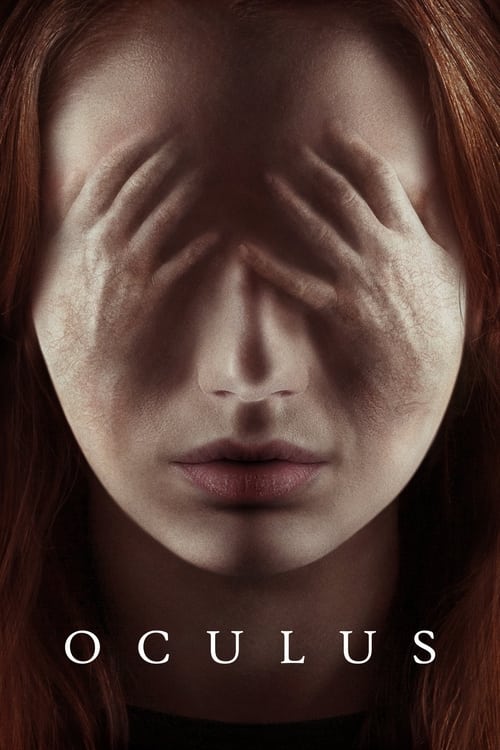
Oculus (2014)
Directed by Mike Flanagan
No — Oculus is not woke, scoring 7 out of 100 on our wokeness meter.
Mike Flanagan's Oculus, released in the spring of 2014, concerns a haunted antique mirror and the two siblings it ruined.
Consciousness Markers
The cast is predominantly white with a single Latino supporting actor (Miguel Sandoval) and a ghost named Marisol Chavez; these are natural genre-casting choices with no commentary on representation.
Kaylie is a capable, driven female lead, but her arc is a horror-protagonist revenge/research quest rather than any articulated feminist thesis.
No LGBTQ+ characters, relationships, or themes appear anywhere in the film.
The film engages no racial themes or commentary whatsoever.
There is no environmental or climate content in the film.
No economic critique or anti-capitalist messaging is present; the auction house is merely a plot device.
Marie's horror visions of her own decaying body run directly counter to any body-positivity messaging.
Tim's psychiatric hospitalization is a plot mechanism for the mirror's gaslighting, not a depiction of neurodivergence as identity or advocacy.
The film is a self-contained supernatural horror with no historical revisionism.
Oculus is a mood-driven horror film that shows rather than lectures; it carries no didactic social messaging.
Why it received this score
Mike Flanagan's Oculus, released in the spring of 2014, concerns a haunted antique mirror and the two siblings it ruined. The mirror has no agenda beyond appetite. It lies, it doubles, it turns a father into a lunatic and a mother into something chained to a wall. There is no lesson embedded in the glass, no thesis about the world we live in, and that absence is the most interesting thing about it. A horror film this committed to dread has no room left over for instruction.
The cast is largely white and the one Latino presence, Miguel Sandoval as the auctioneer, arrives without ceremony. A ghost named Marisol Chavez drifts through the frame as a seductive apparition, which is standard genre furniture, not a statement. Karen Gillan's Kaylie is a driven, capable woman with a research wall and a kill switch, and the film grants her intelligence without ever pausing to congratulate itself for doing so. Her quest is vengeance and proof, not a platform. Tim's stint in a psychiatric hospital functions as the mirror's gaslighting apparatus; the film has no interest in neurodivergence as identity. Marie's visions of her own body rotting away sit at the opposite pole from any contemporary messaging about self-acceptance.
Craft is all that remains. Flanagan intercuts two timelines with real discipline, and the mirror's cruelty is administrative, patient, almost clerical. The film made money, drew warm notices, and spawned a Bollywood remake, which is the ordinary afterlife of a well-built genre piece. It carries no sermon, no economic grievance, no environmental lament. It simply wants to unsettle you, and it does.
Analysis generated by our Consciousness Algorithm
Part of


Synopsis
A woman tries to exonerate her brother's murder conviction by proving that the crime was committed by a supernatural phenomenon.
Questions about Oculus
Is Oculus woke?
No — Oculus is not woke, scoring 7 out of 100 on our wokeness meter. That earns it a verdict of Ultra Based.
Does Oculus have any woke elements?
Very few. None of the 10 markers reaches 30, the level where a marker counts as present; the highest is Representation Casting at 12.
How does Oculus compare to other 2014 movies?
It ranks #173 of the 303 films from 2014 we've scored; their average is 13. The wokest is Selma (68).
How is the Woke Score calculated?
An AI-assisted process researches the film and its reception, scores it 0–100 on ten markers, then combines those into one 0–100 Woke Score. It measures a specific set of 2020s cultural themes, not film quality.