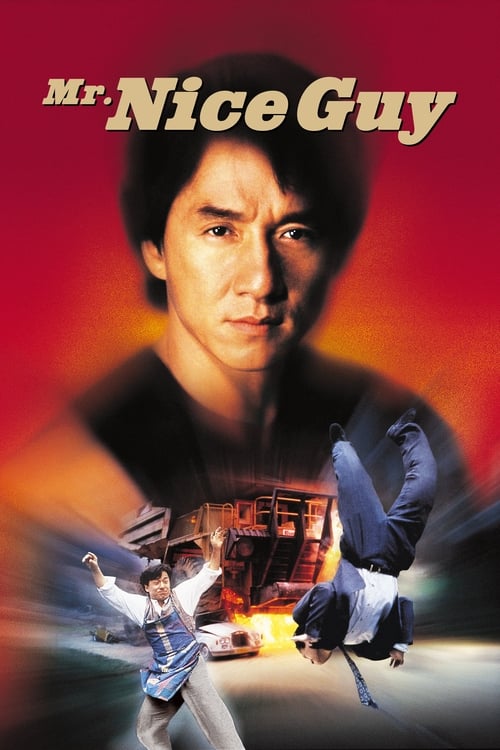
Mr. Nice Guy (1997)
Directed by Sammo Hung Kam-bo
No — Mr. Nice Guy is not woke, scoring 0 out of 100 on our wokeness meter.
Mr. Nice Guy arrives from 1997, a Hong Kong action comedy shot in Melbourne and scripted in English, which at the time counted as a novelty.
Consciousness Markers
No evidence of deliberate modern representation casting; the film's mixed cast reflects the Hong Kong action genre and natural casting, not a social-justice marker.
No LGBTQ+ themes or characters are present.
Female characters exist in action-oriented roles, but the film contains no feminist agenda or commentary.
No racial themes, commentary, or consciousness are explored.
No climate or environmental themes appear.
The film features criminals and drug dealers, but offers no anti-capitalist critique.
No body positivity themes or messaging.
No neurodivergence themes or characters.
No historical revisionism; the film is a contemporary action comedy.
The film is entertainment-focused martial arts action with no preachy or lecture-like social messaging.
Why it received this score
Mr. Nice Guy arrives from 1997, a Hong Kong action comedy shot in Melbourne and scripted in English, which at the time counted as a novelty. Sammo Hung directs and appears briefly as a cyclist who suffers for the privilege. Jackie Chan plays a television chef who acquires, by accident, a videotape of a drug deal, then spends the remainder of the runtime being chased by two criminal organizations that want it back. The plot is a delivery mechanism for stunts. This is not a complaint. It is an observation about engineering. Chan broke his nose and injured his neck during production, which the marketing presumably regarded as a feature.
The film's cultural ledger is remarkably clean. Its cast is mixed in the manner of a Hong Kong production shooting abroad, which is to say the diversity is incidental and never remarked upon. Women appear as journalists, girlfriends, and gang members, and they run, fight, and escape without anyone pausing to make a point of it. Karen McLymont and Gabrielle Fitzpatrick carry their share of the running, and the screenplay never asks them to explain themselves. There is no sermonizing about capital, no environmental lament, no interrogation of historical memory, no therapeutic vocabulary about bodies or brains. The villains are drug traffickers, and the film's position on drug trafficking is that it should be interrupted by a man driving a mining vehicle through a house. That is the whole of its politics.
The film stands as a document of a commercial cinema that had not yet been asked to justify itself. The New Line cut removed thirteen minutes, much of it violence against women, which tells us something about 1998 distribution instincts and nothing about the film's intentions. The result is brisk, forgettable, and entirely free of instruction. We classify it accordingly.
Analysis generated by our Consciousness Algorithm


Synopsis
A Chinese chef accidentally gets involved with a news reporter who filmed a drug bust that went awry and is now being chased by gangs who are trying to get the video tape.
Questions about Mr. Nice Guy
Is Mr. Nice Guy woke?
No — Mr. Nice Guy is not woke, scoring 0 out of 100 on our wokeness meter. That earns it a verdict of Ultra Based.
Does Mr. Nice Guy have any woke elements?
No. All 10 markers score zero.
How does Mr. Nice Guy compare to other 1997 movies?
It ranks #95 of the 109 films from 1997 we've scored; their average is 12. The wokest is Happy Together (65).
How is the Woke Score calculated?
An AI-assisted process researches the film and its reception, scores it 0–100 on ten markers, then combines those into one 0–100 Woke Score. It measures a specific set of 2020s cultural themes, not film quality.