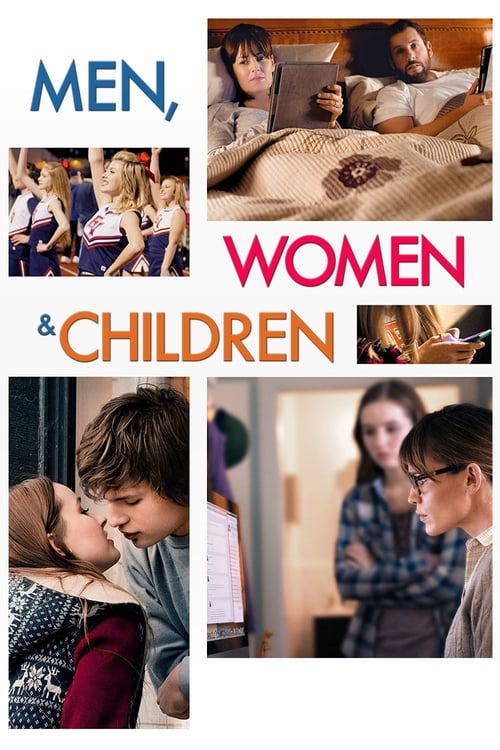
Men, Women & Children (2014)
Directed by Jason Reitman
No — Men, Women & Children is not woke, scoring 13 out of 100 on our wokeness meter.
Jason Reitman's Men, Women & Children arrived in 2014 as a sweeping diagnosis of the digital age, an ensemble of Texas teenagers and their parents all quietly ruined by screens.
Consciousness Markers
The film is heavily didactic about internet addiction and technology, capped by an explicit narrator's moral about kindness and cherishing the earth.
Female characters navigate sexual double standards, objectification, and parental control, but the film treats these as cautionary teen-drama beats rather than a feminist thesis.
The ensemble is overwhelmingly white, with any minority presence incidental rather than part of a deliberate inclusive casting agenda.
No LGBTQ+ characters, relationships, or themes are present.
The film does not engage with race, racial identity, or racial politics.
There is no substantive climate or environmental theme beyond a vague closing plea to cherish the earth.
No critique of capitalism, wealth, or economic structures is present.
The film depicts eating disorders and self-image damage but does not promote body positivity or body acceptance.
No neurodivergent characters or neurodivergence themes are present.
The film is not historical and makes no revisionist historical claims.
Why it received this score
Jason Reitman's Men, Women & Children arrived in 2014 as a sweeping diagnosis of the digital age, an ensemble of Texas teenagers and their parents all quietly ruined by screens. It opened in seventeen theaters, expanded to six hundred and change, and vanished with two million dollars against a sixteen million dollar budget. Critics called it mawkish. They were not wrong, though the film's failure is more interesting than its successes would have been. It wants to be a lament and settles for a lecture.
That lecture is delivered with a straight face and a narrator. Every thread, the porn addiction, the Ashley Madison affairs, the eating disorder, the MMORPG depression, the surveillance software, resolves into a lesson about connection and kindness, capped by an explicit closing instruction to cherish the earth. The film does not trust us to draw conclusions. It draws them for us, in marker, then underlines them. There is a genuine argument buried here about how technology reshapes intimacy, but it sits under a mounting pile of cautionary tales, each one more illustrative than the last.
On the social ledger, the film makes a few gestures. Its female characters carry the weight of sexual double standards, objectification, and parental control, though the treatment is teen-drama cautionary instead of anything resembling a thesis. The ensemble is overwhelmingly white, with minority faces drifting through as set dressing. Race goes unmentioned. So do class, queerness, and any structural critique of the economy that produced these anxious suburbanites. The result is a film with a moral and no argument, sincere, well-acted, and convinced that saying the thing is the same as meaning it.
Analysis generated by our Consciousness Algorithm
Part of


Synopsis
Follows the story of a group of high school teenagers and their parents as they attempt to navigate the many ways the internet has changed their relationships, their communication, their self-image, and their love lives.
Questions about Men, Women & Children
Is Men, Women & Children woke?
No — Men, Women & Children is not woke, scoring 13 out of 100 on our wokeness meter. That earns it a verdict of Ultra Based.
Does Men, Women & Children have any woke elements?
1 of the 10 markers register at 30 or above, led by Lecture Energy (55). On Lecture Energy: The film is heavily didactic about internet addiction and technology, capped by an explicit narrator's moral about kindness and cherishing the earth.
How does Men, Women & Children compare to other 2014 movies?
It ranks #106 of the 303 films from 2014 we've scored; their average is 13. The wokest is Selma (68).
How is the Woke Score calculated?
An AI-assisted process researches the film and its reception, scores it 0–100 on ten markers, then combines those into one 0–100 Woke Score. It measures a specific set of 2020s cultural themes, not film quality.