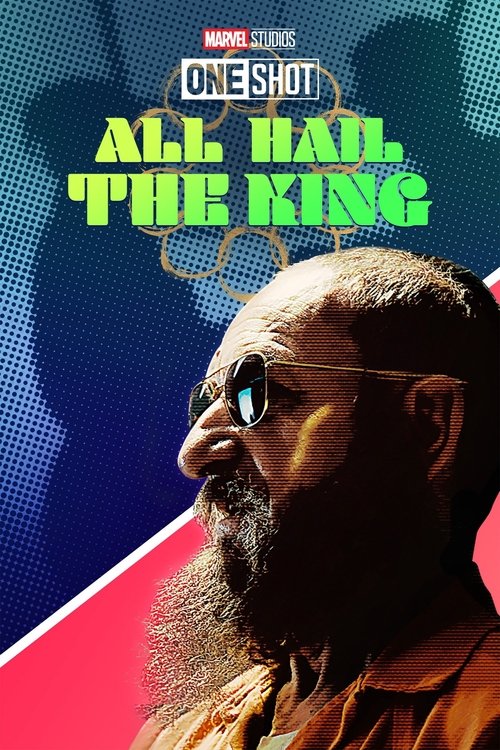
Marvel One-Shot: All Hail the King (2014)
Directed by Drew Pearce
No — Marvel One-Shot: All Hail the King is not woke, scoring 5 out of 100 on our wokeness meter.
Marvel One-Shot: All Hail the King arrives in 2014 as a fourteen-minute apology note tucked inside the Thor: The Dark World home release.
Consciousness Markers
The documentary format provides a narrative structure for exposition, but it is a plot device rather than a didactic lecture on social issues.
The cast is diverse, but the film functions as a standard MCU spin-off, lacking a specific focus on representation beyond existing franchise norms.
The film features a diverse cast, but the plot does not engage in any specific social commentary or deep exploration of racial dynamics.
While the research notes it was Marvel's first attempt to introduce LGBT concepts to the MCU, the film itself contains no thematic exploration of LGBTQ+ issues.
The narrative is driven by male characters and focuses entirely on superhero lore and prison drama, showing no feminist agenda.
There is no mention of environmental issues or climate change within the film's narrative or setting.
The film is produced and distributed by major corporate entities (Marvel/Disney) and focuses on superhero narratives, showing no anti-capitalist leanings.
The film does not address body image, health, or body positivity in any meaningful way.
No characters are portrayed with explicit neurodivergent traits or conditions.
The film expands upon existing MCU lore rather than revising real-world historical events.
Why it received this score
Marvel One-Shot: All Hail the King arrives in 2014 as a fourteen-minute apology note tucked inside the Thor: The Dark World home release. Ben Kingsley returns as Trevor Slattery, the fraudulent Mandarin, now installed at Seagate Prison with a butler, a fan club, and no discernible grasp of his circumstances. Scoot McNairy plays a documentary filmmaker who is not a documentary filmmaker. Sam Rockwell turns up in a Toronto warehouse to reprise Justin Hammer, and the entire enterprise exists to bridge a gap between one franchise entry and the next. It plays like a sketch, and it is content to be one.
The documentary framing supplies exposition, not instruction. There is no sermon about justice here, no lecture about the prison system, no argument about anything at all. The cast is varied in the way Marvel casts are varied, which is to say the diversity is incidental and unremarked, present without comment. A strand of surrounding commentary scolds the short for its handling of homosexuality, calling it the studio's first stumble into that territory. The film contains no such theme. It has a villain, a twist, and a monkey. The monkey is not a metaphor.
Any cultural awareness on display is inherited from the franchise's baseline rather than generated by the material itself. This is corporate housekeeping, designed to soothe fan anger over Iron Man 3 and keep a storyline warm for a later feature. Climate anxiety, body image, neurodivergence, economic grievance: none of these appear, and their absence is less a failing than an accurate description of what the short is. It is well-made, funny, and entirely weightless, a portrait of a man who cannot read a room. We file it accordingly, with a shrug and a stamp.
Analysis generated by our Consciousness Algorithm
Part of


Synopsis
A documentary filmmaker interviews the now-famous Trevor Slattery from behind bars.
Questions about Marvel One-Shot: All Hail the King
Is Marvel One-Shot: All Hail the King woke?
No — Marvel One-Shot: All Hail the King is not woke, scoring 5 out of 100 on our wokeness meter. That earns it a verdict of Ultra Based.
Does Marvel One-Shot: All Hail the King have any woke elements?
Very few. None of the 10 markers reaches 30, the level where a marker counts as present; the highest is Lecture Energy at 15.
How does Marvel One-Shot: All Hail the King compare to other 2014 movies?
It ranks #212 of the 303 films from 2014 we've scored; their average is 13. The wokest is Selma (68).
How is the Woke Score calculated?
An AI-assisted process researches the film and its reception, scores it 0–100 on ten markers, then combines those into one 0–100 Woke Score. It measures a specific set of 2020s cultural themes, not film quality.