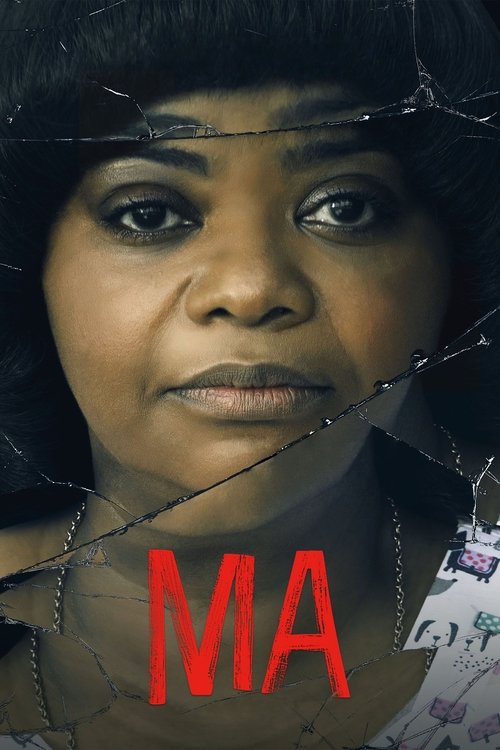
Ma (2019)
Directed by Tate Taylor
No — Ma is not woke, scoring 15 out of 100 on our wokeness meter.
Ma is a Blumhouse revenge thriller with a premise built for discomfort and a lead performance that keeps the whole apparatus from collapsing into camp.
Consciousness Markers
Octavia Spencer headlines as a rare Black female lead in a Blumhouse horror, supported by a reasonably diverse teen ensemble, though the casting is presented without commentary or fanfare.
The film centers a wronged woman's trauma and revenge, and Spencer explicitly sought the role to escape the supporting parts she was usually offered, but it plays as exploitation horror rather than a feminist statement.
Despite a Black lead, the film conspicuously sidesteps race entirely; critics like the Gawker writers noted its avoidance of the subject even as Black audiences identified with Ma.
The filmmakers wove in themes of trauma and 'the sins of our parents,' but the film delivers them through lurid horror set-pieces rather than preachy sermonizing.
No LGBTQ+ characters, relationships, or themes appear anywhere in the film.
No environmental or climate themes are present.
No economic-justice or eat-the-rich messaging; the antagonist's grievances are personal and sexual, not class-based.
No body-positivity themes; the film's treatment of bodies is squarely in the horror-exploitation register.
Mental illness and Munchausen syndrome by proxy appear as villainous plot devices, not as sympathetic neurodivergent representation.
No historical revisionism; the story is a contemporary fictional revenge thriller.
Why it received this score
Ma is a Blumhouse revenge thriller with a premise built for discomfort and a lead performance that keeps the whole apparatus from collapsing into camp. Octavia Spencer headlines as Sue Ann, a veterinary technician who opens her basement to local teenagers and then closes the trap. The casting is notable without being self-congratulatory: a Black woman carries a mainstream horror release, and the teen ensemble is varied enough to feel like a plausible Ohio high school. The film does not pause to announce this. It simply proceeds to the ironing board.
The social consciousness here is thin and intermittent. Sue Ann's grievance is personal and sexual, rooted in a high school humiliation, so the revenge has no class critique and no environmental dimension. There is no LGBTQ thread, no body-positive argument, and no historical revisionism. Mental illness and Munchausen syndrome by proxy arrive as villainous plot machinery, not as sympathetic representation. Race is the more interesting omission. A Black lead in this genre could support a racial reading, but the film conspicuously declines to supply one; critics have noted the avoidance, even as Black audiences found their own identification with Ma.
The feminist angle is present but underdeveloped. Spencer has said she took the part to escape the supporting roles she was usually offered, and the film does center a wronged woman's rage. Yet it treats that rage as exploitation spectacle, with sewing mouths and face paint doing the thematic work. The filmmakers gesture at trauma and inherited cruelty, but they deliver these ideas through lurid set pieces instead of sermonizing. The result is a nasty, efficient genre exercise that mostly avoids preaching. It also mostly avoids saying anything. For a film about a woman who has been underestimated, that is a modest irony.
Analysis generated by our Consciousness Algorithm
Part of


Synopsis
Sue Ann is a loner who keeps to herself in her quiet Ohio town. One day, she is asked by Maggie, a new teenager in town, to buy some booze for her and her friends, and Sue Ann sees the chance to make some unsuspecting, if younger, friends of her own.
Questions about Ma
Is Ma woke?
No — Ma is not woke, scoring 15 out of 100 on our wokeness meter. That earns it a verdict of Ultra Based.
Does Ma have any woke elements?
1 of the 10 markers register at 30 or above, led by Representation Casting (45). On Representation Casting: Octavia Spencer headlines as a rare Black female lead in a Blumhouse horror, supported by a reasonably diverse teen ensemble, though the casting is presented without commentary or fanfare.
How does Ma compare to other 2019 movies?
It ranks #140 of the 284 films from 2019 we've scored; their average is 22. The wokest is Black Christmas (79).
How is the Woke Score calculated?
An AI-assisted process researches the film and its reception, scores it 0–100 on ten markers, then combines those into one 0–100 Woke Score. It measures a specific set of 2020s cultural themes, not film quality.