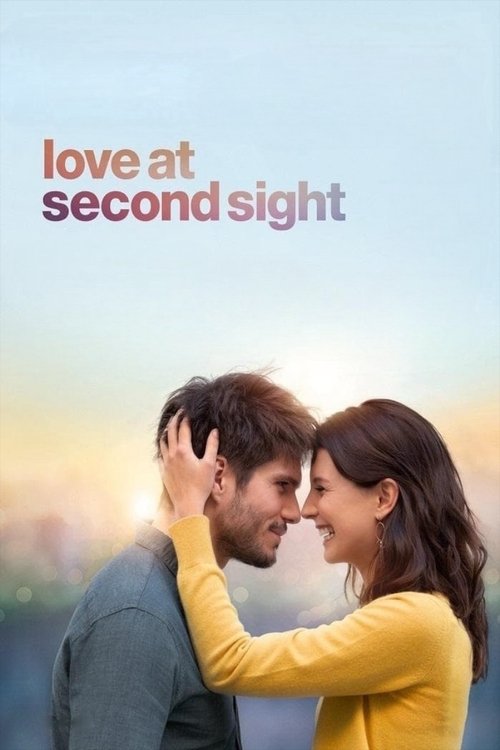
Love at Second Sight (2019)
Directed by Hugo Gélin
No — Love at Second Sight is not woke, scoring 6 out of 100 on our wokeness meter.
Raphaël writes science fiction, marries a promising pianist, becomes famous, neglects her, and then one snowstorm later wakes in a Paris where she never knew him and plays to full houses without him.
Consciousness Markers
Olivia's arc touches on a woman who shelved her piano career for her husband, but the film resolves this through a man's romantic pursuit rather than any feminist thesis.
The cast is overwhelmingly white French performers, with Samir Boitard in a minor supporting role; there is no evident diversity-casting agenda at work.
A TMDB keyword notes a 'pretending to be gay' comedic plot device, but this is a farcical trope rather than any genuine LGBTQ+ representation or advocacy.
This is a breezy romantic comedy that aims to charm rather than preach; any messaging is incidental and mild.
No engagement with race, racism, or racial identity appears in the film.
The snowstorm is a plot mechanism for the parallel-world premise, not an environmental message.
Publishing and fame feature as backdrop, but the film offers no critique of wealth, class, or capitalism.
No body-image or body-acceptance themes are present.
No neurodivergent characters or themes are depicted.
The alternate-reality conceit is personal fantasy, not a revisionist reframing of real history.
Why it received this score
Raphaël writes science fiction, marries a promising pianist, becomes famous, neglects her, and then one snowstorm later wakes in a Paris where she never knew him and plays to full houses without him. The premise is sturdy, lifted from the well-worn shelf of alternate-timeline romances, and Hugo Gélin directs with the smooth, unhurried competence of a man who knows exactly which buttons to press. François Civil is charming throughout. The film took a Swann d'Or and a Best Actor prize at L'Alpe d'Huez, which tells us the French industry found it agreeable. Audiences agreed, modestly.
On the social consciousness ledger, the film is nearly blank, and it seems content to be. The cast is overwhelmingly white French performers, with Samir Boitard in a minor supporting role and no evident interest in casting as argument. A keyword flags a pretending-to-be-gay routine, though it functions as farce, the oldest shortcut in the comedic drawer, and carries no advocacy behind it. Olivia's abandoned piano career gestures at a woman who set aside her own ambition, and the film settles that thread by having a man win her back, which is not a thesis so much as a plot. Race, climate, class, body image, neurodivergence, and the rewriting of real history are all absent. Snow here is weather, not warning.
This is a breezy romantic comedy that wants to charm, and it mostly does. Any messaging is incidental, mild, and buried quickly under a montage. Its cultural footprint is small: fifth place in France on opening, modest ticket sales, and a later footnote as the first French release in Chinese cinemas after the pandemic. Nothing in it lectures. Nothing in it provokes. It is a pleasant, well-tailored garment with no slogan printed on the back. We file it accordingly, with a shrug and a small notation in the margin.
Analysis generated by our Consciousness Algorithm

Synopsis
A man tries to make his wife fall in love with him again, after waking up in an alternate reality where she never knew him.
Questions about Love at Second Sight
Is Love at Second Sight woke?
No — Love at Second Sight is not woke, scoring 6 out of 100 on our wokeness meter. That earns it a verdict of Ultra Based.
Does Love at Second Sight have any woke elements?
Very few. None of the 10 markers reaches 30, the level where a marker counts as present; the highest is Feminist Agenda at 15.
How does Love at Second Sight compare to other 2019 movies?
It ranks #222 of the 284 films from 2019 we've scored; their average is 22. The wokest is Black Christmas (79).
How is the Woke Score calculated?
An AI-assisted process researches the film and its reception, scores it 0–100 on ten markers, then combines those into one 0–100 Woke Score. It measures a specific set of 2020s cultural themes, not film quality.