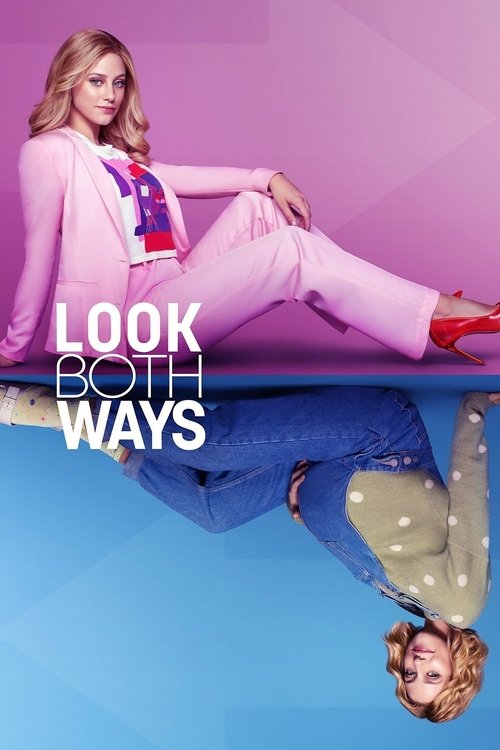
Look Both Ways (2022)
Directed by Wanuri Kahiu
No — Look Both Ways is not especially woke, scoring 23 out of 100 on our wokeness meter.
Look Both Ways arrives from Netflix with the quiet confidence of a film that knows exactly what it is and has no intention of apologizing for it.
Consciousness Markers
A Netflix romcom with a Black woman director (Wanuri Kahiu) and a naturally diverse ensemble including Aisha Dee, Nia Long, and Danny Ramirez, though the diversity is unremarked upon.
A woman-centered narrative about balancing career ambition in animation with motherhood, helmed by a female director and writer, though it remains a conventional romance at heart.
Natalie's best friend Cara is shown with a girlfriend in the LA storyline, a minor but concrete same-sex relationship present without fanfare.
A light, breezy parallel-lives romcom that delivers its themes of embracing fate through story rather than sermon.
The cast is diverse but the film engages no racial themes or commentary whatsoever; characters' races are incidental.
No environmental or climate themes appear in the film.
No critique of capitalism, wealth, or class structures is present.
No body positivity themes or messaging are present.
No neurodivergence themes or characters are present.
No historical revisionism; the film is a contemporary fictional story.
Why it received this score
Look Both Ways arrives from Netflix with the quiet confidence of a film that knows exactly what it is and has no intention of apologizing for it. Wanuri Kahiu directs, April Prosser writes, and Lili Reinhart plays Natalie, a University of Texas graduate whose pregnancy test splits her life into two parallel narratives. In one she raises a daughter in her hometown and claws toward a career in animation. In the other she moves to Los Angeles, assists a demanding animator played by Nia Long, and falls for a colleague. The conceit is tidy. The execution is breezy. Everyone is pleasant, and the film asks very little of anyone.
The progressive content here is present but muted. A Black woman directs, and the cast includes Aisha Dee, Nia Long, and Danny Ramirez without any of them functioning as a statement. Cara, the best friend, has a girlfriend in the Los Angeles timeline, a detail dropped into the frame and never discussed again. The story belongs to a woman weighing ambition against motherhood, a familiar tension handled with a soft hand. No character remarks on race. Nobody mentions the environment. Wealth and class never enter the conversation, and the film shows no interest in bodies, brains, or the historical record.
Its most striking quality is a refusal to lecture. The lessons about fate and risk arrive through montage, not monologue, and the sermonizing stays off-screen. Instead, we get a competent, gentle romance that treats its audience as adults who have sat through a romcom before. The needle barely moves. For those of us who catalog these things for a living, Look Both Ways registers as a mild case, agreeable and forgettable, the cinematic equivalent of a lukewarm seltzer.
Analysis generated by our Consciousness Algorithm


Synopsis
On the night of her college graduation, Natalie's life splits into parallel realities after she takes a pregnancy test. What will life and love bring?
Questions about Look Both Ways
Is Look Both Ways woke?
No — Look Both Ways is not especially woke, scoring 23 out of 100 on our wokeness meter. That earns it a verdict of Based.
Does Look Both Ways have any woke elements?
3 of the 10 markers register at 30 or above, led by Representation Casting (45), Feminist Agenda (35) and LGBTQ+ Themes (30). On Representation Casting: A Netflix romcom with a Black woman director (Wanuri Kahiu) and a naturally diverse ensemble including Aisha Dee, Nia Long, and Danny Ramirez, though the diversity is unremarked upon.
How does Look Both Ways compare to other 2022 movies?
It ranks #74 of the 223 films from 2022 we've scored; their average is 22. The wokest is Bros (92).
How is the Woke Score calculated?
An AI-assisted process researches the film and its reception, scores it 0–100 on ten markers, then combines those into one 0–100 Woke Score. It measures a specific set of 2020s cultural themes, not film quality.