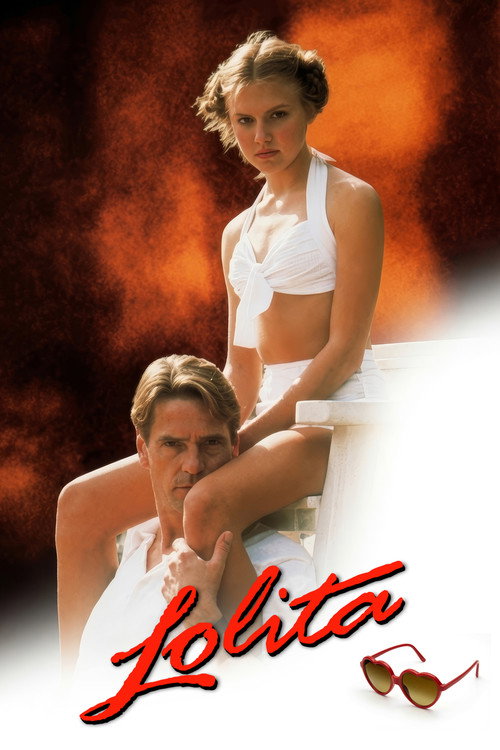
Lolita (1997)
Directed by Adrian Lyne
No — Lolita is not woke, scoring 0 out of 100 on our wokeness meter.
Adrian Lyne's 1997 adaptation of Nabokov arrives carrying the weight of an unfashionable literary fidelity.
Consciousness Markers
The cast is overwhelmingly white and European, with no meaningful effort toward diverse or inclusive casting. The story is a period literary adaptation with no representation agenda.
There are no LGBTQ+ characters or themes; the narrative centers entirely on a heterosexual obsession.
The film is told from the predator's romanticized perspective and, per the composer's own framing, treats the relationship as 'sincere and reciprocal love' — the antithesis of a feminist reading.
No engagement with racial politics or consciousness whatsoever; the story is a white European-American literary drama.
No environmental or climate themes appear in the film.
No economic critique or anti-capitalist messaging; the road-trip motel setting is incidental, not thematic.
No body-positivity themes; the film's gaze is squarely on conventional youthful beauty.
No neurodivergence is depicted or discussed.
The film is a faithful literary adaptation, not a revisionist reframing of history.
The film presents its disturbing subject matter as melodrama and romance rather than moral instruction; it does not lecture the audience on social issues.
Why it received this score
Adrian Lyne's 1997 adaptation of Nabokov arrives carrying the weight of an unfashionable literary fidelity. Where Kubrick chose innuendo, Lyne chooses the novel's darker furnishings, and the result presents itself as grand, doomed romance. Ennio Morricone, no less, described his score as serving a story of sincere and reciprocal love. That single sentence tells us nearly everything about the film's stance, and nothing at all about the modern sensibilities we are gathered here to catalogue.
The ledger, for once, is empty. The cast is white and European from top to bottom, with no inclusive ambitions, and the narrative concerns one heterosexual obsession pursued to its grim conclusion. There is no racial reckoning, no climate anxiety, no economic critique. The motels and highways of the cross-country flight are scenery, not sermon. The camera lingers on youthful conventional beauty, so body positivity finds no purchase. No character is coded as neurodivergent, and nobody lectures us about anything. The film's moral instruction, such as it is, arrives through catastrophe: a murder, a prison death, a young woman dead in childbirth. That is judgment by plot, not by pamphlet.
We are left with a handsomely mounted melodrama that trusts its audience to supply the revulsion it declines to supply itself. Nabokov's black comedy is largely absent, replaced by gauzy romanticism, which many critics took to be the film's central failure. The picture is disturbing without being instructive, and that combination has grown rare. There is no cause here, no lesson, no corrective lens turned back on the viewer. Just a predator, his delusion, and a camera that refuses to wink. In an age that demands its art announce its politics, this one simply tells a terrible story badly enough to be uncomfortable and well enough to be watchable. The classification is straightforward. The film sits at the far end of the scale, and it got there honestly.
Analysis generated by our Consciousness Algorithm


Synopsis
Humbert Humbert is a middle-aged British novelist who is both appalled by and attracted to the vulgarity of American culture. When he comes to stay at the boarding house run by Charlotte Haze, he soon becomes obsessed with Lolita, the woman's teenaged daughter.
Questions about Lolita
Is Lolita woke?
No — Lolita is not woke, scoring 0 out of 100 on our wokeness meter. That earns it a verdict of Ultra Based.
Does Lolita have any woke elements?
No. All 10 markers score zero.
How does Lolita compare to other 1997 movies?
It ranks #95 of the 109 films from 1997 we've scored; their average is 12. The wokest is Happy Together (65).
How is the Woke Score calculated?
An AI-assisted process researches the film and its reception, scores it 0–100 on ten markers, then combines those into one 0–100 Woke Score. It measures a specific set of 2020s cultural themes, not film quality.