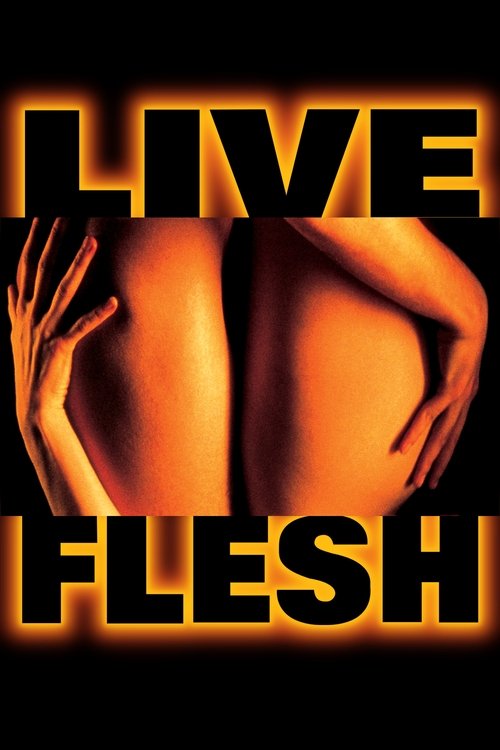
Live Flesh (1997)
Directed by Pedro Almodóvar
No — Live Flesh is not woke, scoring 6 out of 100 on our wokeness meter.
Pedro Almodóvar's twelfth feature arrives from 1997, adapted from a Ruth Rendell novel and relocated to Madrid, where the plot concerns a young man's six-year prison sentence, a paraplegic policeman turned Paralympic basketball star, an orphanage, and a good deal of gunplay conducted in the name of love.
Consciousness Markers
A Spanish-language film with a naturally Spanish cast; no diversity-conscious casting choices are evident in the ensemble.
Elena and Clara are strong-willed women, but the film is an erotic thriller built on sexual obsession and revenge rather than any feminist thesis.
David's paraplegia is treated with some dignity as he becomes a Paralympic athlete, but the film makes no body-image or body-acceptance argument.
The framing device invokes Franco-era Spain and the closing voiceover notes the Spanish people no longer live in fear, but this is atmospheric context rather than a revisionist historical project.
Almodóvar works in restrained melodramatic form here, with no preachy messaging or direct address to the audience.
Despite Almodóvar's own identity, this film contains no LGBTQ+ characters or themes; the plot is entirely heterosexual.
No engagement with racial politics or racial identity whatsoever.
No environmental or climate themes present.
No critique of capitalism or class-based economic commentary.
No neurodivergent characters or themes.
Why it received this score
Pedro Almodóvar's twelfth feature arrives from 1997, adapted from a Ruth Rendell novel and relocated to Madrid, where the plot concerns a young man's six-year prison sentence, a paraplegic policeman turned Paralympic basketball star, an orphanage, and a good deal of gunplay conducted in the name of love. It is an erotic thriller with melodramatic bones, and it moves with a restraint that will surprise anyone who associates this director with louder, campier pleasures. The camera observes. It does not sermonize.
On the matter of social consciousness, the picture is close to a blank slate. The cast is Spanish because the story is Spanish, and no diversity-conscious assembly is on display. Despite the director's own biography, the narrative is entirely heterosexual, its passions aimed at adultery, obsession, and revenge. Elena and Clara are willful women with appetites of their own, though the film employs them as engines of an erotic plot, not as theses. David's paralysis is handled with dignity, his athletic career presented without comment, which is not the same as an argument about bodies.
The Franco-era opening supplies atmosphere, a state of emergency and a birth on a bus, and the closing voiceover notes that the Spanish people no longer live in fear. That is historical texture, not a historical project. Almodóvar keeps his ideas in the flesh and the bullets. The result is a well-made, well-acted melodrama with no interest in the preoccupations of a later decade. It wants to watch people ruin themselves beautifully, and it does.
Analysis generated by our Consciousness Algorithm


Synopsis
When Victor attempts to seduce Elena, all he gets for his trouble is a one-way, six-year ticket to prison, where he concentrates on strengthening his mind, his body... and his desire for vengeance on the man who put him there. After his release and still madly in love with her, Victor will stop at nothing to win her over even if means revenge, for Elena has married David, the cop who sent him to prison!
Questions about Live Flesh
Is Live Flesh woke?
No — Live Flesh is not woke, scoring 6 out of 100 on our wokeness meter. That earns it a verdict of Ultra Based.
Does Live Flesh have any woke elements?
Very few. None of the 10 markers reaches 30, the level where a marker counts as present; the highest is Feminist Agenda at 12.
How does Live Flesh compare to other 1997 movies?
It ranks #73 of the 109 films from 1997 we've scored; their average is 12. The wokest is Happy Together (65).
How is the Woke Score calculated?
An AI-assisted process researches the film and its reception, scores it 0–100 on ten markers, then combines those into one 0–100 Woke Score. It measures a specific set of 2020s cultural themes, not film quality.