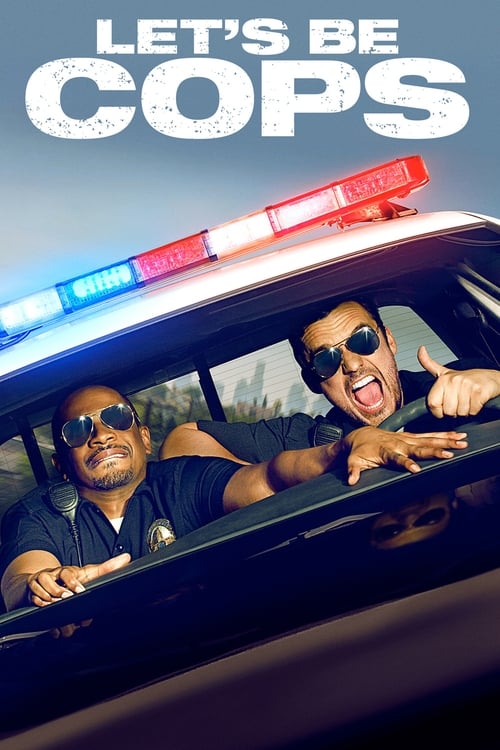
Let's Be Cops (2014)
Directed by Luke Greenfield
No — Let's Be Cops is not woke, scoring 12 out of 100 on our wokeness meter.
Let's Be Cops arrived in August 2014 with a modest budget, a broad premise, and two gifted comic actors who deserved better material.
Consciousness Markers
Damon Wayans Jr. and Keegan-Michael Key anchor a diverse cast, but this is standard buddy-cop genre practice rather than casting performed for representational messaging.
No LGBTQ+ characters, themes, or subtext appear anywhere in the film.
Nina Dobrev's Josie exists as a waitress/aspiring makeup artist and romantic prize; the film offers no feminist framework or commentary.
Despite a Black co-lead, the film never engages race as a subject; the Ferguson-timing controversy was external press commentary, not content in the film.
No environmental or climate themes whatsoever.
The film's arc is a conventional success narrative — Justin becomes a hit game developer and Ryan joins the LAPD — with no critique of wealth or capital.
No body-positivity themes or messaging present.
No neurodivergent characters or themes.
A contemporary fictional comedy with no historical subject matter to revise.
A broad, fratty R-rated comedy that aims to amuse rather than preach; it carries no didactic social messaging.
Why it received this score
Let's Be Cops arrived in August 2014 with a modest budget, a broad premise, and two gifted comic actors who deserved better material. Jake Johnson and Damon Wayans Jr. play thirtysomething friends who wear police uniforms to a college reunion, discover that the costume commands respect, and extend the ruse into a genuinely dangerous entanglement with Albanian gangsters and a corrupt detective. Luke Greenfield directs with the loose, shambling energy of a fraternity weekend. The film earned $138.2 million against a $17 million budget, which is the sort of arithmetic that ends conversations. Critics were unmoved. Eighteen percent on Rotten Tomatoes. Time magazine placed it fifth among the worst films of the year.
We search these things for signs of ideological commitment, and here the cupboard is bare. The film wants to amuse, and it does so with jokes about crystal meth, bare-knuckle boxing, and the indignities of the thirtysomething male ego. Nina Dobrev's Josie is a waitress who aspires to makeup artistry and functions as a romantic reward. The narrative resolves in a conventional success arc: the first hero ships a video game, the second joins the LAPD, and neither outcome invites a single thought about capital, labor, or the institutions being celebrated. There is no environmental conscience, no body-positive messaging, no engagement with neurodivergence, no historical revision to speak of, and no sermonizing whatsoever. The film preaches nothing at all, which is its own kind of achievement.
The Ferguson timing, four days after the shooting of Michael Brown, generated commentary in progressive outlets, and Wayans later suggested he would not revisit the role until police brutality was addressed. That context is real, but it lives in the press coverage, not the celluloid. The film never mentions race, policing as a social question, or anything beyond the mechanics of a lie that escalates. The one point of mild note is the casting, which places two Black performers in prominent roles alongside a mixed ensemble. This is standard buddy-comedy practice, not a statement. The result is a film of almost pure cultural inertness, and we record it as such.
Analysis generated by our Consciousness Algorithm


Synopsis
Best pals Ryan and Justin are stalled in their respective careers -- a fact that is painfully driven home when they go to a college reunion. Dressed as police in the mistaken belief that they were to attend a costume party, Ryan and Justin find that the uniforms earn them much respect and attention. Although Justin is uncomfortable with the idea, Ryan decides to continue with the charade, putting them both in increasingly dangerous situations. When these newly-minted “heroes” get tangled in a real life web of mobsters and dirty detectives, they must put their fake badges on the line.
Questions about Let's Be Cops
Is Let's Be Cops woke?
No — Let's Be Cops is not woke, scoring 12 out of 100 on our wokeness meter. That earns it a verdict of Ultra Based.
Does Let's Be Cops have any woke elements?
Very few. None of the 10 markers reaches 30, the level where a marker counts as present; the highest is Representation Casting at 28.
How does Let's Be Cops compare to other 2014 movies?
It ranks #113 of the 303 films from 2014 we've scored; their average is 13. The wokest is Selma (68).
How is the Woke Score calculated?
An AI-assisted process researches the film and its reception, scores it 0–100 on ten markers, then combines those into one 0–100 Woke Score. It measures a specific set of 2020s cultural themes, not film quality.