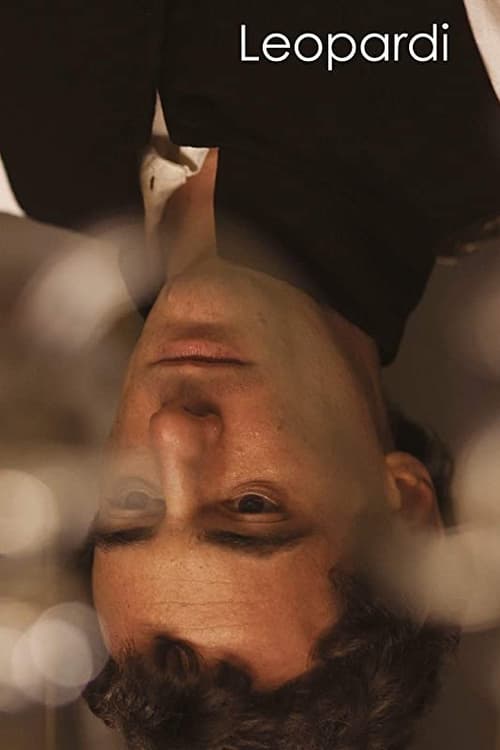
Leopardi (2014)
Directed by Mario Martone
No — Leopardi is not woke, scoring 0 out of 100 on our wokeness meter.
Giacomo Leopardi was born noble in Recanati, taught himself Latin, Greek, Hebrew, Aramaic and English in his father's library, and spent his short life being disappointed by nearly everything.
Consciousness Markers
The cast is entirely Italian, assembled for a 19th-century period biopic with no deliberate diversity casting or commentary on representation.
No LGBTQ+ characters or themes appear; the film's romantic content concerns Leopardi's unrequited love for a countess.
Women appear as mothers and unrequited love interests within a traditional historical frame, with no feminist critique or agenda.
The film is set in a homogeneous 19th-century Italian milieu and engages no racial themes whatsoever.
No environmental or climate concerns are present in this literary biography.
The household's declining fortunes are a period detail, not a critique of capitalism or wealth.
Leopardi's chronic illness and physical affliction are depicted as sources of suffering, not framed through any body-acceptance or body-positivity lens.
His restless intellect and isolation are portrayed as scholarly temperament, not as neurodivergence or a neurodiversity narrative.
The film is a straightforward biographical account of Leopardi's life, not a revisionist reframing of history.
This is a contemplative literary biopic that dramatizes a poet's inner life rather than delivering modern social messaging.
Why it received this score
Giacomo Leopardi was born noble in Recanati, taught himself Latin, Greek, Hebrew, Aramaic and English in his father's library, and spent his short life being disappointed by nearly everything. Mario Martone's film follows him from the family palazzo to Rome, Florence and Naples, watching a hunchbacked genius compose verse while his mother counts the declining household coins and his father frets about propriety. Elio Germano plays the poet with a stillness that suggests a man who has already read the ending. The photography is handsome. The pacing is unhurried. This is the sort of European literary biography that arrives at Venice, competes for the Golden Lion, and then settles quietly into the art-house catalogue.
What the film declines to do is instructive. It has no interest in addressing the viewer about anything. The cast is uniformly Italian, which is what a nineteenth-century Italian period piece requires. The women are mothers and unrequited loves, chiefly the Countess Fanny Targioni Tozzetti, who occupies the poet's longing without ever receiving a lesson on her own agency. There is no racial dimension, no environmental concern, no critique of the aristocracy's money beyond the observation that it is running out. Leopardi's physical suffering is rendered as suffering, full stop, not as a platform for acceptance. His restless mind is a scholarly temperament, not a diagnosis.
The result asks nothing of its audience except attention, which is its own kind of provocation now. It dramatizes a poet's interior life and then ends, as he did, in Naples. We are left with the verse and the quiet. There is nothing here to classify beyond the obvious.
Analysis generated by our Consciousness Algorithm
Synopsis
In 19th-century Italy, Giacomo Leopardi channels his debilitating illness and isolation into poetry.
Questions about Leopardi
Is Leopardi woke?
No — Leopardi is not woke, scoring 0 out of 100 on our wokeness meter. That earns it a verdict of Ultra Based.
Does Leopardi have any woke elements?
No. All 10 markers score zero.
How does Leopardi compare to other 2014 movies?
It ranks #271 of the 303 films from 2014 we've scored; their average is 13. The wokest is Selma (68).
How is the Woke Score calculated?
An AI-assisted process researches the film and its reception, scores it 0–100 on ten markers, then combines those into one 0–100 Woke Score. It measures a specific set of 2020s cultural themes, not film quality.