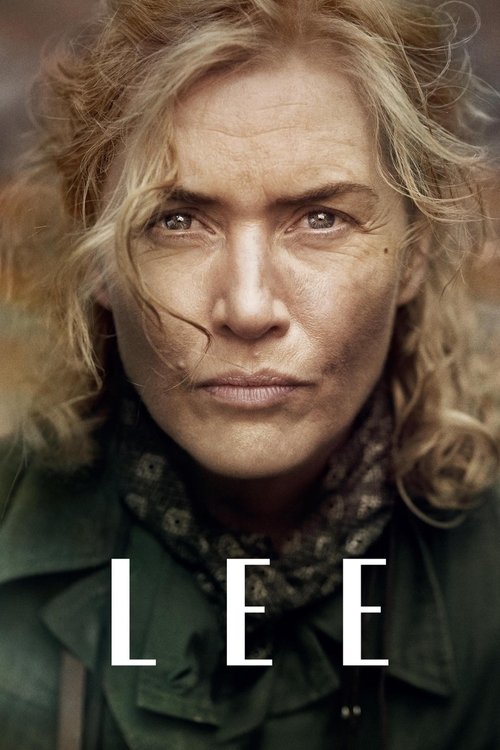
Lee (2024)
Directed by Ellen Kuras
No — Lee is not especially woke, scoring 32 out of 100 on our wokeness meter.
Ellen Kuras brings the war photographer Lee Miller to the screen with the solemnity of a museum plaque, and Kate Winslet carries the thing on her back.
Consciousness Markers
Lee Miller's struggle against being barred from combat zones as a woman, the recurring misogyny she faces, and Winslet's own off-screen battle against patronising male financiers form a clear, sustained feminist thread.
A British period biopic with a predominantly white European cast; a few supporting roles (e.g. Arinzé Kene) add non-white faces to the WWII ensemble, but casting remains period-appropriate rather than consciously revisionist.
A fairly conventional biopic that occasionally signals its themes about women in war and the value of bearing witness, but rarely descends into overt preaching.
The Second World War setting and the public shaming of women collaborators touch on social dynamics, but the film does not foreground racial consciousness as a theme.
Lee's PTSD and alcoholism are depicted with sensitivity, but as wartime trauma rather than a modern neurodivergence framework.
The film faithfully dramatises a true biography, highlighting the censorship of concentration-camp photographs, but does not rewrite or reinterpret history for ideological ends.
The film alludes to the bohemian Parisian milieu and Lee's unconventional personal life, but contains no substantive LGBTQ+ themes or characters.
No environmental or climate-related content whatsoever.
Vogue and the fashion world appear, but as backdrop; there is no anti-capitalist or eat-the-rich critique.
No body positivity themes; the fashion-model framing is presented uncritically and historically.
Why it received this score
Ellen Kuras brings the war photographer Lee Miller to the screen with the solemnity of a museum plaque, and Kate Winslet carries the thing on her back. The film follows Miller from fashion modelling through the Blitz, the Normandy landings, and the liberation of the camps, and it never lets us forget the walls built around her. She is barred from combat zones because she is a woman. Editors condescend. Male financiers, we are told, once asked why anyone should like this woman, and Winslet reportedly paid two weeks of wages herself when the money ran dry. The feminist spine here is genuine and sustained, and it is the film's clearest organising principle.
Elsewhere the ledger runs thin. The cast is a white European ensemble appropriate to a 1940s Vogue circle, with a handful of supporting non-white faces sprinkled through the wartime ranks and no particular comment made about them. The bohemian Parisian milieu hints at a freer personal life, yet the film has no real interest in anything beyond the heterosexual frame. Racial dynamics surface only in the public shaming of women collaborators, a scene observed without much analysis. There is no environmental content, no critique of the fashion economy that employs her, and no engagement with body image despite the modelling backstory. Miller's drinking and post-traumatic stress are handled gently, though as wartime wounds, not as a modern diagnostic category.
As history the film is faithful, dramatising the true story of the censored concentration camp photographs and the attic archive her son later uncovered, with no ideological reworking of the record. Its sermonising is mild. Occasionally it pauses to remind us that women in war and the act of bearing witness matter, then it moves on. The result is a respectable, slightly airless biopic that knows exactly which buttons to press and presses them with a gloved hand. It earns a modest reading on the cultural seismograph. Nothing here will frighten a studio, and nothing here will bore a historian.
Analysis generated by our Consciousness Algorithm


Synopsis
The true story of photographer Elizabeth "Lee" Miller, a fashion model who became an acclaimed war correspondent for Vogue magazine during World War II.
Questions about Lee
Is Lee woke?
No — Lee is not especially woke, scoring 32 out of 100 on our wokeness meter. That earns it a verdict of Based.
Does Lee have any woke elements?
2 of the 10 markers register at 30 or above, led by Feminist Agenda (62) and Representation Casting (32). On Feminist Agenda: Lee Miller's struggle against being barred from combat zones as a woman, the recurring misogyny she faces, and Winslet's own off-screen battle against patronising male financiers form a clear, sustained feminist thread.
How does Lee compare to other 2024 movies?
It ranks #31 of the 189 films from 2024 we've scored; their average is 22. The wokest is The Six Triple Eight (92).
How is the Woke Score calculated?
An AI-assisted process researches the film and its reception, scores it 0–100 on ten markers, then combines those into one 0–100 Woke Score. It measures a specific set of 2020s cultural themes, not film quality.