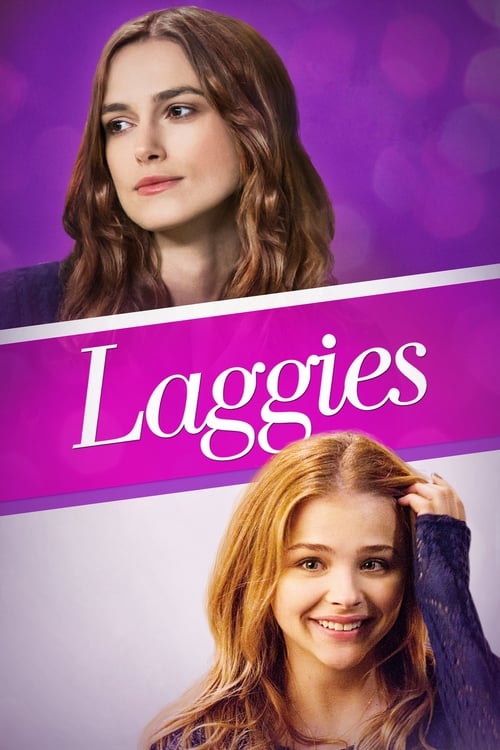
Laggies (2014)
Directed by Lynn Shelton
No — Laggies is not woke, scoring 11 out of 100 on our wokeness meter.
Laggies arrived in 2014 with a modest inventory: a director, Lynn Shelton, working in the loose Seattle register she helped define; a screenwriter, Andrea Seigel; and a premise about a 28-year-old woman who panics at a proposal and hides out in the home of a teenager she met outside a grocery store.
Consciousness Markers
A woman-directed, woman-written film centered on a female protagonist's agency, quarter-life crisis, and a friendship between a 28-year-old woman and a teenage girl. Female experience is the subject, though without explicit feminist messaging.
The protagonist's 'overeducated and underemployed' millennial drift gestures faintly at economic precarity, but the film offers no systemic critique of capitalism or wealth.
A loose, mumblecore-adjacent character piece that observes rather than preaches; no didactic messaging or moralizing.
The cast is overwhelmingly white, with no meaningful racial diversity in principal or supporting roles. No representation-casting intent is evident.
There are no LGBTQ+ characters, relationships, or themes anywhere in the narrative.
No engagement with race or racial consciousness; the story is entirely about white, middle-class Seattle characters.
No environmental or climate themes appear in the film.
No body-positivity themes or messaging are present.
No neurodivergent characters or themes are depicted.
The film is a contemporary character drama with no historical subject matter to revise.
Why it received this score
Laggies arrived in 2014 with a modest inventory: a director, Lynn Shelton, working in the loose Seattle register she helped define; a screenwriter, Andrea Seigel; and a premise about a 28-year-old woman who panics at a proposal and hides out in the home of a teenager she met outside a grocery store. Keira Knightley plays Megan with a slack, agreeable bewilderment. The film observes her drift without diagnosing it. That restraint is the whole personality of the picture, and it is also why the cultural ledger here comes up nearly empty.
There is a female interiority at the center, and an intergenerational friendship between Megan and Annika that the film treats as genuine, not as a punchline. That much registers as a mild progressive sensibility, though the movie never argues a thesis about it. The economic texture is thinner still: Megan is described as overeducated and underemployed, a phrase that gestures toward millennial precarity and then wanders off before anyone asks who arranged the arrangement. Seattle's whiteness goes unremarked. Race, queerness, climate, body politics, neurodivergence, history: none of it is on the agenda. The film has no interest in the ledger.
What it has instead is temperament. The scenes ramble, the jokes land softly, and nobody stands up to deliver a lesson. Sam Rockwell's Craig is a tired single father, not a symbol. The ending, in which Megan leaves a box of wine with a check-box note, is charming and unserious. A film can be thoughtful about a woman's stalled life and still decline to instruct us. This one declines, politely, for ninety-nine minutes. In the taxonomy of social consciousness, it is a vintage of almost no discernible body.
Analysis generated by our Consciousness Algorithm


Synopsis
Overeducated and underemployed, 28 year old Megan is in the throes of a quarterlife crisis. Squarely into adulthood with no career prospects, no particular motivation to think about her future and no one to relate to, Megan is comfortable lagging a few steps behind - while her friends check off milestones and celebrate their new grown-up status. When her high-school sweetheart proposes, Megan panics and- given an unexpected opportunity to escape for a week - hides out in the home of her new friend, 16-year old Annika and Annika's world-weary single dad Craig.
Questions about Laggies
Is Laggies woke?
No — Laggies is not woke, scoring 11 out of 100 on our wokeness meter. That earns it a verdict of Ultra Based.
Does Laggies have any woke elements?
1 of the 10 markers register at 30 or above, led by Feminist Agenda (30). On Feminist Agenda: A woman-directed, woman-written film centered on a female protagonist's agency, quarter-life crisis, and a friendship between a 28-year-old woman and a teenage girl.
How does Laggies compare to other 2014 movies?
It ranks #124 of the 303 films from 2014 we've scored; their average is 13. The wokest is Selma (68).
How is the Woke Score calculated?
An AI-assisted process researches the film and its reception, scores it 0–100 on ten markers, then combines those into one 0–100 Woke Score. It measures a specific set of 2020s cultural themes, not film quality.