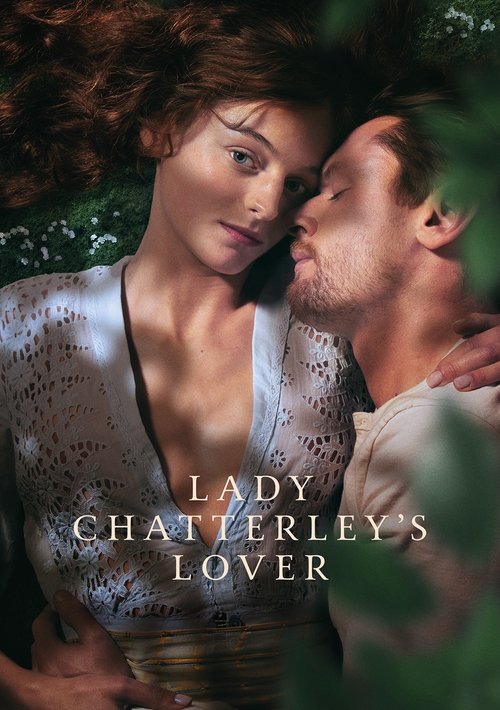
Lady Chatterley's Lover (2022)
Directed by Laure de Clermont-Tonnerre
No — Lady Chatterley's Lover is not especially woke, scoring 29 out of 100 on our wokeness meter.
Six adaptations deep, the novel has been pressed through nearly every available lens, and this version arrives with a female director and Emma Corrin in the title role, which shifts the camera's sympathies in a direction the earlier takes only gestured toward.
Consciousness Markers
The adaptation foregrounds Connie's sexual agency and pleasure and pointedly frames Clifford's controlling, sexist behavior as the villainy of the piece, with a female director steering the gaze.
Clifford is drawn as a grasping industrialist who subjugates his mine workers and servants, and the romance across class lines carries a clear critique of aristocratic capital.
A female director and a non-binary lead performer headline a mostly white British cast; the representation is modest and largely behind the camera rather than a stated on-screen project.
The social critique is embedded in character and drama rather than delivered as direct sermonizing; the film is a romance first.
The film treats physical intimacy and disability frankly, but it does not advance a body-positivity message about size, appearance, or self-acceptance.
The affair is heterosexual throughout and no LGBTQ+ themes or characters appear in the narrative itself.
No engagement with race or racial themes; the story is entirely about class and gender within the English aristocracy.
No environmental or climate themes present.
No neurodivergent characters or themes are present.
A faithful period adaptation of a 1928 novel; it does not rewrite historical events or figures.
Why it received this score
Six adaptations deep, the novel has been pressed through nearly every available lens, and this version arrives with a female director and Emma Corrin in the title role, which shifts the camera's sympathies in a direction the earlier takes only gestured toward. The affair is staged as Connie's discovery of her own appetite, not as a gentleman's conquest, and her husband's refusal to consider any arrangement that might please her registers as the original sin of the marriage. The gaze belongs to her. That is the film's organizing principle, and it holds.
The class material is where the production finds its teeth. Clifford is not merely a wounded aristocrat but a grasping industrialist, sacking gamekeepers and squeezing miners while he lectures about legacy and heirs. His paralysis is treated with honesty, though the script keeps its eye on how he converts private grief into public dominion. The romance across the class line carries a quiet argument about who owns the land and the people standing on it, and the argument is made through behavior, never through speeches.
What the film declines to do is equally instructive. There is no racial dimension, no environmental sermon, no queerness, and the physical frankness on display serves the love story instead of any doctrine of self-acceptance. Corrin's casting is the most contemporary gesture on offer, and it is a quiet one. What remains is a period romance that knows its politics and keeps them in the bedroom and the mine, a more disciplined approach than this material usually receives from the people who adapt it.
Analysis generated by our Consciousness Algorithm


Synopsis
After a crippling injury leaves her husband impotent, Lady Chatterly is torn between her love for her husband and her physical desires. With her husband's consent, she seeks out other means of fulfilling her needs.
Questions about Lady Chatterley's Lover
Is Lady Chatterley's Lover woke?
No — Lady Chatterley's Lover is not especially woke, scoring 29 out of 100 on our wokeness meter. That earns it a verdict of Based.
Does Lady Chatterley's Lover have any woke elements?
2 of the 10 markers register at 30 or above, led by Feminist Agenda (60) and Eat the Rich (45). On Feminist Agenda: The adaptation foregrounds Connie's sexual agency and pleasure and pointedly frames Clifford's controlling, sexist behavior as the villainy of the piece, with a female director steering the gaze.
How does Lady Chatterley's Lover compare to other 2022 movies?
It ranks #58 of the 223 films from 2022 we've scored; their average is 22. The wokest is Bros (92).
How is the Woke Score calculated?
An AI-assisted process researches the film and its reception, scores it 0–100 on ten markers, then combines those into one 0–100 Woke Score. It measures a specific set of 2020s cultural themes, not film quality.