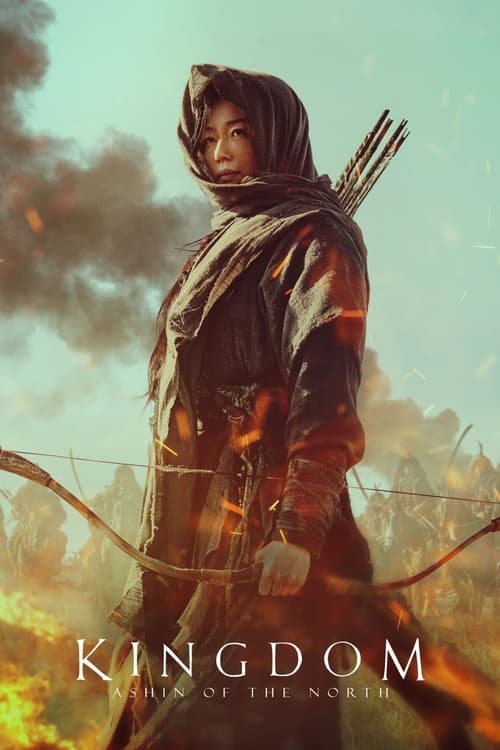
Kingdom: Ashin of the North (2021)
Directed by Kim Seong-hun
No — Kingdom: Ashin of the North is not woke, scoring 12 out of 100 on our wokeness meter.
Kingdom: Ashin of the North arrives as an extended coda to a television series about zombies in Joseon-era Korea, a premise that sounds like a joke and is not one.
Consciousness Markers
The story depicts ethnic conflict between the Jurchen tribe and Joseon forces, with the massacre of a marginalized tribe driving the plot, but it is framed as personal revenge rather than modern racial justice.
The cast is entirely Korean, which is natural for a Korean historical production rather than a deliberate progressive casting choice.
No LGBTQ+ characters or themes are present.
The film features a female protagonist seeking revenge, but it does not advance a feminist agenda or critique patriarchy.
No environmental or climate themes are present.
No critique of capitalism or economic inequality is present.
No body positivity themes are present.
No neurodivergent characters or themes are present.
The film is a fictional historical fantasy set in the Joseon dynasty, not a revisionist reinterpretation of history.
The film does not preach or lecture on social issues; it is a revenge thriller.
Why it received this score
Kingdom: Ashin of the North arrives as an extended coda to a television series about zombies in Joseon-era Korea, a premise that sounds like a joke and is not one. The special runs roughly ninety minutes and follows Ashin, played by Gianna Jun, from a childhood among a Jurchen settlement on the northern frontier to a cold, patient adulthood spent arranging the ruin of everyone who wronged her. The craft is precise. Snow, smoke, and torchlight do the heavy lifting, and the film understands that grief in a period setting reads best when nobody explains it.
There is ethnic friction here. The Jurchen are treated as a disposable people by Joseon officials, and a massacre sets the whole tragedy in motion. A viewer braced for contemporary moral instruction will find none. The slaughter is a wound in one woman's life, not a platform. The film never pauses to editorialize about the treatment of marginalized peoples, never gestures toward a modern audience's conscience, and never asks to be applauded for its sensitivity. It simply lets the betrayal sit there and rot.
So we come to the ledger. There is no romantic subplot reaching for inclusivity, no lecture on economic structures, no environmental lament, no meditation on body image, no neurodivergent arc, no corrective rewriting of the historical record. A woman with a grudge and a plan is not, by itself, a statement about gender, and this film does not pretend otherwise. What remains is a grim, well-mounted revenge piece with an unusual quantity of snow and a satisfyingly terrible final image. The sommelier sets down the glass. A quiet vintage, no additives, faint notes of ash.
Analysis generated by our Consciousness Algorithm


Synopsis
Tragedy, betrayal and a mysterious discovery fuel a woman's vengeance for the loss of her tribe and family.
Questions about Kingdom: Ashin of the North
Is Kingdom: Ashin of the North woke?
No — Kingdom: Ashin of the North is not woke, scoring 12 out of 100 on our wokeness meter. That earns it a verdict of Ultra Based.
Does Kingdom: Ashin of the North have any woke elements?
Very few. None of the 10 markers reaches 30, the level where a marker counts as present; the highest is Racial Consciousness at 20.
How does Kingdom: Ashin of the North compare to other 2021 movies?
It ranks #152 of the 242 films from 2021 we've scored; their average is 23. The wokest is The Forever Purge (83).
How is the Woke Score calculated?
An AI-assisted process researches the film and its reception, scores it 0–100 on ten markers, then combines those into one 0–100 Woke Score. It measures a specific set of 2020s cultural themes, not film quality.