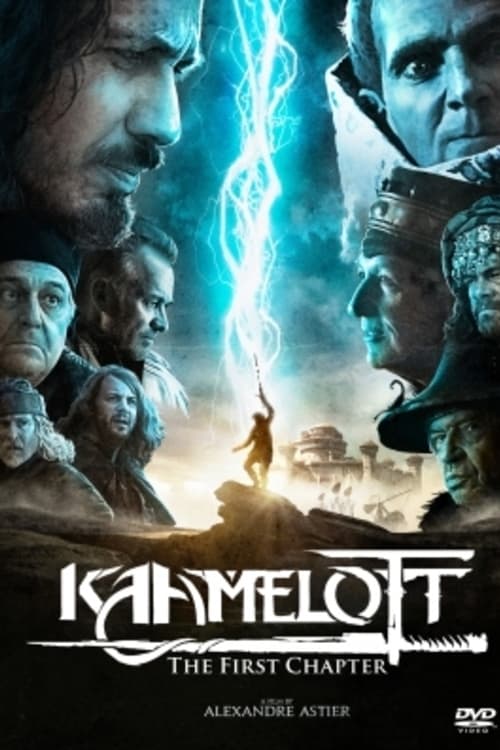
Kaamelott: The First Chapter (2021)
Directed by Alexandre Astier
No — Kaamelott: The First Chapter is not woke, scoring 2 out of 100 on our wokeness meter.
Kaamelott: The First Chapter arrives as a cinematic continuation of a beloved French television series, with Alexandre Astier returning to write, direct, produce, and star.
Consciousness Markers
The cast is a largely homogeneous ensemble of French actors reprising roles from the series, with no evident push for diverse or color-conscious casting.
No LGBTQ+ characters, relationships, or themes appear in the Arthurian narrative.
Female characters like Guenièvre and the Lady of the Lake exist within the established story but carry no feminist messaging or gendered critique.
The film engages no racial themes or commentary whatsoever.
There is no environmental or climate-related content in the film.
Léodagan's greed is played purely for comedy and does not constitute an anti-capitalist or eat-the-rich message.
No body-positivity themes or messaging are present.
Perceval's ineptitude and poor communication are comedic character traits, not a deliberate neurodivergence narrative.
The film is Arthurian fantasy legend, not a reworking of real historical events.
This is a comedic fantasy adventure with no preachy or didactic messaging directed at the audience.
Why it received this score
Kaamelott: The First Chapter arrives as a cinematic continuation of a beloved French television series, with Alexandre Astier returning to write, direct, produce, and star. The film assumes deep familiarity with its sprawling Arthurian ensemble and rewards that familiarity with callbacks, political squabbles, and the melancholy of a king who has misplaced his purpose. It is a comedy-drama of myth and appetite, not a vehicle for contemporary moral instruction. The narrative picks up after Arthur's abdication, follows his convalescence in Rome, and watches Lancelot's tyrannical grip on Logres tighten. The stakes are personal, dynastic, and occasionally absurd. No one pauses to explain how the audience should feel about the modern world.
The cast remains a largely homogeneous collection of French performers reprising roles from the series, with no evident effort to reengineer the ensemble along color-conscious lines. Female figures such as Guenièvre and the Lady of the Lake occupy established positions in the legend, yet the film offers no gendered critique or feminist reframing. Perceval's ineptitude and Karadoc's hunger are comic traits, not clinical statements. Léodagan's greed is a running joke about a miserly king, not an economic thesis. LGBTQ themes, racial commentary, climate anxiety, and body-positivity messaging are absent. So too is any attempt to revise real history, since the material is Arthurian fantasy from the start.
Above all, the film does not lecture. It is an adventure with swords, castles, and quarrels, content to serve its existing congregation. The humor comes from character and absurdity, not from a desire to correct the viewer's politics. There is no sermonizing, no preachy detour, no moment when the story stops to address the audience's conscience. This is not a failing. It is a classification. The film sits comfortably in a pre-existing tradition of French popular entertainment, untouched by the cultural anxieties that dominate so much contemporary Anglophone cinema. It asks only that we enjoy the return of a king who would rather be left alone.
Analysis generated by our Consciousness Algorithm

Synopsis
Hidden in Rome, King Arthur is planning his return to oppose the army of his former friend Lancelot.
Questions about Kaamelott: The First Chapter
Is Kaamelott: The First Chapter woke?
No — Kaamelott: The First Chapter is not woke, scoring 2 out of 100 on our wokeness meter. That earns it a verdict of Ultra Based.
Does Kaamelott: The First Chapter have any woke elements?
Very few. None of the 10 markers reaches 30, the level where a marker counts as present; the highest is Representation Casting at 5.
How does Kaamelott: The First Chapter compare to other 2021 movies?
It ranks #231 of the 242 films from 2021 we've scored; their average is 23. The wokest is The Forever Purge (83).
How is the Woke Score calculated?
An AI-assisted process researches the film and its reception, scores it 0–100 on ten markers, then combines those into one 0–100 Woke Score. It measures a specific set of 2020s cultural themes, not film quality.