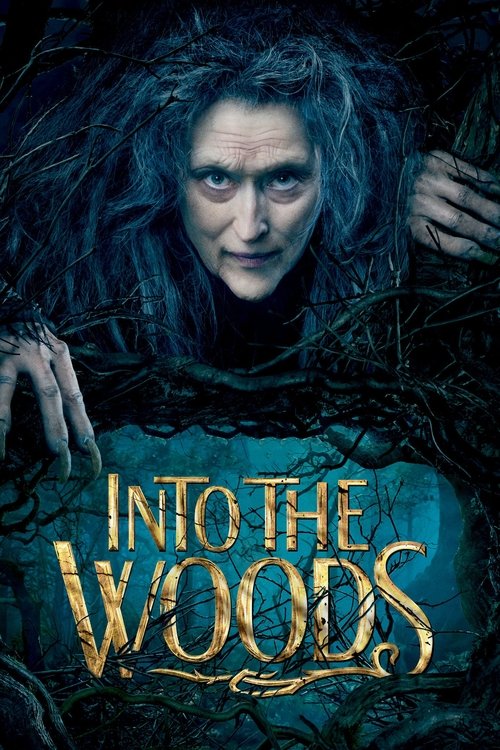
Into the Woods (2014)
Directed by Rob Marshall
No — Into the Woods is not woke, scoring 14 out of 100 on our wokeness meter.
A Disney adaptation of a Sondheim musical was always going to arrive with its edges sanded, and Rob Marshall's 2014 film does not disappoint in that regard.
Consciousness Markers
The film features several female characters with agency, such as Cinderella rejecting her cheating prince and the Baker's Wife driving the plot, but it does not advance a modern feminist agenda.
The musical concludes with moral lessons about community and responsibility, but these are not framed as progressive social justice lectures.
The cast is entirely white, with no significant racial or ethnic diversity in principal roles.
No LGBTQ+ characters or themes are present.
No exploration of race or racial issues.
No environmental or climate themes.
No critique of capitalism or wealth inequality.
The Witch's curse revolves around ugliness and aging, but the film does not promote body positivity.
No neurodivergent characters or themes.
The film is a fairy tale fantasy, not a historical revision.
Why it received this score
A Disney adaptation of a Sondheim musical was always going to arrive with its edges sanded, and Rob Marshall's 2014 film does not disappoint in that regard. The Baker and his wife traipse through the woods collecting a cow, a cape, a lock of hair, and a golden slipper, all to lift a witch's curse. Meryl Streep essays the witch with visible relish. The production is handsome, the singing competent, and the whole enterprise sits comfortably within the studio's fairy tale industrial complex. We have seen this forest before, and the trees are familiar.
On the matter of contemporary social consciousness, the film is a near-total abstention. The cast is uniformly white, the romance is uniformly heterosexual, and no character pauses to interrogate the structures that produced them. There is a modest thread of female agency: Cinderella walks away from a philandering prince, and the Baker's Wife drives much of the plot before her untimely death. Jack's mother and Little Red Riding Hood exist with some grit. This constitutes a gentle nod in the direction of self-determination, nothing more. The witch's preoccupation with youth and beauty is presented as vanity and curse, not as a critique of beauty standards. No environmental parable lurks in the beanstalk, no class analysis in Jack's theft from the giant. The wolves here are literal.
The final act does lean on moral instruction, with the surviving characters lecturing one another about blame, community, and the duty to raise children well. The witch delivers a closing sermon on how children will listen. It is earnest, it is sung, and it is about personal responsibility as transmitted through folk tradition. No modern political program is smuggled in. What remains is a well-mounted musical about consequences, and a studio that kept its investment safe.
Analysis generated by our Consciousness Algorithm
Part of


Synopsis
In a woods filled with magic and fairy tale characters, a baker and his wife set out to end the curse put on them by their neighbor, a spiteful witch.
Questions about Into the Woods
Is Into the Woods woke?
No — Into the Woods is not woke, scoring 14 out of 100 on our wokeness meter. That earns it a verdict of Ultra Based.
Does Into the Woods have any woke elements?
Very few. None of the 10 markers reaches 30, the level where a marker counts as present; the highest is Feminist Agenda at 20.
How does Into the Woods compare to other 2014 movies?
It ranks #100 of the 303 films from 2014 we've scored; their average is 13. The wokest is Selma (68).
How is the Woke Score calculated?
An AI-assisted process researches the film and its reception, scores it 0–100 on ten markers, then combines those into one 0–100 Woke Score. It measures a specific set of 2020s cultural themes, not film quality.