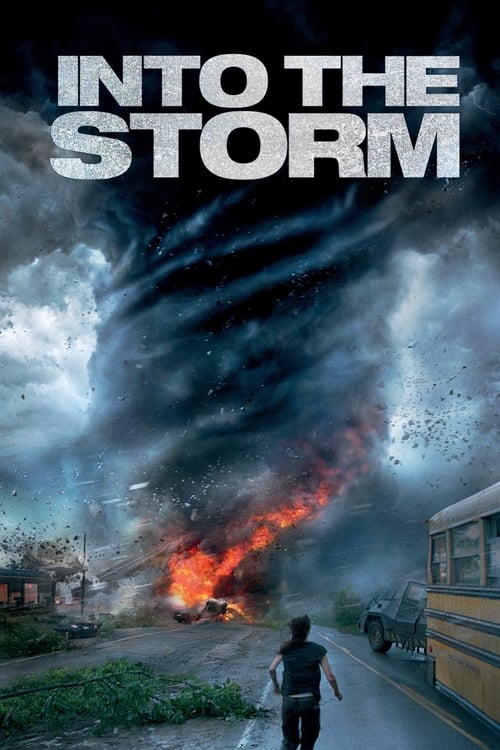
Into the Storm (2014)
Directed by Steven Quale
No — Into the Storm is not woke, scoring 6 out of 100 on our wokeness meter.
Into the Storm arrives as a found footage tornado picture, a 2014 exercise in wind, debris, and the steady erosion of structural integrity.
Consciousness Markers
The cast includes a few non-white actors in supporting roles, such as Arlen Escarpeta and Scott Lawrence, but the film does not foreground diversity as a theme or narrative point.
Sarah Wayne Callies plays a meteorologist and mother, but the film does not advance a feminist critique or agenda; her role remains conventional for the disaster genre.
No LGBTQ+ characters, relationships, or themes appear in the film.
Race is not addressed or made a subject of the film's disaster narrative.
The tornado outbreak is presented as a meteorological disaster, not as a climate-change parable or environmental warning.
There is no critique of capitalism, wealth inequality, or corporate greed; the storm-chaser team is motivated by scientific ambition and spectacle.
No body-positivity themes or diverse body representation as a message are present.
No neurodivergent characters or themes are present; Donnie's introversion is not framed as neurodivergence.
The film is fictional and does not revise or reinterpret historical events.
The film delivers spectacle and disaster action rather than social or political lectures.
Why it received this score
Into the Storm arrives as a found footage tornado picture, a 2014 exercise in wind, debris, and the steady erosion of structural integrity. It follows storm chasers and townspeople through an outbreak in Silverton, Oklahoma, and it does so with the grim efficiency of a weather alert. The film's cultural ambitions are modest. It wants to put a camera in the middle of a funnel cloud and let the audience watch a truck become airborne. On that narrow front, it succeeds. On the broader front of social consciousness, it mostly declines to compete.
The cast includes a few non-white performers in supporting roles, notably Arlen Escarpeta and Scott Lawrence, but the film treats them as part of the professional and civic furniture. Race never becomes a subject. Sarah Wayne Callies plays a meteorologist and mother whose desire to reunite with her daughter creates friction with her team. That is a recognizable human detail, not a feminist argument. The film does not build a critique around her, nor does it pause to examine the gender politics of storm chasing. Its concerns are meteorological, familial, and professional. It does not turn the storm into a parable about climate, capital, sexual identity, or the body. It does not reframe history, and it does not diagnose its characters. The tornado is simply a tornado. The storm chasers want data and footage. The vice principal wants his sons. The town wants to survive. These are ancient, uncomplicated motives.
The film settles for spectacle, and it is honest about that. It offers collapsing buildings, a firenado, and a sacrifice that borders on the operatic. There is no lecture waiting at the end, no sermon about how we should live or what we should believe. The time capsule interviews suggest a mild appreciation for life, which is about as close as the movie comes to a thesis. It is a loud, clumsy, occasionally effective piece of disaster engineering. As a cultural document, it is nearly silent. As a study in progressive messaging, it is a calm day with no rotation detected.
Analysis generated by our Consciousness Algorithm
Part of


Synopsis
As a new day begins in the town of Silverton, its residents have little reason to believe it will be anything other than ordinary. Mother Nature, however has other plans. In the span of just a few hours, an unprecedented onslaught of powerful tornadoes ravages Silverton. Storm trackers predict that the worst is still to come, as terrified residents seek shelter, and professional storm-chasers run toward the danger, hoping to study the phenomenon close up and get a once-in-a-lifetime shot.
Questions about Into the Storm
Is Into the Storm woke?
No — Into the Storm is not woke, scoring 6 out of 100 on our wokeness meter. That earns it a verdict of Ultra Based.
Does Into the Storm have any woke elements?
Very few. None of the 10 markers reaches 30, the level where a marker counts as present; the highest is Representation Casting at 15.
How does Into the Storm compare to other 2014 movies?
It ranks #185 of the 303 films from 2014 we've scored; their average is 13. The wokest is Selma (68).
How is the Woke Score calculated?
An AI-assisted process researches the film and its reception, scores it 0–100 on ten markers, then combines those into one 0–100 Woke Score. It measures a specific set of 2020s cultural themes, not film quality.