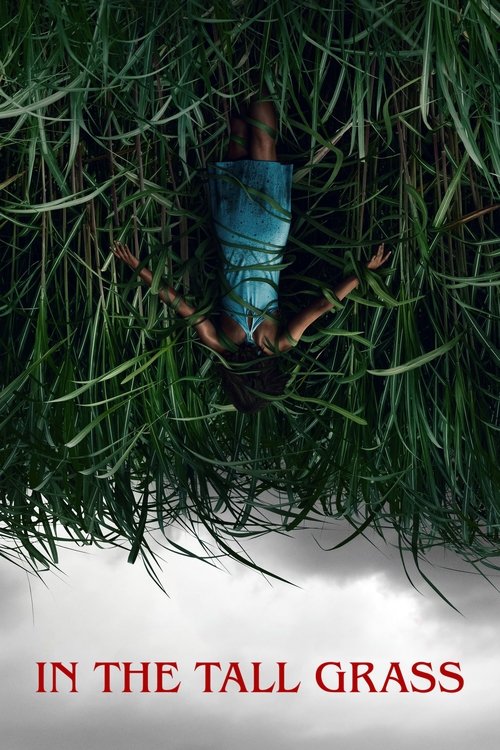
In the Tall Grass (2019)
Directed by Vincenzo Natali
No — In the Tall Grass is not woke, scoring 6 out of 100 on our wokeness meter.
Vincenzo Natali's adaptation of the Stephen King and Joe Hill novella arrives with a premise of admirable economy: a field of grass, a crying child, and a pregnant woman who walks in and cannot walk out.
Consciousness Markers
The cast features a Brazilian-Canadian lead and a modestly varied ensemble, but their presence is incidental to the horror premise and carries no commentary or thematic weight.
Becky is a pregnant protagonist with agency, but the narrative's treatment of her pregnancy leans toward a motherhood-and-adoption moral rather than any feminist critique.
No LGBTQ+ characters, relationships, or themes appear anywhere in the film.
Race is never addressed, thematized, or made relevant to the story.
The malevolent grass field is a supernatural horror device, not an environmental allegory or climate statement.
No economic critique, class commentary, or anti-capitalist themes are present.
Pregnancy is used for body horror and dread, the opposite of any body-positive messaging.
No neurodivergent characters or themes are depicted.
The film is a contemporary supernatural horror with no historical subject matter to revise.
The film offers no moralizing, messaging, or didactic speeches; it is a straightforward genre exercise.
Why it received this score
Vincenzo Natali's adaptation of the Stephen King and Joe Hill novella arrives with a premise of admirable economy: a field of grass, a crying child, and a pregnant woman who walks in and cannot walk out. What follows is a time loop, a rock with opinions, and Patrick Wilson doing his level best to make horticulture menacing. The film is a genre exercise in the purest sense, and for the purposes of this ledger that purity is the whole story. There is almost nothing here to classify beyond the obvious.
The cast is led by Laysla De Oliveira, a Brazilian-Canadian performer, and the ensemble is modestly varied. Their presence carries no argument, no commentary, no thesis. The film casts people and lets the grass consume them. That registers as a faint pulse on the representation dial and nothing further. Race is never raised as a subject, and the film shows no interest in making it one. The malevolent field is not a stand-in for ecological collapse. It is a malevolent field. No corporation is indicted. No economic order is interrogated. The grass has no politics, which is its most endearing quality.
Becky's pregnancy is the film's one recurring idea. She is carrying a child she intends to place with adoptive parents, and the loop keeps dragging her back toward a decision to keep it. The narrative grants her a measure of agency, though the arc bends toward a moral about motherhood instead of any critique of the structures around her. Her body is treated as a site of horror, roots and seeds and dread, which places the film at a comfortable distance from any affirmative posture toward bodies. The remaining categories sit empty. No LGBTQ characters, no neurodivergent figures, no historical record to rewrite, no speeches to deliver, no sermon at the end. A film like this reminds us that most movies are not arguments. They are contraptions. This one is a contraption about grass, and it makes no apology for that.
Analysis generated by our Consciousness Algorithm


Synopsis
After hearing a child screaming for help from the green depths of a vast field of tall grass, Becky, a pregnant woman, and Cal, her brother, park their car near a mysterious abandoned church and enter the field, discovering that they are not alone and, for some reason, they are unable to escape a completely inextricable vegetable labyrinth.
Questions about In the Tall Grass
Is In the Tall Grass woke?
No — In the Tall Grass is not woke, scoring 6 out of 100 on our wokeness meter. That earns it a verdict of Ultra Based.
Does In the Tall Grass have any woke elements?
Very few. None of the 10 markers reaches 30, the level where a marker counts as present; the highest is Representation Casting at 15.
How does In the Tall Grass compare to other 2019 movies?
It ranks #222 of the 284 films from 2019 we've scored; their average is 22. The wokest is Black Christmas (79).
How is the Woke Score calculated?
An AI-assisted process researches the film and its reception, scores it 0–100 on ten markers, then combines those into one 0–100 Woke Score. It measures a specific set of 2020s cultural themes, not film quality.