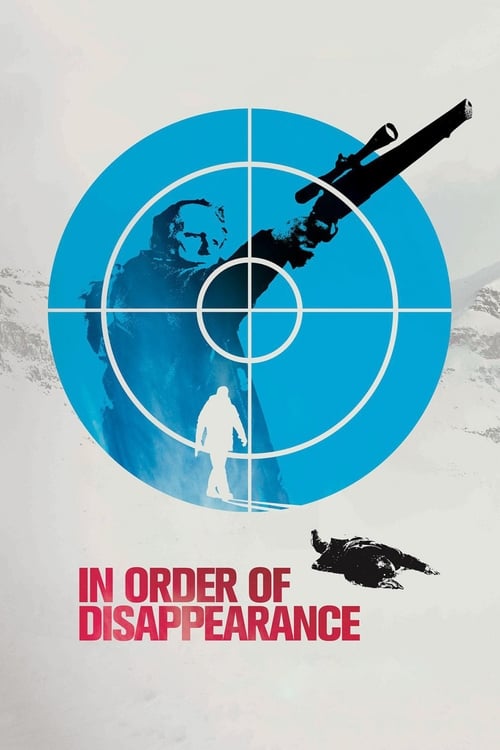
In Order of Disappearance (2014)
Directed by Hans Petter Moland
No — In Order of Disappearance is not woke, scoring 6 out of 100 on our wokeness meter.
In Order of Disappearance arrives from Norway in 2014 with snow, a plow, and a grievance.
Consciousness Markers
The cast is overwhelmingly white Scandinavian, with a Serbian mafia clan and a Danish-Japanese hitman ('The Chinaman') appearing as natural genre archetypes rather than as deliberate diversity casting.
Serbian and Japanese characters exist as ethnic gangster archetypes, but the film makes no racial commentary or consciousness-raising gesture.
The drug trade and gangland economics are depicted as brutal business, but there is no eat-the-rich critique or systemic capitalist indictment.
No LGBTQ+ characters, themes, or subtext of any kind appear in this Nordic revenge thriller.
The film is a male-dominated gangster revenge narrative with no feminist themes, commentary, or notable female agency.
Snow and plowing are atmospheric setting and plot mechanics, not an environmental message.
No body positivity themes; the vegan gangster's diet is a running gag, not a body-image statement.
No neurodivergent characters or themes are present.
The film is a fictional contemporary crime story with no historical revisionism.
The film is a deadpan black comedy that never pauses to deliver a moral lesson or social sermon.
Why it received this score
In Order of Disappearance arrives from Norway in 2014 with snow, a plow, and a grievance. Stellan Skarsgård plays Nils Dickman, citizen of the year, whose son turns up dead of a heroin overdose that the police decline to investigate. Nils investigates instead, and the film proceeds as a black comedy of escalating gangland slaughter, Serbian dealers on one side, a fastidious crime lord called the Count on the other. Hans Petter Moland directs with a flat, cold-eyed calm, letting the bodies accumulate while the landscape stays white and indifferent. It is a revenge picture with a dry sense of humor and no interest in instructing anyone.
The cast is Scandinavian to its bones, with a Serbian mafia family and a Danish-Japanese contract killer known as the Chinaman filling out the roster. These are genre archetypes, stocked the way a western stocks its saloons. No casting gesture is being made, and none is needed. The Count's veganism supplies a recurring joke about his diet and his temper, not a statement about bodies or ethics. There is no romantic subplot of note, no ethnic commentary, no environmental allegory hiding in the snowdrifts, and no character pauses mid-kidnapping to explain how the audience ought to feel about any of it.
The film is content to be a film. It kills its characters in order, as promised by the title, and it ends with two grieving fathers driving off in the same car, satisfied. The whole enterprise sits comfortably outside the cultural conversation of its moment, and it has aged without acquiring any new significance. A remake followed in 2019. That is the entire arc of its social ambition.
Analysis generated by our Consciousness Algorithm


Synopsis
Upstanding community leader Nils has just won an award for "Citizen of the Year" when he learns the news that his son has died of a heroin overdose. Suspecting foul play, Nils begins to investigate, and soon finds himself at the center of an escalating underworld gang war between Serbian drug dealers and a sociopathic criminal mastermind known only as “The Count.”
Questions about In Order of Disappearance
Is In Order of Disappearance woke?
No — In Order of Disappearance is not woke, scoring 6 out of 100 on our wokeness meter. That earns it a verdict of Ultra Based.
Does In Order of Disappearance have any woke elements?
Very few. None of the 10 markers reaches 30, the level where a marker counts as present; the highest is Representation Casting at 12.
How does In Order of Disappearance compare to other 2014 movies?
It ranks #185 of the 303 films from 2014 we've scored; their average is 13. The wokest is Selma (68).
How is the Woke Score calculated?
An AI-assisted process researches the film and its reception, scores it 0–100 on ten markers, then combines those into one 0–100 Woke Score. It measures a specific set of 2020s cultural themes, not film quality.