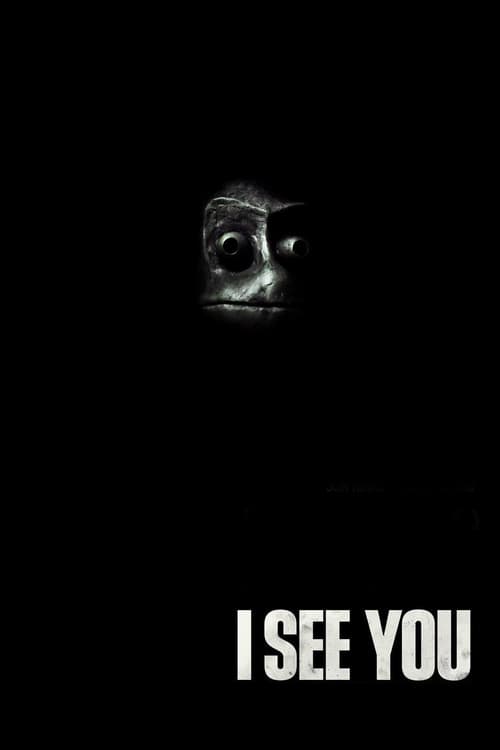
I See You (2019)
Directed by Adam Randall
No — I See You is not woke, scoring 8 out of 100 on our wokeness meter.
I See You is a 2019 thriller that opens as a supernatural haunting, pivots into a home-invasion picture, and settles into a serial-killer procedural, all within ninety-eight minutes.
Consciousness Markers
The cast includes Black actors Gregory Alan Williams and Erika Alexander in supporting roles, but their presence is natural and unremarked upon, with no diversity-driven casting agenda.
Helen Hunt's Jackie is a central character with an affair subplot, but the film offers no feminist commentary or gender-power critique.
The 'phrogging' subplot involves homeless characters squatting in a home, but this is a horror device rather than an economic critique of wealth or capitalism.
There are no LGBTQ+ characters, relationships, or themes anywhere in the film.
Race plays no role in the narrative, and no racial themes or commentary are present.
No environmental or climate-related content exists in the film.
No body-positivity themes or messaging are present.
No neurodivergent characters or themes are depicted.
The film is a fictional thriller with no historical subject matter to revise.
The film is a twist-driven suspense thriller that never pauses to deliver social or moral instruction to the audience.
Why it received this score
I See You is a 2019 thriller that opens as a supernatural haunting, pivots into a home-invasion picture, and settles into a serial-killer procedural, all within ninety-eight minutes. It is a film built on misdirection, and the misdirection is the point. The camera lingers on a shifting door, a missing knife, a hamster loose in a closet, and we are invited to draw the wrong conclusions until the screenplay decides to show us the other side of the wall. As a piece of engineering, it is competent. As a vehicle for social instruction, it is a vacuum.
The cast is led by Helen Hunt, who brings a weary precision to a woman managing an affair and a marriage in freefall. Gregory Alan Williams and Erika Alexander appear in supporting roles as law enforcement colleagues, and their presence is entirely unremarkable, which is to say the film does not pause to congratulate itself for it. There is no LGBTQ+ material, no racial commentary, no environmental sermon, and no examination of body image or neurodivergence. The homeless couple at the center of the twist could be read as an economic gesture, but the film treats them as a mechanism of dread, not as a thesis about housing. Nobody lectures anyone. The villain delivers a monologue about his own childhood victimization, and the film lets another character reject it in a single line before pulling the trigger.
What remains is a tidy, twist-dependent suspense piece that trusts its plot more than its themes, of which there are approximately none. It premiered at SXSW, drew favorable notices for its structural gamesmanship, and made a modest sum at the box office before finding a second life in streaming. The cultural awareness on display is minimal, and the film seems content with that. Some pictures want to be about something. This one wants to be about the door you did not hear open.
Analysis generated by our Consciousness Algorithm


Synopsis
When a 12-year-old boy goes missing at a local park, a detective investigates the case to help the boy's family find answers.
Questions about I See You
Is I See You woke?
No — I See You is not woke, scoring 8 out of 100 on our wokeness meter. That earns it a verdict of Ultra Based.
Does I See You have any woke elements?
Very few. None of the 10 markers reaches 30, the level where a marker counts as present; the highest is Representation Casting at 18.
How does I See You compare to other 2019 movies?
It ranks #196 of the 284 films from 2019 we've scored; their average is 22. The wokest is Black Christmas (79).
How is the Woke Score calculated?
An AI-assisted process researches the film and its reception, scores it 0–100 on ten markers, then combines those into one 0–100 Woke Score. It measures a specific set of 2020s cultural themes, not film quality.