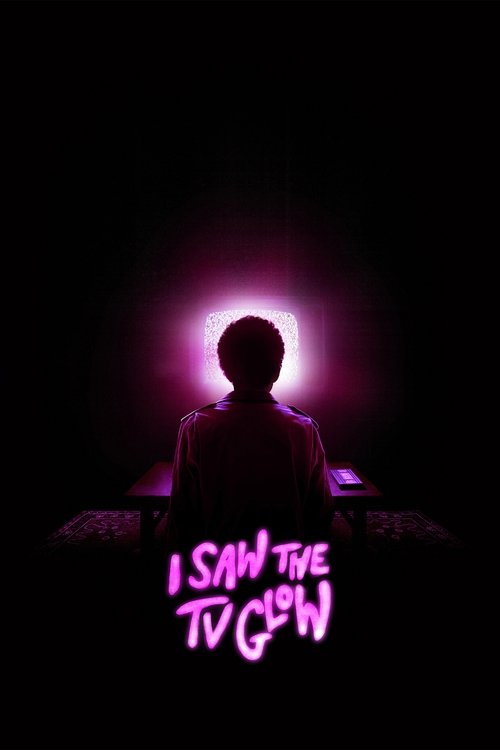
I Saw the TV Glow (2024)
Directed by Jane Schoenbrun
Yes — I Saw the TV Glow is woke, scoring 60 out of 100 on our wokeness meter.
Jane Schoenbrun's second feature follows Owen across two decades of suburban New Jersey, from a lonely adolescence spent sneaking tapes of a canceled young-adult show to a middle age spent apologizing to children at a birthday party.
Consciousness Markers
A central transgender allegory about the 'egg crack,' repression, and identity, directed by a nonbinary filmmaker and explicitly framed as queer/trans horror.
Led by Black actor Justice Smith and nonbinary actor Jack Haven, with a notably diverse supporting cast including Danielle Deadwyler and trans/nonbinary performers.
The fictional show-within-the-film features strong female leads and echoes Buffy, but the film's primary lens is trans identity rather than a feminist agenda.
The film works through allegory and atmosphere rather than direct preaching, though its trans themes are unmistakable.
Mild critique of suburban malaise and consumerist escapism, but no coherent anti-capitalist argument or 'eat the rich' energy.
Features a Black lead but engages with no racial themes, commentary, or consciousness; race is not a subject of the film.
No climate or environmental themes present.
Body horror and dysphoria are central, but not in service of body positivity or fat acceptance.
No explicit neurodivergence themes or representation.
No historical revisionism; the film is a contemporary allegorical horror.
Why it received this score
Jane Schoenbrun's second feature follows Owen across two decades of suburban New Jersey, from a lonely adolescence spent sneaking tapes of a canceled young-adult show to a middle age spent apologizing to children at a birthday party. The Pink Opaque, the show within the film, is a Buffy-shaped vessel for psychic teenagers and a villain named Mr. Melancholy, and it serves as the surface onto which the film's real subject is projected. That subject is the egg crack, the moment a trans person recognizes that the shape of their own life does not fit. Schoenbrun works in allegory and atmosphere, declining to stage a coming-out scene, which lends the whole enterprise a humming dread that a more literal treatment could not sustain.
Justice Smith anchors the film as a Black lead whose race the screenplay never raises as a subject, and Jack Haven matches him as Maddy, the friend who buries herself and returns claiming to be someone else. The supporting cast draws from a wide pool, including Danielle Deadwyler, trans and nonbinary performers, and a parade of musicians. The show within the show gives us two psychic heroines and a monster-of-the-week rhythm inherited from the nineties, though the film's interests sit with identity and repression, not with a program for gender politics. Suburbia here is a soft prison of arcades and VHS tapes, and the critique of consumer escapism never hardens into an economic argument.
The omissions are as telling as the inclusions. There is no environmental sermon, no historical revisionism, no body positivity despite the body horror, no neurodivergence as a stated theme. The film lectures almost not at all, trusting the image of a man cutting open his own chest to find a television glowing inside. It is a serious work, and it is not confused about what it is.
Analysis generated by our Consciousness Algorithm
Part of


Synopsis
In late-90s suburbia, lonely teenager Owen meets Maddy, who introduces him to a mysterious late-night TV show — a vision of a supernatural world pulsing beneath their own. As time — and life — goes on, however, questions begin to arise about why the show sometimes seems more real than their own lives. In the pale glow of the television, their view of reality begins to crack.
Questions about I Saw the TV Glow
Is I Saw the TV Glow woke?
Yes — I Saw the TV Glow is woke, scoring 60 out of 100 on our wokeness meter. That earns it a verdict of Woke.
What makes I Saw the TV Glow woke?
3 of the 10 markers register at 30 or above, led by LGBTQ+ Themes (95), Representation Casting (80) and Feminist Agenda (30). On LGBTQ+ Themes: A central transgender allegory about the 'egg crack,' repression, and identity, directed by a nonbinary filmmaker and explicitly framed as queer/trans horror.
How does I Saw the TV Glow compare to other 2024 movies?
It ranks #10 of the 189 films from 2024 we've scored; their average is 22. The wokest is The Six Triple Eight (92).
How is the Woke Score calculated?
An AI-assisted process researches the film and its reception, scores it 0–100 on ten markers, then combines those into one 0–100 Woke Score. It measures a specific set of 2020s cultural themes, not film quality.