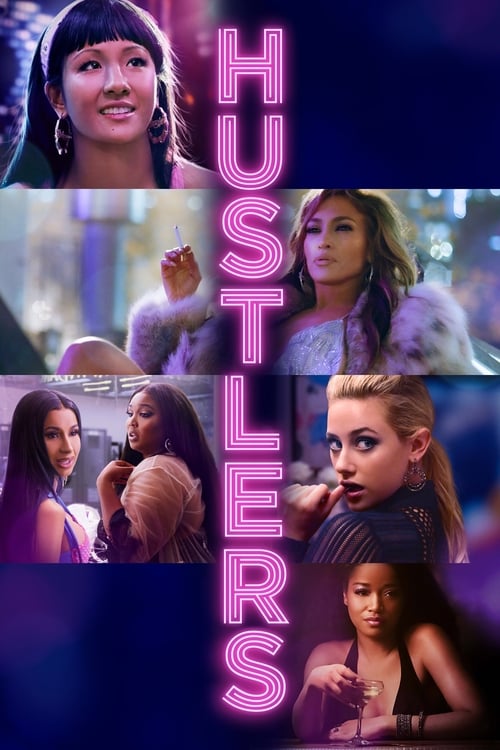
Hustlers (2019)
Directed by Lorene Scafaria
Yes — Hustlers is woke, scoring 60 out of 100 on our wokeness meter.
Lorene Scafaria's Hustlers arrived in 2019 with a diamond bodysuit, a soundtrack that runs from Janet Jackson to Chopin, and a business plan involving drugged stock traders and maxed-out credit cards.
Consciousness Markers
A female-directed, female-led heist drama centered on sex workers' agency, solidarity, and retaliation against exploitative men; critics widely described it as empowering.
The plot explicitly targets Wall Street traders and CEOs as parasitic beneficiaries of the 2008 financial crisis, framing the scams as class revenge.
The film assembles a notably diverse female ensemble—Asian-American, Latina, Black, and white performers—though the story does not foreground representation as a theme.
Social commentary on financial collapse and sex-work stigma is present, but it is delivered through character and genre rather than direct preaching.
The cast is diverse, but race is not a central concern; economic desperation and gender drive the narrative more than racial identity.
The film showcases a range of body types among its stripper ensemble, but it does not advance an explicit body-positivity message.
No LGBTQ+ themes, characters, or subtext are present in the narrative.
No environmental or climate-change themes appear.
No neurodivergent characters or themes are present.
It adapts a true-crime magazine article, but it does not revise or reinterpret established history.
Why it received this score
Lorene Scafaria's Hustlers arrived in 2019 with a diamond bodysuit, a soundtrack that runs from Janet Jackson to Chopin, and a business plan involving drugged stock traders and maxed-out credit cards. The film adapts Jessica Pressler's New York magazine article about a crew of strippers who converted the 2008 collapse into a revenue stream. It earned $157 million against a $20 million budget. Critics called it empowering. Audiences handed it a B minus, which is the sound of a room enjoying itself while remaining faintly unsure about the ethics on display.
That unease is the engine. Scafaria directs a female ensemble spanning Latina, Asian-American, Black, and white performers, and she never pauses to announce the fact. These are workers with a payroll problem, and the camera treats them as such. The targets are named plainly: the traders and CEOs who treat the club as a personal subsidy. Ramona's contempt for the men who wrecked the economy plays as class retaliation, and the film lets her keep it. The ensemble also covers a range of body types without converting that into a manifesto. Commentary on sex work and stigma is present, though it arrives through character and genre mechanics instead of a podium. The sermon stays in its seat.
What the film declines to do is equally notable. Race sits in the casting but not the argument; the desperation here is economic and gendered. There is no environmental subplot, no queer thread, no neurodivergent arc, and no attempt to rewrite the historical record, only to dramatize a magazine story with unusual patience. The result is a heist picture with a conscience and a ledger, more interested in who gets paid than in who gets lectured.
Analysis generated by our Consciousness Algorithm


Synopsis
A crew of savvy former strip club employees band together to turn the tables on their Wall Street clients.
Questions about Hustlers
Is Hustlers woke?
Yes — Hustlers is woke, scoring 60 out of 100 on our wokeness meter. That earns it a verdict of Woke.
What makes Hustlers woke?
4 of the 10 markers register at 30 or above, led by Feminist Agenda (80), Eat the Rich (70) and Representation Casting (55). On Feminist Agenda: A female-directed, female-led heist drama centered on sex workers' agency, solidarity, and retaliation against exploitative men; critics widely described it as empowering.
How does Hustlers compare to other 2019 movies?
It ranks #15 of the 284 films from 2019 we've scored; their average is 22. The wokest is Black Christmas (79).
How is the Woke Score calculated?
An AI-assisted process researches the film and its reception, scores it 0–100 on ten markers, then combines those into one 0–100 Woke Score. It measures a specific set of 2020s cultural themes, not film quality.