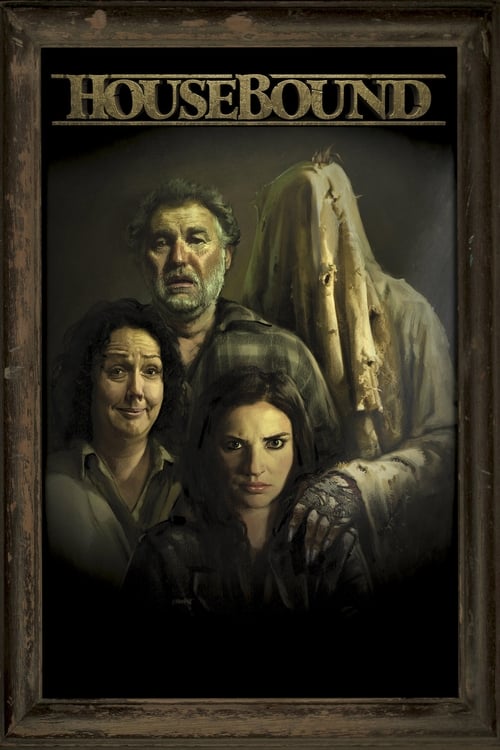
Housebound (2014)
Directed by Gerard Johnstone
No — Housebound is not woke, scoring 6 out of 100 on our wokeness meter.
Housebound arrives from New Zealand in 2014 carrying a haunted house, a court-ordered ankle monitor, and no apparent interest in instructing anyone about anything.
Consciousness Markers
Kylie is a prickly, unsympathetic female lead and the mother-daughter relationship drives the plot, but the film is a genre exercise rather than a feminist statement and never frames its women as a political thesis.
The cast includes Māori actors (Glen-Paul Waru, Rima Te Wiata) in natural roles, but the film makes no comment on their identity and casts them as ordinary characters rather than as a representational statement.
Eugene is described as a 'young savant' with mechanical and electronic genius, echoing the autistic-savant trope, but the film treats this as a horror-genre oddity rather than a neurodivergence-affirming theme.
No LGBTQ+ characters, themes, or subtext appear anywhere in the film.
Race is never a subject of the film; no racial themes, commentary, or consciousness are present.
No environmental or climate themes appear in the film.
The film contains no critique of wealth, class, or capitalism; the ATM theft is a character beat, not a political one.
No body-positivity themes or messaging are present.
The film does not engage with or revise any historical narrative.
The film is a brisk horror-comedy that never pauses to deliver a moral or social lesson to the audience.
Why it received this score
Housebound arrives from New Zealand in 2014 carrying a haunted house, a court-ordered ankle monitor, and no apparent interest in instructing anyone about anything. Gerard Johnstone's debut concerns Kylie Bucknell, a recidivist burglar confined to her mother's home, where a hostile spirit turns out to be a young man named Eugene living inside the walls. The film is brisk, gory, and wholly unconcerned with the moral improvement of its audience. We classify it, then, as a clean specimen of the pre-sermon era, a genre exercise that wants only to make you laugh and then flinch.
Kylie is not a heroine assembled for our approval. She is surly, alienating, and slow to accept her mother as a person with a past and a private life. The mother-daughter friction carries the plot, and the women are permitted to be unpleasant without the film pausing to redeem them in political terms. This is texture, not thesis. The casting of Rima Te Wiata and Glen-Paul Waru places Māori performers in ordinary roles, a nagging mother and a security contractor, and the film never once gestures at what that might signify. They are simply people in a house.
Eugene, the young savant in the crawlspace, brushes against the autistic-genius trope, though the screenplay treats him as a horror contrivance with a soldering iron and a talent for high-voltage switches, not as a statement about neurodivergence. The result is a film with almost no ideological furniture in it. No lecture. No moral. Just exploding heads, garden shears, and a partial denture doing plot work. We score it accordingly, and we do so with something close to admiration.
Analysis generated by our Consciousness Algorithm


Synopsis
When Kylie Bucknell is sentenced to home detention, she's forced to come to terms with her unsociable behaviour, her blabbering mother and a hostile spirit who seems less than happy about the new living arrangement.
Questions about Housebound
Is Housebound woke?
No — Housebound is not woke, scoring 6 out of 100 on our wokeness meter. That earns it a verdict of Ultra Based.
Does Housebound have any woke elements?
Very few. None of the 10 markers reaches 30, the level where a marker counts as present; the highest is Feminist Agenda at 15.
How does Housebound compare to other 2014 movies?
It ranks #185 of the 303 films from 2014 we've scored; their average is 13. The wokest is Selma (68).
How is the Woke Score calculated?
An AI-assisted process researches the film and its reception, scores it 0–100 on ten markers, then combines those into one 0–100 Woke Score. It measures a specific set of 2020s cultural themes, not film quality.