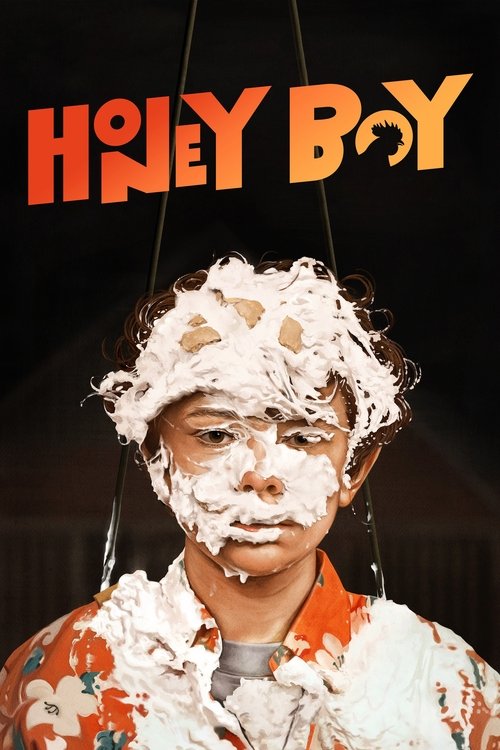
Honey Boy (2019)
Directed by Alma Har'el
No — Honey Boy is not woke, scoring 15 out of 100 on our wokeness meter.
Honey Boy arrives as an act of public self-dissection, a screenplay Shia LaBeouf composed inside a rehabilitation facility and then handed to director Alma Har'el, who films it with a patient, unhurried eye.
Consciousness Markers
PTSD, addiction, and rehabilitation are central and discussed in therapy scenes, though the film treats them as trauma and mental health rather than neurodivergence activism.
The cast includes Black and Latino performers in supporting roles and a woman director, but the diversity is naturalistic rather than framed as a representational statement.
Therapy scenes explain trauma and PTSD, but the film remains personal and restrained rather than preachy or lecture-driven.
A woman directed the film and several female characters appear, but the narrative is centered on a father-son trauma story without an explicit feminist agenda.
It critiques the child-star economy and a father living off his son's earnings, but this is personal exploitation rather than systemic anti-capitalist commentary.
There are no LGBTQ+ characters, themes, or subtext in the film.
The film does not engage with race, racial identity, or systemic racial issues.
There is no climate or environmental theme in the film.
The film does not address body image, body positivity, or related themes.
The story is semi-autobiographical but does not revise or reinterpret historical events in a woke framework.
Why it received this score
Honey Boy arrives as an act of public self-dissection, a screenplay Shia LaBeouf composed inside a rehabilitation facility and then handed to director Alma Har'el, who films it with a patient, unhurried eye. The structure splits a child actor named Otis across two decades: a boy enduring his father's rages in a San Fernando Valley motel, and a young man crashing cars and resisting court-ordered therapy. LaBeouf plays the father, which is either courage or a very expensive form of penance. The film is quiet, well acted, and deeply sincere about the wreckage of a single family. Sincerity, however, is not the same as a program.
The therapy material does the heavier lifting. Otis is told he has PTSD, denies it, submits to exposure therapy, screams in the woods on a counselor's advice, and slowly stops fighting the process. Addiction, rehabilitation, and trauma are the film's whole engine, though they are treated as private wounds to be dressed, not as a platform. A woman directs, and women appear throughout, but the story belongs to fathers and sons, and no broader argument about gender gets mounted. The child-star economy takes a beating, since the father lives off his son's wages, but the complaint stays domestic: this is one man's exploitation, not a verdict on the system that produced it.
What the film declines to do is just as legible. It has no interest in race as a subject, no environmental conscience, no commentary on bodies or beauty, no queer presence of any kind. Its speechifying is confined to a counselor's office, where the vocabulary of trauma gets explained plainly and then dropped. The result is a modest, humane piece of autobiography that never once climbs onto a soapbox. We file it accordingly, with respect and without alarm.
Analysis generated by our Consciousness Algorithm

Synopsis
The story of a child star attempting to mend his relationship with his law-breaking, alcohol-abusing father over the course of a decade, loosely based on Shia LaBeouf’s life.
Questions about Honey Boy
Is Honey Boy woke?
No — Honey Boy is not woke, scoring 15 out of 100 on our wokeness meter. That earns it a verdict of Ultra Based.
Does Honey Boy have any woke elements?
1 of the 10 markers register at 30 or above, led by Neurodivergence (30). On Neurodivergence: PTSD, addiction, and rehabilitation are central and discussed in therapy scenes, though the film treats them as trauma and mental health rather than neurodivergence activism.
How does Honey Boy compare to other 2019 movies?
It ranks #140 of the 284 films from 2019 we've scored; their average is 22. The wokest is Black Christmas (79).
How is the Woke Score calculated?
An AI-assisted process researches the film and its reception, scores it 0–100 on ten markers, then combines those into one 0–100 Woke Score. It measures a specific set of 2020s cultural themes, not film quality.