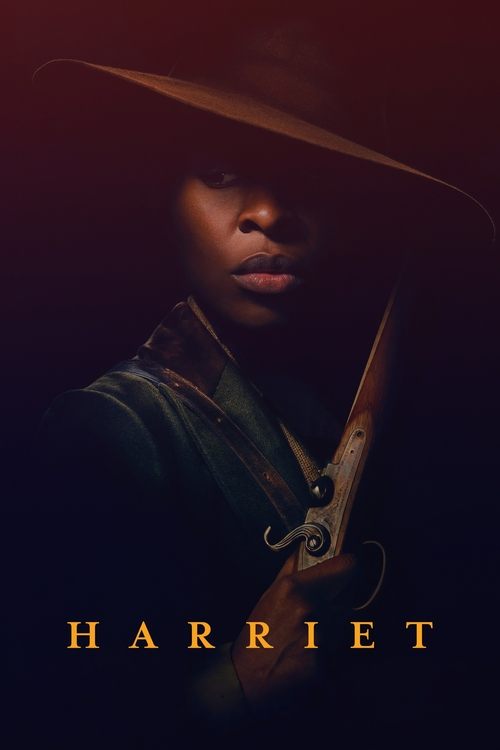
Harriet (2019)
Directed by Kasi Lemmons
Yes — Harriet is woke, scoring 60 out of 100 on our wokeness meter.
Harriet arrives as a respectable historical biopic, the kind that treats freedom as a moral inheritance and delivers it with a straight back and a soaring score.
Consciousness Markers
The film is fundamentally about slavery, racial oppression, and Black liberation, with the Underground Railroad and Tubman's missions as its central focus.
The film centers a Black historical heroine with a predominantly Black cast and a Black female director, making representation intrinsic to its subject rather than incidental.
Harriet Tubman is portrayed as a courageous woman leading others to freedom, and the epilogue notes her advocacy for women's suffrage, though the film's feminism is historical rather than explicitly ideological.
The film carries inspirational historical lessons about freedom and courage, with an epilogue listing Tubman's achievements, but it rarely lectures in a modern activist register.
There are no LGBTQ+ themes, characters, or subtext in the film.
There is no environmental or climate-related theme in the film.
While slavery is depicted as an exploitative economic system, the film does not advance a modern anti-capitalist critique.
There is no body-positivity theme or related representation in the film.
Harriet's spells and visions are framed as spiritual or divine experiences, not as neurodivergence or disability representation.
The film is a conventional historical biopic and does not reinterpret events through a modern woke revisionist lens.
Why it received this score
Harriet arrives as a respectable historical biopic, the kind that treats freedom as a moral inheritance and delivers it with a straight back and a soaring score. Kasi Lemmons directs Cynthia Erivo through the familiar stations of the genre: the escape, the pursuit, the river jump, the epilogue that summarizes the rest of a heroic life. The film's representational work is neither incidental nor coy. A Black woman directs a Black heroine surrounded by a predominantly Black cast, and the camera keeps its attention on the people whose labor and courage made the Underground Railroad function. This is representation as subject, not decoration.
The racial conscience of the film is its engine. Slavery is not a backdrop but the machinery of the plot, and Tubman's missions are framed as an ongoing campaign against a domestic terror state. The feminism is historical and restrained. Harriet leads because she must, and the closing text notes her suffrage advocacy without turning the film into a seminar. There is some sermonizing in the final reel, the usual biographical accounting of accomplishments, but it stays within the register of inspirational history. The spells and visions are treated as divine guidance, not as a neurological condition, and the film has no interest in modern disability framing.
The ledger elsewhere is quiet. No LGBTQ subplot, no climate allegory, no body-positive detour, no anti-capitalist lecture about the plantation as a business model, though it plainly was one. The film does not revise history through a present-day ideological lens; it repeats the biopic template with conviction. As a piece of cultural classification, it is a sturdy, sincere artifact, more likely to be screened in a history class than to start an argument at a dinner party. The score is high on racial consciousness and representation, moderate on feminist and sermonizing impulses, and silent on the rest.
Analysis generated by our Consciousness Algorithm
Part of


Synopsis
The extraordinary tale of Harriet Tubman's escape from slavery and transformation into one of America's greatest heroes. Her courage, ingenuity and tenacity freed hundreds of slaves and changed the course of history.
Questions about Harriet
Is Harriet woke?
Yes — Harriet is woke, scoring 60 out of 100 on our wokeness meter. That earns it a verdict of Woke.
What makes Harriet woke?
4 of the 10 markers register at 30 or above, led by Racial Consciousness (90), Representation Casting (82) and Feminist Agenda (55). On Racial Consciousness: The film is fundamentally about slavery, racial oppression, and Black liberation, with the Underground Railroad and Tubman's missions as its central focus.
How does Harriet compare to other 2019 movies?
It ranks #15 of the 284 films from 2019 we've scored; their average is 22. The wokest is Black Christmas (79).
How is the Woke Score calculated?
An AI-assisted process researches the film and its reception, scores it 0–100 on ten markers, then combines those into one 0–100 Woke Score. It measures a specific set of 2020s cultural themes, not film quality.