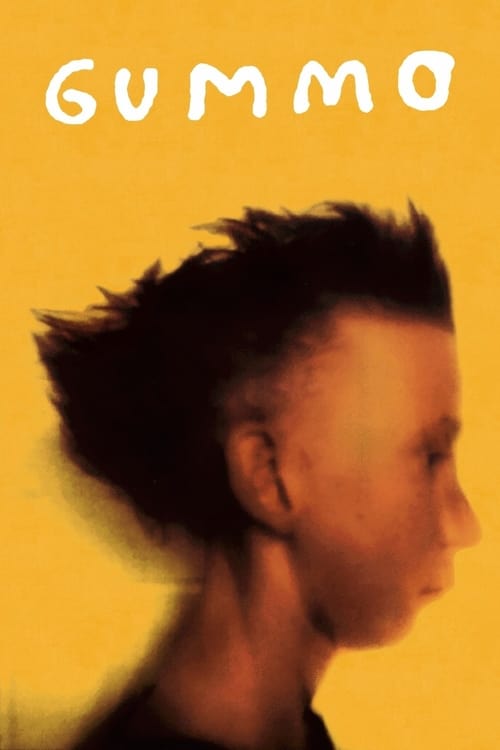
Gummo (1997)
Directed by Harmony Korine
No — Gummo is not woke, scoring 9 out of 100 on our wokeness meter.
Gummo arrives from 1997 with the confidence of a provocation and the hygiene of a gas station restroom.
Consciousness Markers
The film includes a transgender sibling mentioned in dialogue, cross-dressing photographs, and a brief flirtation with a male dwarf, but these elements are transgressive rather than affirming or agenda-driven.
The cast is largely composed of local non-actors, but this is an aesthetic choice rather than a modern representation-casting initiative; no deliberate diversity or inclusion agenda is present.
Female characters exist but are largely depicted through exploitation, abuse, and sexualization; there is no feminist critique or empowerment narrative.
Racial bigotry is depicted in dialogue and vignettes, but the film does not engage in racial consciousness or social justice commentary.
The tornado that devastated Xenia is a historical backdrop, not a climate-change allegory or environmental crusade.
Poverty and social decay are shown, but the film offers no anti-capitalist critique or eat-the-rich sentiment.
There is no body-positivity theme or celebration of diverse body types.
A tennis player mentions ADHD treatment and other characters have mental health issues, but these are not framed through a modern neurodivergence-awareness lens.
The film is a fictional collage set against a real historical tornado, with no revisionist historical narrative.
The film is deliberately anti-didactic and observational, offering no lecture or moral instruction.
Why it received this score
Gummo arrives from 1997 with the confidence of a provocation and the hygiene of a gas station restroom. Harmony Korine's debut sets itself in Xenia, Ohio, a town still dented by a 1974 tornado, then fills the frame with local non-actors, glue sniffing, cat hunting, and a mute boy in pink bunny ears. As a vehicle for modern representation casting, it scores nothing. The faces are real, but they are selected for aura and inconvenience, not for a diversity initiative. The film has no interest in making anyone feel included.
On LGBTQ matters, there is a faint residue: a transgender sibling mentioned in dialogue, cross-dressing photographs, and a drunken flirtation with a male dwarf. These are not affirmations. They are curiosities in a cabinet of Midwestern grotesques, offered without a thesis. Feminist, racial, climate, anti-capitalist, body-positive, and neurodivergent readings all collapse on contact. Poverty is present, but it is not a sermon. A tennis player mentions ADHD treatment, and the film moves on. Racist talk appears as ambient ugliness, not as a teachable moment. The tornado is weather and memory, not an environmental parable.
Above all, Gummo refuses to lecture. It observes, collages, and then drowns a cat in the opening minutes. The film's moral instruction is limited to the suggestion that life is a series of ugly, funny, sad rooms. There is no lecture energy, no revisionist history, no call to action. It is a grimy artifact from a time when American independent cinema could be unpleasant without also being improving. We are left to classify it, which we do with the solemnity of a sommelier identifying notes of glue and wet fur.
Analysis generated by our Consciousness Algorithm
Synopsis
Teenagers Solomon and Tummler kill time in Xenia, Ohio, a small town that has never recovered from the tornado that ravaged the community in the 1970s.
Questions about Gummo
Is Gummo woke?
No — Gummo is not woke, scoring 9 out of 100 on our wokeness meter. That earns it a verdict of Ultra Based.
Does Gummo have any woke elements?
Very few. None of the 10 markers reaches 30, the level where a marker counts as present; the highest is LGBTQ+ Themes at 15.
How does Gummo compare to other 1997 movies?
It ranks #46 of the 109 films from 1997 we've scored; their average is 12. The wokest is Happy Together (65).
How is the Woke Score calculated?
An AI-assisted process researches the film and its reception, scores it 0–100 on ten markers, then combines those into one 0–100 Woke Score. It measures a specific set of 2020s cultural themes, not film quality.