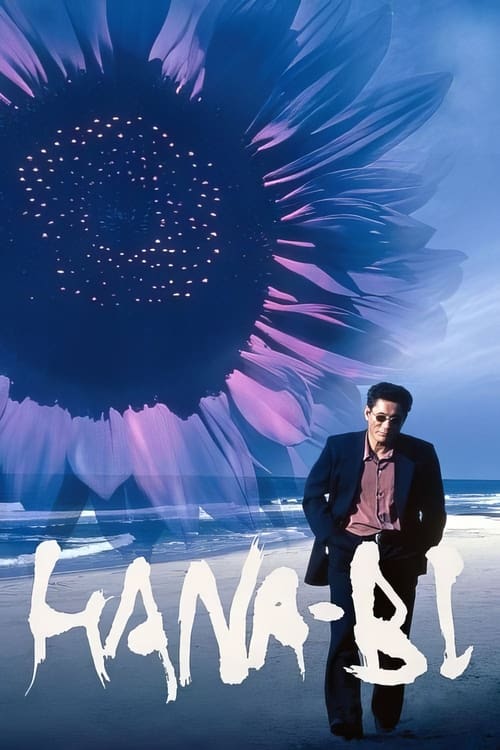
Fireworks (1997)
Directed by Takeshi Kitano
No — Fireworks is not woke, scoring 0 out of 100 on our wokeness meter.
Takeshi Kitano's Hana-bi, known in some territories as Fireworks, is a 1997 crime drama of few words and many long, quiet stares.
Consciousness Markers
The cast is entirely Japanese, reflecting the film's setting and production context rather than any deliberate diversity initiative. No representation-casting intent is present.
No LGBTQ+ characters, themes, or subtext appear anywhere in the film.
The wife is a largely silent, dying figure cared for by the protagonist; the film offers no feminist critique or gender-conscious framing.
The film is a Japanese production with an all-Japanese cast and no engagement with racial politics or consciousness.
No environmental or climate themes are present.
Yakuza debt and a bank robbery feature in the plot, but purely as crime-genre mechanics with no anti-capitalist or class-conscious message.
Horibe's paralysis is treated as personal tragedy and artistic catalyst, not as body-positivity advocacy.
No neurodivergence themes or characters are present.
The film is a fictional crime drama with no historical revisionism.
Kitano's film is famously spare and elliptical, conveying emotion through image and silence rather than moral instruction.
Why it received this score
Takeshi Kitano's Hana-bi, known in some territories as Fireworks, is a 1997 crime drama of few words and many long, quiet stares. A detective borrows from the yakuza, robs a bank, and takes his dying wife to the sea. Kitano directs with an economy that borders on the monastic. The film has no interest in explaining itself, and no interest in instructing us. It observes violence and tenderness with the same flat, patient gaze. The result is a work that feels older than its release date, untouched by the cultural weather of the present.
If we inspect the film for contemporary social consciousness, we find empty rooms. The cast is Japanese because the film is Japanese. The wife is a dying presence, not a platform. Horibe's paralysis becomes a reason to paint, not a lesson about accessibility. The yakuza debt and bank robbery are genre machinery, not a critique of late capitalism. There is no climate sermon, no identity ledger, no moment where a character turns to camera to correct our thinking. Kitano's style is elliptical to the point of refusal. Emotion arrives through image, silence, Joe Hisaishi's score, and the sudden crack of gunfire.
This absence is not a failure. It is a classification. Hana-bi belongs to a tradition of cinematic stoicism that predates the current era's appetite for moral instruction. It asks nothing of our politics and offers no checklist in return. The final beach scene, with its kite and its two distant gunshots, remains ambiguous and unclaimed. A modern viewer may search for a message about representation, power, or justice. The film will not provide one. It simply watches the sea, then goes quiet. For that stubborn reticence, we can only assign it a clean slate.
Analysis generated by our Consciousness Algorithm


Synopsis
Beleaguered police detective Nishi takes desperate measures to try and set things right in a world gone wrong. With those close to him suffering their own tribulations, Nishi's methods become increasingly extreme.
Questions about Fireworks
Is Fireworks woke?
No — Fireworks is not woke, scoring 0 out of 100 on our wokeness meter. That earns it a verdict of Ultra Based.
Does Fireworks have any woke elements?
No. All 10 markers score zero.
How does Fireworks compare to other 1997 movies?
It ranks #95 of the 109 films from 1997 we've scored; their average is 12. The wokest is Happy Together (65).
How is the Woke Score calculated?
An AI-assisted process researches the film and its reception, scores it 0–100 on ten markers, then combines those into one 0–100 Woke Score. It measures a specific set of 2020s cultural themes, not film quality.