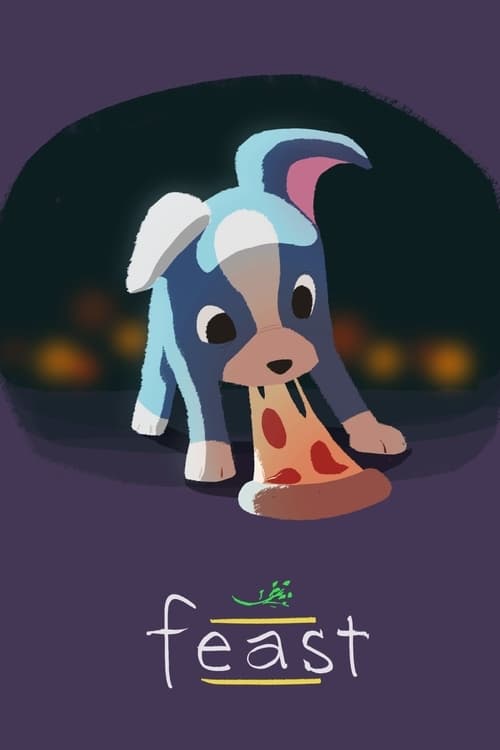
Feast (2014)
Directed by Patrick Osborne
No — Feast is not woke, scoring 0 out of 100 on our wokeness meter.
Feast arrives as a six-minute Disney short in which a Boston Terrier named Winston narrates, without narration, the romantic fortunes of his owner James, as measured in scraps.
Consciousness Markers
The voice cast is a standard ensemble of Disney voice actors portraying unnamed human characters and a dog; no casting choices made with representational intent.
The story concerns a man, a woman, and a Boston Terrier; no LGBTQ+ characters or themes appear.
Kirby is a waitress who nudges James toward healthier eating, but she functions as a romantic plot device rather than a vehicle for any feminist statement.
No racial themes, commentary, or consciousness of any kind are present in this wordless domestic vignette.
The film contrasts junk food with a healthier diet, but this is a personal-lifestyle beat, not an environmental or climate message.
Fast food and home cooking appear as emotional signifiers, not as a critique of capitalism or corporate greed.
The diet subplot is about a dog's appetite and a couple's habits, not about body image, size acceptance, or self-love messaging.
No neurodivergent characters or themes are depicted.
A simple original story about a dog and his owner; no historical events are reinterpreted or revised.
The short is told visually through food and has no dialogue or moralizing; it never lectures the audience on any subject.
Why it received this score
Feast arrives as a six-minute Disney short in which a Boston Terrier named Winston narrates, without narration, the romantic fortunes of his owner James, as measured in scraps. The film premiered at Annecy in 2014, rode into theaters ahead of Big Hero 6, and collected both an Annie and an Academy Award for Best Animated Short Film. Patrick Osborne, making his directing debut, built the thing out of one-second increments of daily life, which is why it moves like a flipbook of dinners. James meets Kirby the waitress and eats vegetables under her influence. He loses her, reverts to burgers, and is reunited by a dog carrying a sprig of parsley across town. The camera keeps the humans soft and out of focus until Winston bothers to look at them. It is a formal conceit executed with discipline.
There is very little here for the cultural archaeologist to excavate. The cast is a standard ensemble of Disney voice performers, none of them visible, all of them grunting and murmuring as unnamed humans. No character announces an identity. No institution is indicted. The diet subplot concerns a dog's palate and a man's heartbreak. It is not about body image, corporate agriculture, or the moral status of the chicken nugget. Kirby nudges James toward kale and then exits the plot as a romantic objective. Winston's triumph is a return to cupcakes. The film takes no position on anything except that dogs love food and that people are, on the whole, improved by owning one.
This is a vintage with nothing to decant. It is charming, wordless, and entirely innocent of the decade that followed it. We score it accordingly and move on to the next bottle.
Analysis generated by our Consciousness Algorithm
Part of
Studio · Disney Animation
Are Disney Animation Movies Woke?
43 films across two labels, average 26 (Based). This film is 26 points below the Disney Animation average.
Studio · Disney
Are Disney Movies Woke?
391 films across nine labels, average 19 (Ultra Based). This film is 19 points below the Disney average.

Synopsis
This Oscar-winning animated short film tells the story of one man's love life as seen through the eyes of his best friend and dog, Winston, and revealed bite by bite through the meals they share.
Questions about Feast
Is Feast woke?
No — Feast is not woke, scoring 0 out of 100 on our wokeness meter. That earns it a verdict of Ultra Based.
Does Feast have any woke elements?
No. All 10 markers score zero.
How does Feast compare to other 2014 movies?
It ranks #271 of the 303 films from 2014 we've scored; their average is 13. The wokest is Selma (68).
How is the Woke Score calculated?
An AI-assisted process researches the film and its reception, scores it 0–100 on ten markers, then combines those into one 0–100 Woke Score. It measures a specific set of 2020s cultural themes, not film quality.