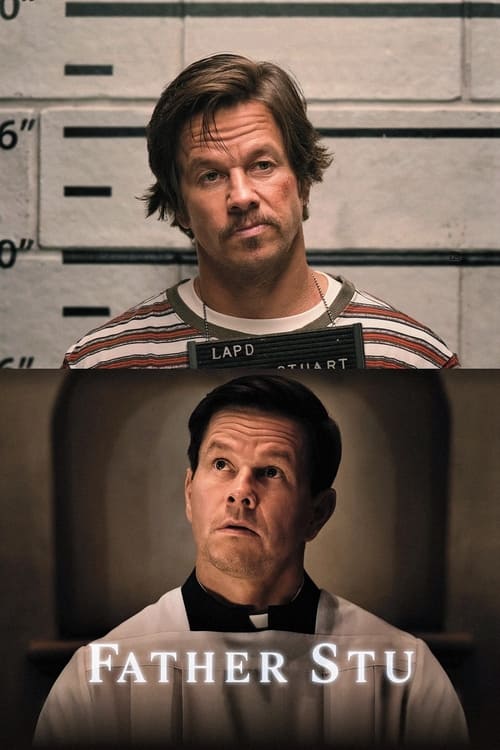
Father Stu (2022)
Directed by Rosalind Ross
No — Father Stu is not woke, scoring 7 out of 100 on our wokeness meter.
Father Stu arrives as a curiosity: a faith-based biopic with an R rating, a foul-mouthed leading man, and a first-time director in Rosalind Ross.
Consciousness Markers
Features a Latina love interest (Teresa Ruiz) and some diverse supporting cast, though the story remains centered on a white male protagonist.
Contains religious moralizing and faith-based messages, but not progressive social justice lecturing.
A female director and a few strong-willed female characters, but the narrative is traditional and male-focused.
No LGBTQ+ themes or characters; Cody Fern's casting does not translate to queer content.
No engagement with racial issues or consciousness; the Latina character is present without racial commentary.
No environmental or climate themes.
No anti-capitalist or eat-the-rich messaging; the protagonist's material ambitions are personal, not political.
Depicts physical disability and weight gain, but not as body-positive advocacy; it frames suffering as spiritual.
No neurodivergent characters or themes.
A straightforward biopic of a Catholic priest, with no revisionist historical agenda.
Why it received this score
Father Stu arrives as a curiosity: a faith-based biopic with an R rating, a foul-mouthed leading man, and a first-time director in Rosalind Ross. It follows Stuart Long, an amateur boxer from Montana who drifts to Los Angeles chasing acting work, meets a Sunday school teacher named Carmen, and eventually trades the bottle and the audition circuit for the seminary. Mark Wahlberg gained thirty pounds for the part. Mel Gibson plays the alcoholic father. The project was financed in part by Wahlberg's own money, which is either devotion or a tax strategy, and nobody involved is saying which.
The film's social consciousness is modest and largely incidental. Carmen is Latina, played by Teresa Ruiz, and her family appears without any comment on the matter. A woman directed it, and Jacki Weaver gets a few moments of steel as Stu's mother, but the camera stays fixed on the suffering of one white man. There is no racial reckoning, no climate anxiety, no critique of the economic order. Stu's material ambitions are personal and are abandoned, not indicted.
The illness that defines the back half, inclusion body myositis, is rendered as spiritual trial instead of bodily politics. His weight gain and his decay are framed as gifts that draw him closer to Christ, which places the film at some distance from any contemporary conversation about bodies. The moralizing here is religious, not progressive, and it is delivered with the plain confidence of a man who has already decided the argument. What we get is sincere, occasionally effective, and almost entirely out of step with the present moment. It ends with photographs of the real priest. The audience, apparently, wept.
Analysis generated by our Consciousness Algorithm


Synopsis
The true-life story of boxer-turned-priest. When an injury ends his amateur boxing career, Stuart Long moves to Los Angeles to find money and fame. While scraping by as a supermarket clerk, he meets Carmen, a Sunday school teacher who seems immune to his bad-boy charm. Determined to win her over, the longtime agnostic starts going to church to impress her. However, a motorcycle accident leaves him wondering if he can use his second chance to help others, leading to the surprising realization that he's meant to be a Catholic priest.
Questions about Father Stu
Is Father Stu woke?
No — Father Stu is not woke, scoring 7 out of 100 on our wokeness meter. That earns it a verdict of Ultra Based.
Does Father Stu have any woke elements?
Very few. None of the 10 markers reaches 30, the level where a marker counts as present; the highest is Representation Casting at 20.
How does Father Stu compare to other 2022 movies?
It ranks #183 of the 223 films from 2022 we've scored; their average is 22. The wokest is Bros (92).
How is the Woke Score calculated?
An AI-assisted process researches the film and its reception, scores it 0–100 on ten markers, then combines those into one 0–100 Woke Score. It measures a specific set of 2020s cultural themes, not film quality.