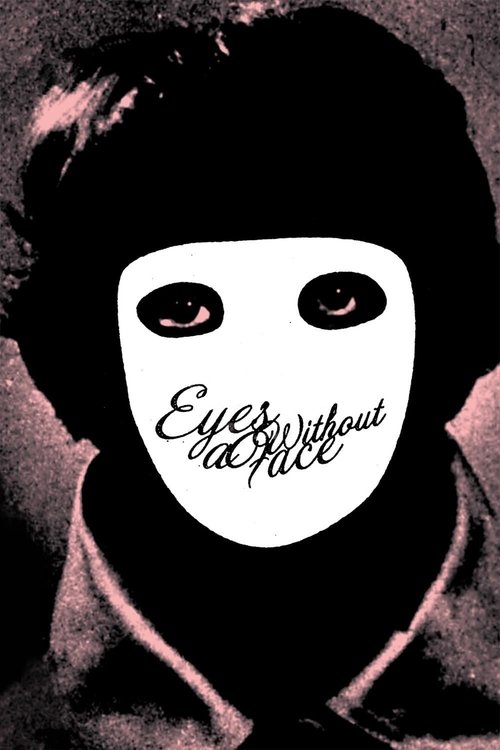
Eyes Without a Face (1960)
Directed by Georges Franju
No — Eyes Without a Face is not woke, scoring 3 out of 100 on our wokeness meter.
Georges Franju's 1960 study in surgical obsession arrives from a distant country, culturally speaking.
Consciousness Markers
The film grants Christiane an inner life and a final act of agency, and Louise is a substantial female presence, but this is genre drama rather than a feminist statement—the women are largely instruments of a male surgeon's obsession.
The cast is entirely white European, typical of a 1960 French production; no deliberate diverse casting is present.
No LGBTQ+ characters, themes, or subtext of any kind appear in the film.
There is no engagement with race or racial politics whatsoever.
No environmental or climate themes are present.
No critique of wealth, class, or capitalism is offered; the doctor's motive is personal guilt, not profit.
The film dwells on disfigurement and lost beauty as horror, which is thematically the inverse of body-positivity messaging.
Christiane's psychological deterioration is framed as horror-madness, not as neurodivergent identity or representation.
Nothing in the film revises or reinterprets historical events or figures.
Franju's stated aim was 'horror in homeopathic doses'—a poetic, atmospheric work with no didactic or preachy register.
Why it received this score
Georges Franju's 1960 study in surgical obsession arrives from a distant country, culturally speaking. The cast is entirely white European, as was typical of a French-Italian co-production of the period, and the film makes no comment on the matter. There is no racial politics here, no environmental anxiety, no quarrel with wealth or its distribution. Dr. Génessier mutilates young women out of personal guilt, not profit, so no economic critique can be extracted from the wreckage. His victims are chosen for the similarity of their features, a detail that is chilling and entirely apolitical. The film is adapted from Jean Redon's novel, which supplies its plot and nothing resembling an ideological program.
The single tremble of progressive feeling here is faint and largely incidental. Christiane is granted an interior life, and her final rebellion, freeing the dogs and the doves before walking into the woods, is a genuine act of will. Louise, the accomplice, is a substantial female presence with her own scars and motives. Yet these women remain instruments of a man's grand project, and the camera lingers on disfigurement and lost beauty as horror. This is the precise inverse of any lesson about accepting the body as it is. Christiane's unraveling is staged as madness, a genre affliction, never as an identity to be understood.
What remains is atmosphere. Franju spoke of horror in homeopathic doses, and the film honors that prescription. There is no sermonizing, no lesson, no finger raised toward the audience. It wants only to unsettle, and it does so with a surgeon's patience. We classify it, then, as a beautiful and morally serious object with almost nothing in it for the contemporary cultural ledger. The sommelier may set down the glass.
Analysis generated by our Consciousness Algorithm


Synopsis
Dr. Génessier is riddled with guilt after an accident that he caused disfigures the face of his daughter, the once beautiful Christiane, who outsiders believe is dead. Dr. Génessier, along with accomplice and laboratory assistant Louise, kidnaps young women and brings them to the Génessier mansion. After rendering his victims unconscious, Dr. Génessier removes their faces and attempts to graft them on to Christiane's.
Questions about Eyes Without a Face
Is Eyes Without a Face woke?
No — Eyes Without a Face is not woke, scoring 3 out of 100 on our wokeness meter. That earns it a verdict of Ultra Based.
Does Eyes Without a Face have any woke elements?
Very few. None of the 10 markers reaches 30, the level where a marker counts as present; the highest is Feminist Agenda at 5.
How does Eyes Without a Face compare to other 1960 movies?
It ranks #11 of the 17 films from 1960 we've scored; their average is 7. The wokest is Rocco and His Brothers (29).
How is the Woke Score calculated?
An AI-assisted process researches the film and its reception, scores it 0–100 on ten markers, then combines those into one 0–100 Woke Score. It measures a specific set of 2020s cultural themes, not film quality.