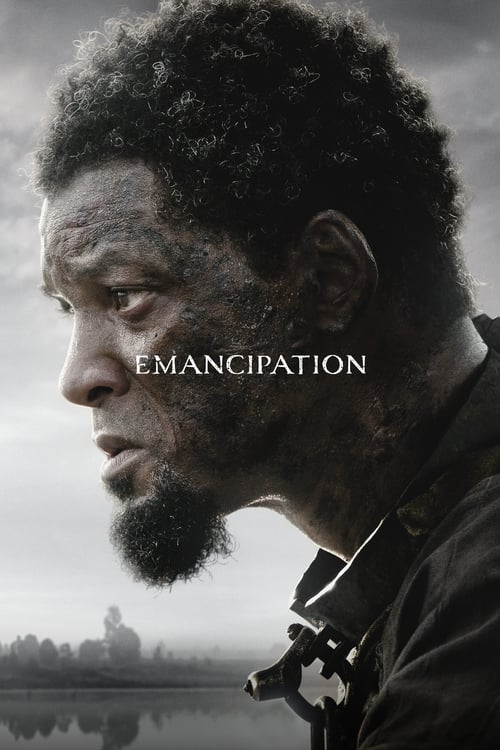
Emancipation (2022)
Directed by Antoine Fuqua
No — Emancipation is not especially woke, scoring 35 out of 100 on our wokeness meter.
Emancipation arrives with the grim determination of a history lesson recut as an action picture.
Consciousness Markers
The film is squarely and unambiguously about the brutality of chattel slavery, the scourged-back photograph, and the struggle for Black freedom, engaging racial oppression as its central subject.
A predominantly Black ensemble led by Will Smith anchors the film, though this casting is demanded by the subject matter rather than imposed as a modern diversity initiative.
The film largely shows rather than lectures, though an epilogue text and solemn moral framing about the Emancipation Proclamation's freeing of four million slaves carries a mild didactic charge.
The film is only loosely based on the historical Gordon/'Whipped Peter' and compresses events, but its deviations are conventional dramatic license rather than an ideological rewriting of history.
The enslaved wife Dodienne is a present but largely reactive figure; the film is a male-driven survival narrative with no discernible feminist argument.
Slavery is depicted as an exploitative labor system, but the film makes no explicit critique of capitalism or class as an ideology.
No LGBTQ+ characters or themes appear anywhere in the narrative.
No environmental or climate themes are present.
The film depicts bodily suffering and scarring, the opposite of any body-positivity messaging.
No neurodivergent characters or themes are present.
Why it received this score
Emancipation arrives with the grim determination of a history lesson recut as an action picture. Antoine Fuqua follows Peter, an enslaved man torn from his family on a Louisiana plantation, conscripted into Confederate labor, and driven to flee through the swamps toward Union-held Baton Rouge with slave catchers and their dogs at his heels. The scourged-back photograph of Gordon, or Whipped Peter, sits at the center of the enterprise, and the film treats chattel slavery as its unambiguous subject. That is a serious historical commitment. It is also the film's entire moral architecture, which leaves the modern cultural markers with very little to do.
The casting is a predominantly Black ensemble led by Will Smith, though the subject matter demands this and no studio executive had to be persuaded. Charmaine Bingwa's Dodienne waits and mourns; the camera hands the movie to her husband. Slavery appears as an exploitative labor system, yet nobody pauses to indict capital as an idea, and the swamps contain no sermons about the climate. The film shows the lash, the brand, and the dogs instead of explaining them, so the lecturing stays mild, confined largely to the closing text about four million freed. The deviations from the historical record are the ordinary compressions of a screenplay, not an ideological rewrite.
The result is a handsomely mounted chase picture that believes its own gravity. Fuqua stages the flight with competence and the violence with a certain relish, and the whole thing sits awkwardly between the abolitionist pamphlet and the thriller. It means well, it means it loudly, and it has almost nothing to say about the present moment beyond the obvious. The scars do the talking. The film mostly lets them, and that restraint is the most interesting decision anyone made here.
{"thematic_tags": ["true_story"]}
Analysis generated by our Consciousness Algorithm


Synopsis
Inspired by the gripping true story of a man who would do anything for his family—and for freedom. When Peter, an enslaved man, risks his life to escape and return to his family, he embarks on a perilous journey of love and endurance.
Questions about Emancipation
Is Emancipation woke?
No — Emancipation is not especially woke, scoring 35 out of 100 on our wokeness meter. That earns it a verdict of Based.
Does Emancipation have any woke elements?
3 of the 10 markers register at 30 or above, led by Racial Consciousness (65), Representation Casting (55) and Lecture Energy (35). On Racial Consciousness: The film is squarely and unambiguously about the brutality of chattel slavery, the scourged-back photograph, and the struggle for Black freedom, engaging racial oppression as its central subject.
How does Emancipation compare to other 2022 movies?
It ranks #47 of the 223 films from 2022 we've scored; their average is 22. The wokest is Bros (92).
How is the Woke Score calculated?
An AI-assisted process researches the film and its reception, scores it 0–100 on ten markers, then combines those into one 0–100 Woke Score. It measures a specific set of 2020s cultural themes, not film quality.