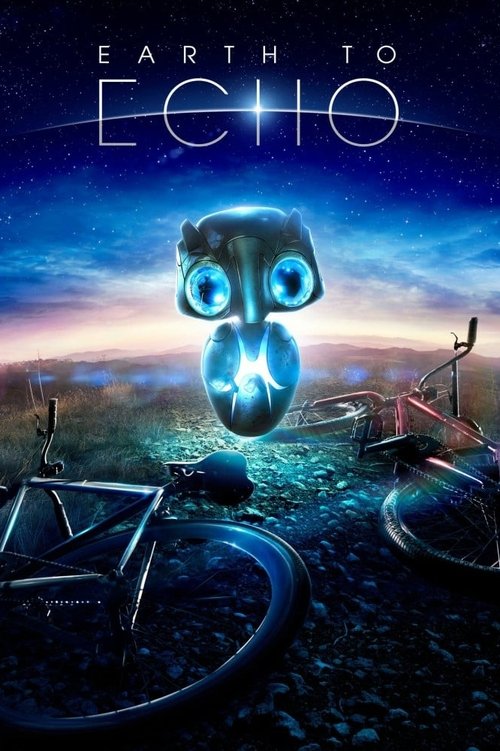
Earth to Echo (2014)
Directed by Dave Green
No — Earth to Echo is not woke, scoring 14 out of 100 on our wokeness meter.
Earth to Echo arrives from 2014 as a found-footage lark about three Nevada boys, a soon-to-be-demolished neighborhood, and a wounded robotic alien who communicates in yes or no questions.
Consciousness Markers
The young ensemble is naturally diverse — a Black kid (Munch), a girl (Emma), and a possibly Middle Eastern lead (Alex) — but the film never comments on or foregrounds this, treating it as unremarkable. Modest credit for a casually mixed cast.
Emma is a capable girl who joins the group and rescues Alex from a security guard, but she is a standard adventure-sidekick addition rather than a vehicle for any feminist thesis.
The film is a light E.T./Goonies-style romp with no preachy messaging or moralizing monologues aimed at the audience.
No LGBTQ+ characters, themes, or subtext of any kind appear in this kids' alien adventure.
The film features a multiracial friend group but engages in zero racial commentary, historical reckoning, or consciousness-raising. Diversity exists without a message.
No environmental themes whatsoever; the construction project is a covert alien-recovery operation, not an ecological parable.
The villains are government-adjacent scientists seeking alien technology, not a critique of capitalism or corporate greed. No eat-the-rich energy.
No body-positive messaging or body-diverse representation is present.
Munch is a quirky, gadget-loving kid, but his traits are played as comic personality rather than any depiction or advocacy of neurodivergence.
The film invents no counter-narrative history; it is a straightforward contemporary sci-fi adventure.
Why it received this score
Earth to Echo arrives from 2014 as a found-footage lark about three Nevada boys, a soon-to-be-demolished neighborhood, and a wounded robotic alien who communicates in yes or no questions. It was developed at Disney, handed off to Relativity, and released to a collective shrug. The film's most notable cultural feature is how little it insists on. Its young ensemble is mixed without ceremony: a Black kid with a talent for gadgets, a white ringleader behind the camera, and a lead whose heritage the screenplay never bothers to name. The casting is integrated, and the film treats that as unremarkable, which is either admirable restraint or an absence of curiosity. We lean toward the latter, though credit is due for the lack of self-congratulation.
Emma, the classmate who joins in the second act, gets one genuine moment, hauling Alex away from a security guard. It is competent sidekick work and nothing further. The film never frames her as a statement. The antagonists are government-adjacent scientists chasing alien technology, and the screenplay shows no appetite for corporate critique, environmental parable, or historical reckoning. There is no messaging to speak of, no monologue aimed at the audience, no lesson stapled to the closing credits. The construction project is a cover story for a dig, not a metaphor. The gadget-loving kid is played for comic texture, not as advocacy of any kind.
What remains is a competent imitation of better movies, pleasant enough for its intended audience and mercifully free of sermonizing. It borrows from E.T. and The Goonies and repays the debt in smartphone screens. The cultural footprint is faint, the pronouncements nonexistent. We record it accordingly, with the weary gratitude of a critic who has spent the week being lectured and would like, just once, to watch children ride bicycles toward a spaceship in peace.
Analysis generated by our Consciousness Algorithm


Synopsis
After a construction project begins digging in their neighbourhood, best friends Tuck, Munch and Alex inexplicably begin to receive strange, encoded messages on their cell phones. Convinced something bigger is going on, they go to their parents and the authorities. The three embark on a secret adventure to crack the code and follow it to its source, and discover a mysterious being from another world who desperately needs their help. The journey that follows will change all their lives forever.
Questions about Earth to Echo
Is Earth to Echo woke?
No — Earth to Echo is not woke, scoring 14 out of 100 on our wokeness meter. That earns it a verdict of Ultra Based.
Does Earth to Echo have any woke elements?
1 of the 10 markers register at 30 or above, led by Representation Casting (30). On Representation Casting: The young ensemble is naturally diverse — a Black kid (Munch), a girl (Emma), and a possibly Middle Eastern lead (Alex) — but the film never comments on or foregrounds this, treating it as unremarkable.
How does Earth to Echo compare to other 2014 movies?
It ranks #100 of the 303 films from 2014 we've scored; their average is 13. The wokest is Selma (68).
How is the Woke Score calculated?
An AI-assisted process researches the film and its reception, scores it 0–100 on ten markers, then combines those into one 0–100 Woke Score. It measures a specific set of 2020s cultural themes, not film quality.