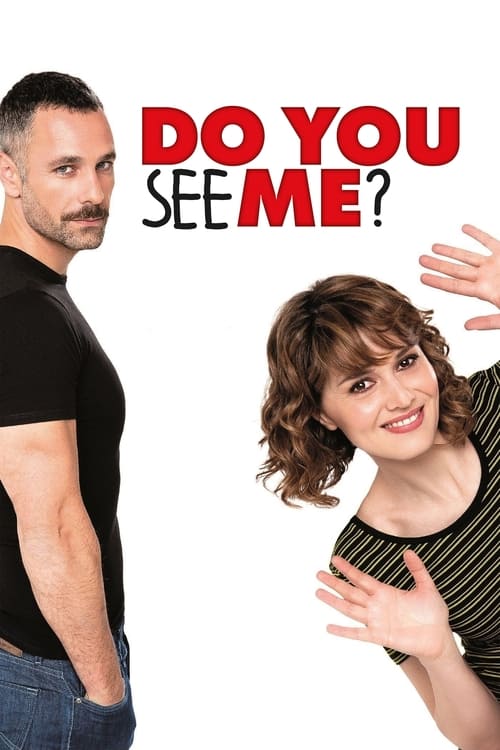
Do You See Me? (2014)
Directed by Riccardo Milani
Partly — Do You See Me? is somewhat woke, scoring 41 out of 100 on our wokeness meter.
Do You See Me? is a 2014 Italian comedy with a clean comedic engine and a social point that it never quite hides.
Consciousness Markers
The entire premise hinges on a qualified woman being denied work in Italy and forced to impersonate a man to be taken seriously, a pointed critique of gender bias in the workplace.
A central gay character, Francesco, and a coming-out storyline involving his son form a significant emotional thread of the film.
The film carries a clear social message about gender discrimination and acceptance, but delivers it through light comedic plotting rather than overt preaching.
The cast is a standard Italian ensemble with a female lead and a gay supporting character, but there is no deliberate diverse-casting agenda beyond the story's needs.
The film touches on professional precarity and the Corviale redevelopment, but frames it as individual struggle rather than a systemic anti-capitalist critique.
No engagement with racial politics or racial identity; the film's social critique is entirely gendered and sexual.
No environmental or climate themes present.
No body-positivity themes or messaging.
No neurodivergence themes or characters.
No historical revisionism; the film is a contemporary-set comedy.
Why it received this score
Do You See Me? is a 2014 Italian comedy with a clean comedic engine and a social point that it never quite hides. Serena, a well-credentialed architect, returns to Rome and discovers that the professional door opens only for men, so she passes herself off as the man behind her Corviale redevelopment project. The gender critique is the load-bearing wall here. It is pointed, sustained, and entirely central to the plot, which means the film earns its feminist credentials through structure, not through a stray speech. The delivery remains light, however, and the sermonizing stays mostly in the architecture of the premise.
Her friendship with Francesco supplies the film's other substantial thread. He is gay, the attraction is initially one-sided, and the relationship matures into a supportive partnership in which she helps him come out to his son. This is handled with warmth and a fair amount of screen time, so the LGBTQ material is more than decorative. The cast is a standard Italian ensemble with a female lead and a gay supporting character, and we find no deliberate diversity agenda beyond what the story requires. Representation is present; the casting does not advertise itself.
Elsewhere the film is quiet. Race, climate, body image, neurodivergence, and historical revisionism are absent, and the script does not strain to invent them. The Corviale project and Serena's precarious employment brush against economic injustice, but the film treats them as personal obstacles instead of a systemic indictment. The social message about gender discrimination and acceptance is clear, though it arrives through comic plotting instead of a lecture. The result is a film with progressive sensibilities and a modest appetite for preaching. It states its case, then gets on with the joke.
Analysis generated by our Consciousness Algorithm
Synopsis
Serena Bruno is an architect who studied and got several masters in different countries of the world but she decides to go back to Italy so she can live and work there. She will soon find out that her native country is not as open minded and she will struggle to find a job that she truly loves and is passionate about. Along the way she will meet Francesco a gay man who will help and support her throughout her journey.
Questions about Do You See Me?
Is Do You See Me? woke?
Partly — Do You See Me? is somewhat woke, scoring 41 out of 100 on our wokeness meter. That earns it a verdict of Woke-Adjacent.
What makes Do You See Me? woke?
4 of the 10 markers register at 30 or above, led by Feminist Agenda (65), LGBTQ+ Themes (58) and Lecture Energy (32). On Feminist Agenda: The entire premise hinges on a qualified woman being denied work in Italy and forced to impersonate a man to be taken seriously, a pointed critique of gender bias in the workplace.
How does Do You See Me? compare to other 2014 movies?
It ranks #16 of the 303 films from 2014 we've scored; their average is 13. The wokest is Selma (68).
How is the Woke Score calculated?
An AI-assisted process researches the film and its reception, scores it 0–100 on ten markers, then combines those into one 0–100 Woke Score. It measures a specific set of 2020s cultural themes, not film quality.