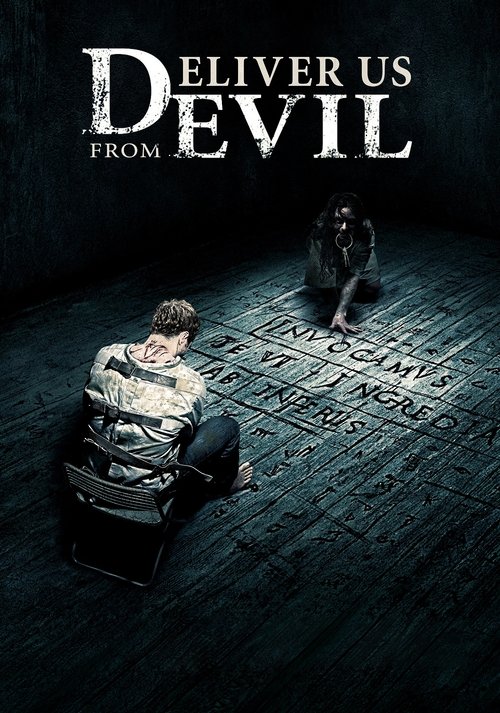
Deliver Us from Evil (2014)
Directed by Scott Derrickson
No — Deliver Us from Evil is not woke, scoring 7 out of 100 on our wokeness meter.
Scott Derrickson's 2014 possession procedural arrives with the full Bruckheimer apparatus: a Bronx setting, a lapsed Catholic sergeant, a Jesuit with a cross in his coat pocket, and a demon who has learned to speak through a Marine.
Consciousness Markers
The cast is moderately diverse (Édgar Ramírez, Dorian Missick, Valentina Rendón), but these are natural procedural roles rather than a deliberate representation agenda.
Mendoza delivers some exposition about primary and secondary evil, but the theology serves the plot rather than functioning as preachy social lecturing.
The film's 'inspired by actual accounts' marketing embellishes a largely original screenplay, a mild instance of dressing fiction as fact, though it does not reinterpret history.
Olivia Munn's Jennifer is a largely conventional supportive-wife figure; there is no feminist framing or commentary.
A multiethnic New York cast populates the film, but race is never examined or made a thematic concern.
No LGBTQ+ characters, themes, or subtext appear anywhere in the film.
No environmental or climate themes are present.
No economic critique or class commentary exists; the antagonist is a literal demon.
No body-positivity themes or messaging are present.
Mental disturbance is treated as demonic possession, not as neurodivergence to be understood or celebrated.
Why it received this score
Scott Derrickson's 2014 possession procedural arrives with the full Bruckheimer apparatus: a Bronx setting, a lapsed Catholic sergeant, a Jesuit with a cross in his coat pocket, and a demon who has learned to speak through a Marine. Eric Bana plays Ralph Sarchie as a man whose faith has curdled into procedure. The film is competent, atmospheric, and almost entirely uninterested in saying anything about the world it depicts. That is not a criticism. It is a classification.
The cast is agreeably multiethnic without ever becoming a statement. Édgar Ramírez, Dorian Missick, and Valentina Rendón occupy their roles as working professionals, not as arguments. Race is present and unexamined. Olivia Munn's Jennifer is a wife who waits at home and is eventually abducted, a function the screenplay never troubles to expand. The theology arrives through Mendoza's explanation of primary and secondary evil, a passage lifted from the source book's preface and delivered as plot mechanics, not as sermon. The film gestures at moral weight and then returns to the basement.
Marketing described the picture as inspired by actual accounts while the screenplay remained largely original, a modest bit of costume jewelry pinned to a fiction. Beyond that, the film has no cultural program to advance. No economic critique, no environmental conscience, no reclamation of history. The antagonist is a demon, which is the oldest excuse in the genre and, in this case, an honest one. The Doors on the soundtrack do more ideological work than the script. A routine exorcism picture, then, and a fairly tidy one. It asks nothing of us but attention, and it barely asks that.
Analysis generated by our Consciousness Algorithm


Synopsis
When a frightening wave of violence sweeps through New York City, troubled cop Sarchie fails to find a rational explanation for the bizarre crimes. However, his eyes are opened to a frightening alternate reality when renegade Jesuit priest Mendoza convinces him that demonic possession may be to blame for the gruesome murders. Together, they wage a valiant supernatural struggle to rid the city of an otherworldly evil.
Questions about Deliver Us from Evil
Is Deliver Us from Evil woke?
No — Deliver Us from Evil is not woke, scoring 7 out of 100 on our wokeness meter. That earns it a verdict of Ultra Based.
Does Deliver Us from Evil have any woke elements?
Very few. None of the 10 markers reaches 30, the level where a marker counts as present; the highest is Representation Casting at 22.
How does Deliver Us from Evil compare to other 2014 movies?
It ranks #173 of the 303 films from 2014 we've scored; their average is 13. The wokest is Selma (68).
How is the Woke Score calculated?
An AI-assisted process researches the film and its reception, scores it 0–100 on ten markers, then combines those into one 0–100 Woke Score. It measures a specific set of 2020s cultural themes, not film quality.