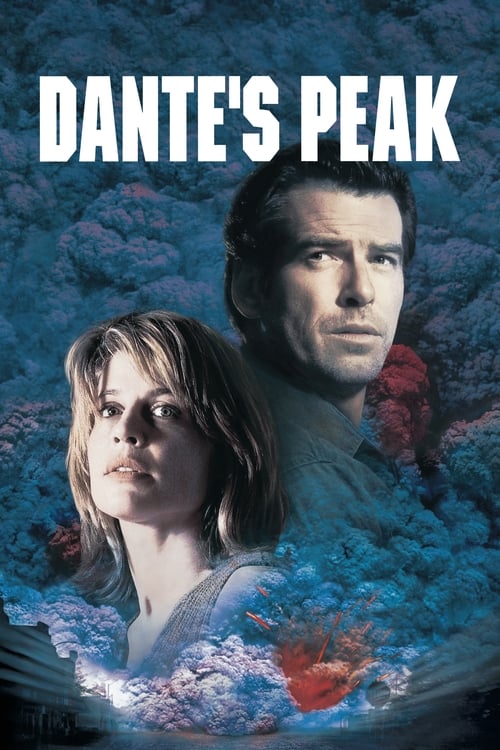
Dante's Peak (1997)
Directed by Roger Donaldson
No — Dante's Peak is not woke, scoring 9 out of 100 on our wokeness meter.
Dante's Peak arrives from 1997 with a volcano, a small Washington town, and a scientist who has already watched a loved one die in the prologue.
Consciousness Markers
The cast is overwhelmingly white, with Tzi Ma's Stan a minor supporting presence; Linda Hamilton as mayor provides the only notable non-default lead, and it is presented without comment.
Linda Hamilton plays a capable female mayor who takes decisive action, but the film treats this as ordinary competence rather than a feminist statement.
The film's volcanology is accurate enough that the USGS and science teachers used it educationally, but it preaches nothing and delivers no social sermon.
A faint tension exists between the town's economic development ambitions and safety warnings, but the film never frames this as a critique of capitalism or the wealthy.
No LGBTQ+ characters, themes, or subtext of any kind appear in the film.
Race is never addressed or thematized; the small-town Washington setting is presented as racially unmarked.
The threat is a natural volcanic eruption, not anthropogenic climate change; no environmental messaging is present.
No body-positivity themes or messaging appear.
No neurodivergent characters or themes are present.
The film is a fictional disaster narrative with no historical revisionism.
Why it received this score
Dante's Peak arrives from 1997 with a volcano, a small Washington town, and a scientist who has already watched a loved one die in the prologue. Pierce Brosnan plays Harry Dalton, a volcanologist for the USGS, and Linda Hamilton plays Rachel Wando, the mayor. The town is called Dante's Peak. The mountain above it is dormant until it is not. This is a film about lava, ash, acid lakes, and the logistical problem of moving a population out of the path of a pyroclastic flow, and it handles that problem with more competence than the genre usually musters. Critics of the day found the dialogue soggy and the spectacle excellent. They were broadly correct.
Whatever social instruction the picture carries is minimal and mostly accidental. Race goes unmentioned and unmarked. The cast is nearly all white, with Tzi Ma's Stan registering as a minor supporting presence and nothing more. There is no romantic or identity subtext beyond the default, and no environmental argument to make, since the mountain is a natural phenomenon and not a metaphor for industrial sin. A faint friction exists between the town's appetite for growth and the warnings of a scientist, though the film declines to turn that friction into a critique of money or the people who have it. The volcanology is accurate enough that the USGS published a fact-check page and science teachers still screen it in classrooms, which is the closest thing to a sermon on offer: instruction in sulfur dioxide and lahar mechanics, delivered without moralizing.
Rachel Wando governs a town, makes decisions, and saves her children, and the film treats all of this as ordinary. That is the extent of its progressive sensibility. Two hours of rock and fire, a dog named Roughy, and a crater where a summit used to be. Modest, physical, and content to be so.
Analysis generated by our Consciousness Algorithm
Part of


Synopsis
Volcanologist Harry Dalton comes to the sleepy town of Dante's Peak to investigate the recent rumblings of the dormant volcano the burg is named for. Before long, his worst fears are realized when a massive eruption hits, and immediately, Harry, the mayor and the townspeople find themselves fighting for their lives amid a catastrophic nightmare.
Questions about Dante's Peak
Is Dante's Peak woke?
No — Dante's Peak is not woke, scoring 9 out of 100 on our wokeness meter. That earns it a verdict of Ultra Based.
Does Dante's Peak have any woke elements?
Very few. None of the 10 markers reaches 30, the level where a marker counts as present; the highest is Representation Casting at 18.
How does Dante's Peak compare to other 1997 movies?
It ranks #46 of the 109 films from 1997 we've scored; their average is 12. The wokest is Happy Together (65).
How is the Woke Score calculated?
An AI-assisted process researches the film and its reception, scores it 0–100 on ten markers, then combines those into one 0–100 Woke Score. It measures a specific set of 2020s cultural themes, not film quality.