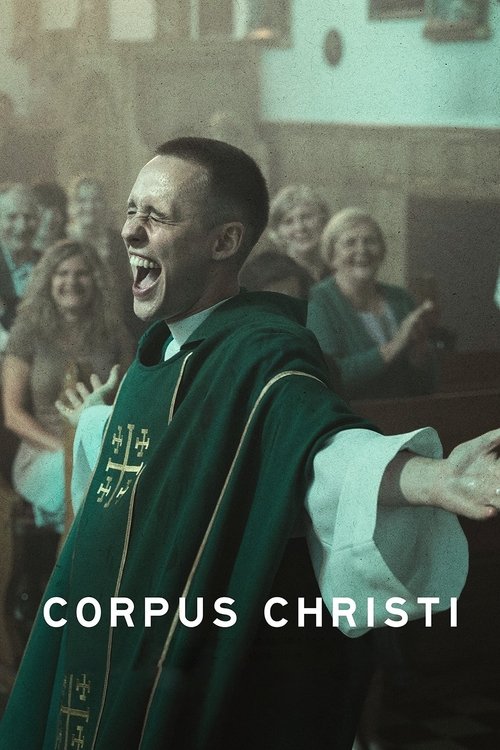
Corpus Christi (2019)
Directed by Jan Komasa
No — Corpus Christi is not woke, scoring 12 out of 100 on our wokeness meter.
Corpus Christi concerns a twenty-year-old ex-convict who impersonates a priest in a Polish village and discovers an unexpected gift for consolation.
Consciousness Markers
The film centers on a marginalized juvenile delinquent who assumes a position of spiritual authority, offering a commentary on social outcasts, though it stops short of modern intersectional representation.
Marta provides a degree of agency and challenges the community's rigid social norms, but the film's primary focus remains on spiritual and social hypocrisy rather than a feminist agenda.
The film revisits the trauma of a local tragedy and the community's refusal to face the truth, which functions as a localized social revision, but not a grand historical one.
The critique is directed at religious and social hypocrisy within a small community, rather than systemic economic or corporate structures.
The film is a quiet, character-driven drama that avoids the didactic, lecture-style social commentary often found in modern progressive cinema.
The narrative is strictly focused on religious and social drama, with no discernible LGBTQ+ themes or representation.
The setting and character dynamics are entirely focused on Polish social and religious issues, with no racial elements present.
The environmental impact of the film's setting or plot is entirely absent from the narrative.
There is no thematic engagement with body image or the celebration of diverse physical forms.
While Daniel is psychologically troubled, the film does not explore or label his behavior through the lens of neurodivergence.
Why it received this score
Corpus Christi concerns a twenty-year-old ex-convict who impersonates a priest in a Polish village and discovers an unexpected gift for consolation. It is a serious film about faith, guilt, and the stories communities tell themselves in order to sleep at night. Seriousness, however, is not the same as cultural alignment, and our task here is classification, not canonization.
The film does grant its protagonist the moral authority of the outcast. Daniel's criminal record bars him from the seminary, and his fluency in suffering lets him reach parishioners the ordained cannot. This is a modest gesture toward representation, though it stops well short of any intersectional program. Marta, who holds the incriminating video and eventually pays a price for revealing it, has some agency, and the film is faintly interested in her dissent. Elsewhere the ledger is bare. There is no racial dimension, no queer subtext, no environmental conscience, no celebration of the body, and no diagnostic vocabulary applied to Daniel's volatility. The village's refusal to blame its own dead teenagers for a crash carries a whiff of local historical reckoning, the Smolensk echo included, but it is a reckoning with one specific tragedy, not a rewrite of the national record.
Most telling is what the film declines to do. It never turns to the camera to explain its lesson. The target is clerical and communal hypocrisy, not the machinery of capital, and the anger stays inside the church and the cemetery where it belongs. The result is quiet, character-driven, and content to let us draw our own conclusions. In an era of cinema that frequently mistakes a monologue for an argument, that restraint reads as almost antique.
Analysis generated by our Consciousness Algorithm


Synopsis
A pious 20-year-old juvenile delinquent is sent to work at a sawmill in a small town; on arrival, he dresses up as a priest and accidentally takes over the local parish. The arrival of this young, charismatic preacher is an opportunity for the local community to begin the healing process after a tragedy that happened a year prior.
Questions about Corpus Christi
Is Corpus Christi woke?
No — Corpus Christi is not woke, scoring 12 out of 100 on our wokeness meter. That earns it a verdict of Ultra Based.
Does Corpus Christi have any woke elements?
1 of the 10 markers register at 30 or above, led by Representation Casting (35). On Representation Casting: The film centers on a marginalized juvenile delinquent who assumes a position of spiritual authority, offering a commentary on social outcasts, though it stops short of modern intersectional representation.
How does Corpus Christi compare to other 2019 movies?
It ranks #169 of the 284 films from 2019 we've scored; their average is 22. The wokest is Black Christmas (79).
How is the Woke Score calculated?
An AI-assisted process researches the film and its reception, scores it 0–100 on ten markers, then combines those into one 0–100 Woke Score. It measures a specific set of 2020s cultural themes, not film quality.