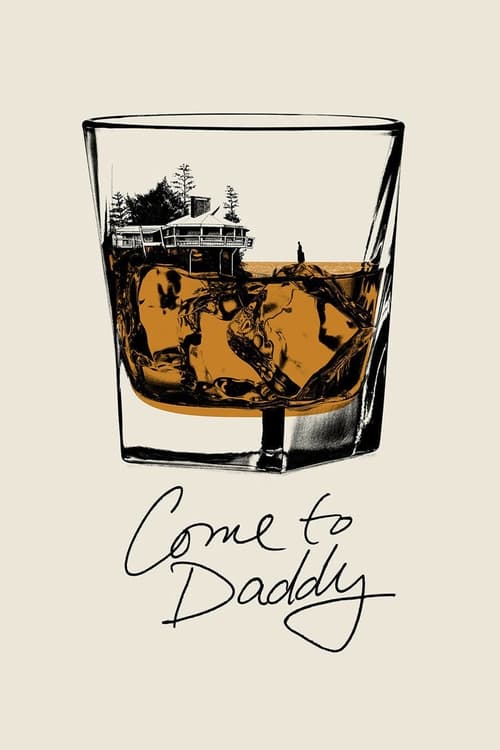
Come to Daddy (2019)
Directed by Ant Timpson
No — Come to Daddy is not woke, scoring 4 out of 100 on our wokeness meter.
Ant Timpson's Come to Daddy arrives from Tribeca with an 86 percent approval rating and a body count that renders such metrics decorative.
Consciousness Markers
The cast is predominantly white, with a handful of non-white actors (Madeleine Sami, Garfield Wilson, Simon Chin) in supporting roles that carry no commentary or thematic weight.
No LGBTQ+ characters, relationships, or themes appear anywhere in the film.
The film has no feminist agenda; female characters are peripheral, including a prostitute who functions as a plot device.
Race is never addressed or thematized; the story is entirely unconcerned with racial dynamics.
No environmental or climate themes are present in this coastal-cabin thriller.
While the protagonist is a privileged Beverly Hills musician funded by ransom money, the film makes no systemic critique of capitalism or wealth.
No body positivity themes; the film's violence is visceral and body-focused in a horror register, not a celebratory one.
Norval's suicide attempt and awkwardness are treated as character texture, not as a neurodivergence narrative or advocacy.
The film is a fictional genre piece with no historical subject matter to revise.
This is a lean, nasty black-comedy thriller that preaches nothing and delivers its themes through violence and absurdity.
Why it received this score
Ant Timpson's Come to Daddy arrives from Tribeca with an 86 percent approval rating and a body count that renders such metrics decorative. Elijah Wood plays Norval Greenwood, a wealthy Beverly Hills musician who travels to an Oregon coastal cabin to meet the father who abandoned him at five. What follows is not a reunion but a bait and switch: a meat cleaver, a heart attack, a corpse kept in the living room for want of morgue space, and a bunker beneath the floorboards holding the actual parent. Toby Harvard's screenplay treats this as comedy, which it is, in the way a bear trap is a solution to a foot problem.
The film is lean to the point of emaciation and has no interest in instructing anyone about anything. Race goes unmentioned. The supporting cast includes a few non-white faces in roles that carry no commentary, and the film lets them be. Women exist at the periphery, most memorably a sex worker who participates in a stabbing and then vanishes, a plot device in a film that regards all of its characters as plot devices. There is no environmental sermon, no critique of the ransom economy that funds Norval's comfortable life, no therapeutic vocabulary applied to his suicide attempt. His awkwardness is texture, not diagnosis.
That refusal is the film's discipline. It is nasty, funny, and brief, and it ends with a son lying beside a dying father by a lake, apologizing for something he could not have controlled. The moment lands without a line of moral instruction attached to it. We are left with a small, mean, well-made picture that trusts violence and absurdity to do the talking, and declines, with dignity, to tell us how to feel about any of it.
Analysis generated by our Consciousness Algorithm


Synopsis
After receiving a cryptic letter from his estranged father, Norval travels to his dad’s oceanfront home for what he hopes will be a positive experience. If only he’d known the dark truth about his old man beforehand.
Questions about Come to Daddy
Is Come to Daddy woke?
No — Come to Daddy is not woke, scoring 4 out of 100 on our wokeness meter. That earns it a verdict of Ultra Based.
Does Come to Daddy have any woke elements?
Very few. None of the 10 markers reaches 30, the level where a marker counts as present; the highest is Representation Casting at 10.
How does Come to Daddy compare to other 2019 movies?
It ranks #244 of the 284 films from 2019 we've scored; their average is 22. The wokest is Black Christmas (79).
How is the Woke Score calculated?
An AI-assisted process researches the film and its reception, scores it 0–100 on ten markers, then combines those into one 0–100 Woke Score. It measures a specific set of 2020s cultural themes, not film quality.