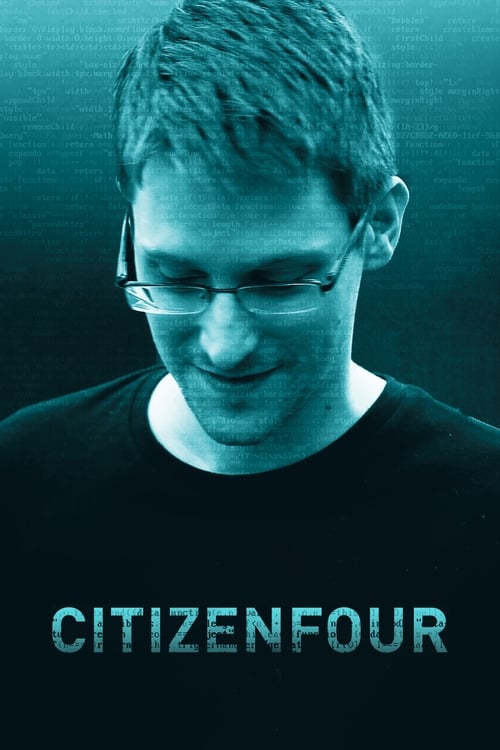
Citizenfour (2014)
Directed by Laura Poitras
No — Citizenfour is not woke, scoring 7 out of 100 on our wokeness meter.
Citizenfour arrives with the gravity of a sealed envelope, which is roughly how it was made.
Consciousness Markers
The film conveys a strong political message about surveillance, but it is presented in an observational, thriller-like style rather than a direct lecture.
Directed by a woman, Laura Poitras, who is also a central figure, but the film does not engage with feminist themes or gender politics.
The film critiques government surveillance and corporate contractors like Booz Allen Hamilton, but its focus is on civil liberties rather than economic inequality or anti-capitalism.
The film is a documentary featuring the actual subjects of the events; there is no casting process or intentional representation casting.
No LGBTQ+ themes or characters are explored.
The film does not address racial issues or racial consciousness.
No climate change or environmental themes.
No body positivity themes.
No neurodivergence themes.
It is an observational documentary about recent events, not a revisionist historical narrative.
Why it received this score
Citizenfour arrives with the gravity of a sealed envelope, which is roughly how it was made. Laura Poitras filmed Edward Snowden in a Hong Kong hotel room over eight days in June 2013, and the resulting documentary is a procedural thriller assembled from hotel carpet, encrypted drives, and the stillness of a man who has already decided his life is over. It won the Academy Award for Best Documentary Feature, and it earned that. The film is based on real events, which spares us the customary disclaimers.
For a work so freighted with political content, the inventory of contemporary social consciousness is remarkably bare. The picture concerns state surveillance and the civil liberties it erodes. It does not concern economic inequality, though Booz Allen Hamilton is named and the contractor economy receives a sidelong glance. It does not concern race, gender politics, or the body. Poitras is a woman and a central presence on camera, and the closing crawl credits free software projects without which the film would not exist, which may be the most sincere act of political commitment in the entire runtime. None of this amounts to an agenda beyond the obvious one: the government is watching, and someone should say so.
That message is delivered with restraint. Snowden explains, Greenwald argues, Binney testifies, and the camera stays in the room. No montage instructs us how to feel. The urgency is structural, built from the knowledge that men in Virginia are reading the email of everyone in the theater. We are lectured, but quietly, by a man in a button-down shirt who seems genuinely sorry to be doing it. This is a document of an event, not a sermon about a society. It is, in the end, admirably narrow.
Analysis generated by our Consciousness Algorithm


Synopsis
In June 2013, Laura Poitras and reporter Glenn Greenwald flew to Hong Kong for the first of many meetings with Edward Snowden. She brought her camera with her.
Questions about Citizenfour
Is Citizenfour woke?
No — Citizenfour is not woke, scoring 7 out of 100 on our wokeness meter. That earns it a verdict of Ultra Based.
Does Citizenfour have any woke elements?
Very few. None of the 10 markers reaches 30, the level where a marker counts as present; the highest is Lecture Energy at 20.
How does Citizenfour compare to other 2014 movies?
It ranks #173 of the 303 films from 2014 we've scored; their average is 13. The wokest is Selma (68).
How is the Woke Score calculated?
An AI-assisted process researches the film and its reception, scores it 0–100 on ten markers, then combines those into one 0–100 Woke Score. It measures a specific set of 2020s cultural themes, not film quality.