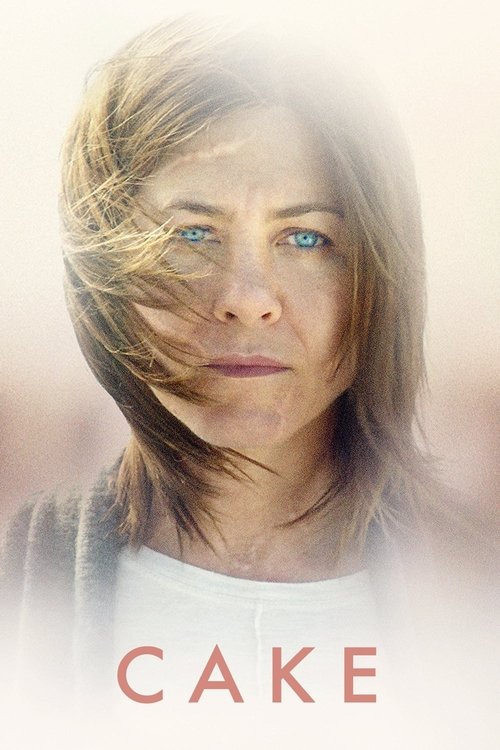
Cake (2014)
Directed by Daniel Barnz
No — Cake is not woke, scoring 6 out of 100 on our wokeness meter.
There is a scene in which Jennifer Aniston lies on a railroad track and conducts a conversation with a dead woman, and the film treats this as neither revelation nor breakdown, merely weather.
Consciousness Markers
Adriana Barraza, a Mexican actress, plays Silvana, the housekeeper and caretaker, a substantial supporting role, but the casting reads as natural rather than a deliberate diversity statement.
The film centers on a woman's grief, addiction, and physical pain, but it is a character study rather than a work advancing a feminist thesis.
The film is a somber character drama that observes rather than preaches, offering little in the way of moral instruction to the audience.
No LGBTQ+ characters, themes, or subtext appear anywhere in the film.
Race is not a subject of the film; the Latina housekeeper role carries no commentary on racial dynamics.
No environmental or climate themes are present.
The film contains no critique of capitalism, wealth, or class structures.
Chronic pain and physical decline are depicted, but there is no body-positivity messaging or celebration of diverse body types.
No neurodivergent characters or themes are explored; the protagonist's condition is chronic physical pain and addiction.
The film is a contemporary fictional drama with no historical revisionism.
Why it received this score
There is a scene in which Jennifer Aniston lies on a railroad track and conducts a conversation with a dead woman, and the film treats this as neither revelation nor breakdown, merely weather. Cake is a study of grief, chronic pain, and the particular stubbornness of a person who has decided that feeling nothing is preferable to feeling this. Claire Bennett lost a son in a car accident, inherited a body that will not cooperate, and now spends her days abusing Percocet and her nights hallucinating a support-group acquaintance who took her own life. The film observes all of this with a steady, unblinking camera and a marked reluctance to explain anything. It is somber work, and it is largely uninterested in telling us what to think about it.
Adriana Barraza's Silvana, the housekeeper who drives, feeds, and scolds her employer into something resembling survival, is the film's warmest presence, and the casting carries a quiet, unremarked naturalism. The story belongs to a woman, and her pain, addiction, and slow crawl back toward the living are rendered without a thesis attached. This is a character study, not a position paper. Race, class, sexuality, and the environment are simply not subjects the screenplay wishes to raise, and it raises none of them. The film's moral instruction, such as it is, amounts to a wind chime hung in a tree and a woman finally sitting upright in the passenger seat.
What we get instead is a performance of considerable physical commitment and a screenplay content to let silences do the arguing. The result is a modest, melancholy piece that premiered at Toronto, earned its lead a Golden Globe nomination, and then quietly vanished from theaters. It preaches nothing, demands nothing, and asks only that we sit with a person who is not yet ready to be well. There are worse ways to spend an evening, though not many livelier ones.
Analysis generated by our Consciousness Algorithm


Synopsis
After having visions of a member of her support group who killed herself, a woman who also suffers with chronic pain seeks out the widower of the suicide.
Questions about Cake
Is Cake woke?
No — Cake is not woke, scoring 6 out of 100 on our wokeness meter. That earns it a verdict of Ultra Based.
Does Cake have any woke elements?
Very few. None of the 10 markers reaches 30, the level where a marker counts as present; the highest is Representation Casting at 15.
How does Cake compare to other 2014 movies?
It ranks #185 of the 303 films from 2014 we've scored; their average is 13. The wokest is Selma (68).
How is the Woke Score calculated?
An AI-assisted process researches the film and its reception, scores it 0–100 on ten markers, then combines those into one 0–100 Woke Score. It measures a specific set of 2020s cultural themes, not film quality.