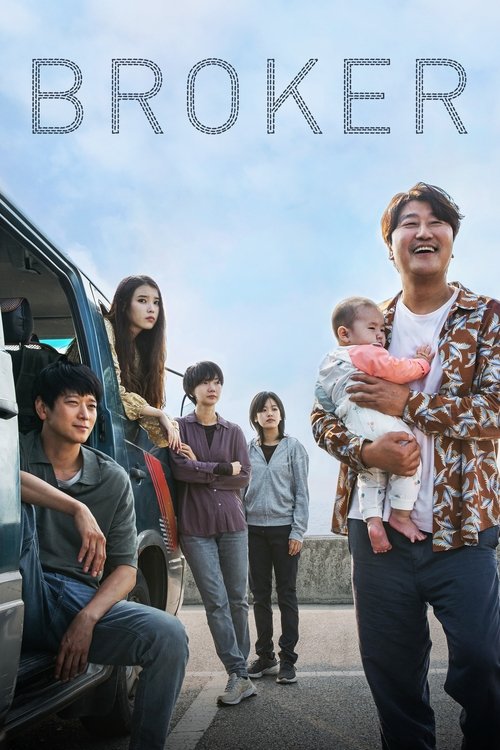
Broker (2022)
Directed by Hirokazu Kore-eda
No — Broker is not woke, scoring 16 out of 100 on our wokeness meter.
Broker arrives from Hirokazu Kore-eda, a director who has spent two decades building small, patient films about people who form families out of scrap and necessity.
Consciousness Markers
Centers on a single mother and a female detective, touching on societal stigma around single motherhood, but without an explicit feminist thesis.
The illegal baby-selling scheme offers mild critique of commodifying children, but the film is more interested in ethics and unconventional family than systemic capitalism.
Kore-eda's humanist style asks questions rather than preaching; minimal lecture energy.
Entirely Korean cast in a Korean-set story; no deliberate diversity casting or commentary on representation.
No LGBTQ+ characters or themes appear in the film.
No engagement with racial identity or racial justice themes.
No climate or environmental themes.
No body positivity themes or messaging.
No neurodivergence representation or themes.
Fictional contemporary story with no historical revisionism.
Why it received this score
Broker arrives from Hirokazu Kore-eda, a director who has spent two decades building small, patient films about people who form families out of scrap and necessity. Here he moves to South Korea and assembles a cast of Korean actors for a Korean story, which is to say the film's representation is entirely internal to its setting and makes no case for itself on that front. Song Kang-ho plays a church volunteer who skims abandoned infants from a baby box and sells them on the adoption black market. A young mother (Lee Ji-eun) decides to tag along. A pair of detectives follows. A child from an orphanage stows away in the van. The van becomes a family, which is the only argument the film is interested in making.
The film's social consciousness is gentle and specific. It notices the stigma that attaches to single mothers and lets a female detective carry the moral weight of the investigation, though it never converts this into a thesis. The baby-selling operation gestures at the commodification of children, and the people running it are broke and sympathetic, so the critique lands softly. Nothing here is shouted. Nobody is lectured. Kore-eda asks questions and then lets the questions sit, which is a rare and slightly unfashionable approach.
The result is warm, unhurried, and largely free of the sermonizing that has become standard in contemporary drama. Whether that counts as a virtue depends on what you want from a film about stolen babies. It won the Ecumenical Jury prize at Cannes and made Song Kang-ho the first Korean actor to take Best Actor there, and the whole thing ends with a laundry van driving away while a mother runs toward her son. It is a good film. It is not, by any measure available to this office, an ideological one.
Analysis generated by our Consciousness Algorithm


Synopsis
When a young mother reconsiders abandoning her baby, she discovers a scheme selling foundlings for adoption.
Questions about Broker
Is Broker woke?
No — Broker is not woke, scoring 16 out of 100 on our wokeness meter. That earns it a verdict of Ultra Based.
Does Broker have any woke elements?
Very few. None of the 10 markers reaches 30, the level where a marker counts as present; the highest is Feminist Agenda at 25.
How does Broker compare to other 2022 movies?
It ranks #108 of the 223 films from 2022 we've scored; their average is 22. The wokest is Bros (92).
How is the Woke Score calculated?
An AI-assisted process researches the film and its reception, scores it 0–100 on ten markers, then combines those into one 0–100 Woke Score. It measures a specific set of 2020s cultural themes, not film quality.