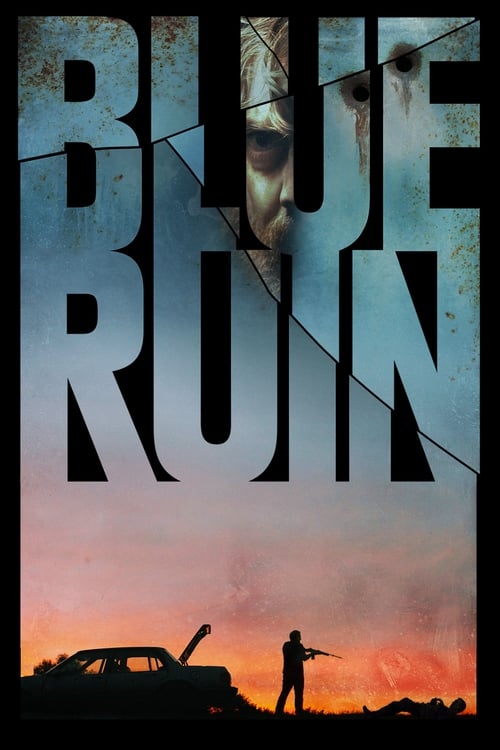
Blue Ruin (2014)
Directed by Jeremy Saulnier
No — Blue Ruin is not woke, scoring 0 out of 100 on our wokeness meter.
Jeremy Saulnier's Blue Ruin arrives with the grim economy of a man who has decided that exposition is a luxury he cannot afford.
Consciousness Markers
The cast is overwhelmingly white and the film makes no effort toward inclusive or representative casting.
There are no LGBTQ+ characters, themes, or subtext in the film.
Female characters exist mainly as family members in a revenge plot, with no feminist agenda or commentary.
The film does not engage with race, racism, or racial identity in any meaningful way.
There is no environmental or climate-related theme in the film.
The film contains no critique of capitalism, wealth inequality, or class struggle.
There is no body-positivity theme or messaging.
There is no exploration or representation of neurodivergence.
The film is a fictional revenge thriller and does not revise or reinterpret historical events.
The film is a stripped-down genre exercise and does not lecture the audience on social or political issues.
Why it received this score
Jeremy Saulnier's Blue Ruin arrives with the grim economy of a man who has decided that exposition is a luxury he cannot afford. Dwight Evans lives out of a rusted Pontiac, learns that his parents' killer is leaving prison, and proceeds to botch a revenge so thoroughly that we spend the remaining hour watching a wounded amateur bleed across Virginia. The film is named after the car. That is the level of poetry on offer, and it works. Mr. Saulnier has spoken of grounding a revenge story in mundane, unglamorous mechanics, and the result is a thriller that treats violence as an administrative burden, complete with car trouble, hospital visits, and a crossbow bolt that must be sawed off in a field.
From a cultural standpoint, the picture is a desert. Its cast is white, its concerns are familial, and its politics are the politics of a bolt to the thigh. No character pauses to explain the moral architecture of the world. No subplot gestures toward a broader social grievance, and the film's lone thematic ambition is the revelation that everyone's parents behaved badly. There is no lecture here. There is no messaging. There is a man in a trunk, and there is a man who has forgotten his keys.
We are left to classify a film that resists classification beyond its genre, and there is something almost restful about that. It is a Kickstarter-funded neo-noir that won a prize at Cannes and then earned under a million dollars worldwide, which is its own quiet commentary on the economics of American independent cinema, though the film itself advances no such argument. On the scale of modern social consciousness, Blue Ruin registers as a zero. It has nothing to say about representation, identity, climate, capital, or the body. It has something to say about how quickly a man bleeds out, and it says it without raising its voice.
Analysis generated by our Consciousness Algorithm


Synopsis
When the quiet life of a beach bum is upended by dreadful news, he sets off for his childhood home to carry out an act of vengeance. However, he proves an inept assassin and finds himself in a brutal fight to protect his estranged family.
Questions about Blue Ruin
Is Blue Ruin woke?
No — Blue Ruin is not woke, scoring 0 out of 100 on our wokeness meter. That earns it a verdict of Ultra Based.
Does Blue Ruin have any woke elements?
No. All 10 markers score zero.
How does Blue Ruin compare to other 2014 movies?
It ranks #271 of the 303 films from 2014 we've scored; their average is 13. The wokest is Selma (68).
How is the Woke Score calculated?
An AI-assisted process researches the film and its reception, scores it 0–100 on ten markers, then combines those into one 0–100 Woke Score. It measures a specific set of 2020s cultural themes, not film quality.