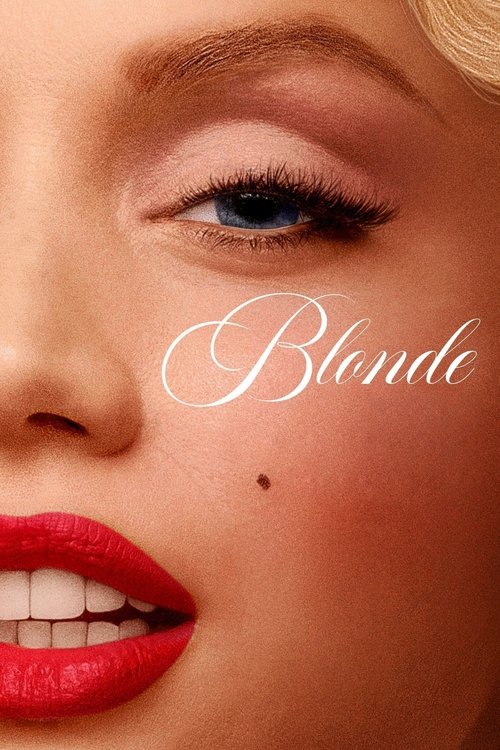
Blonde (2022)
Directed by Andrew Dominik
No — Blonde is not especially woke, scoring 38 out of 100 on our wokeness meter.
Andrew Dominik's Blonde is the rare prestige object built to offend nearly everyone, which the director announced in advance as an intention.
Consciousness Markers
Adapted from Joyce Carol Oates' controversial fictionalized novel, the film deliberately blurs fact and fiction, inventing a threesome, a JFK rape, and hallucinated abortions to reimagine a real person's documented life.
Cuban actress Ana de Armas was cast as the all-American icon Marilyn Monroe, a deliberate piece of nontraditional casting that drew considerable comment, though the film itself makes no textual point of it.
The film centers a woman's systematic abuse and exploitation by men and the studio machine, and Dominik framed Monroe as embodying 'all the injustices visited upon the feminine' — yet critics widely condemned the result as itself exploitative and misogynistic, muddying any clear feminist thesis.
The film critiques the Hollywood studio system as a machine that commodifies and devours a person, with the studio head Mr. Z raping her and the industry consuming her identity, but this is a showbiz-exploitation critique rather than a systemic economic one.
The film depicts Norma Jeane as a lover to both Cass Chaplin Jr. and Eddy Robinson Jr. simultaneously, giving a mild note of sexual fluidity, but queerness is not a thematic concern.
Dominik deliberately built the film as an 'avalanche of images' with very little dialogue and ambiguous morality, so it rarely stops to preach a message despite its heavy subject matter.
The film heavily depicts mental illness, trauma, and substance dependence, but frames them as psychological damage rather than through any neurodiversity-affirming lens.
The subject is a white Hollywood icon and the film engages no racial themes whatsoever.
No environmental or climate content appears in the film.
The film depicts the objectification of Monroe's body but offers no body-positivity or self-acceptance framing.
Why it received this score
Andrew Dominik's Blonde is the rare prestige object built to offend nearly everyone, which the director announced in advance as an intention. Working from Joyce Carol Oates' 2000 novel, he treats the historical Marilyn Monroe as raw material for a dream logic that invents a threesome, a presidential assault, and hallucinated abortions, then films them in shifting aspect ratios and alternating black and white. This is a biography that has quietly stopped being one. Norma Jeane's documented life becomes a mood board, and the audience sorts the archive from the invention alone, because the film will not help.
The stated concern is the machinery that consumed her: the studio head who rapes her, the agent who polices her, the husbands who hit her. Dominik has said she embodies every injustice visited upon the feminine, and the intent is legible. The execution is another matter. Critics found the camera doing what the men in the story do, lingering where it should look away, so the argument arrives pre-undermined. The Hollywood-as-commodifying-machine critique lands with some force, though it never becomes an argument about capital itself. Ana de Armas, a Cuban actress playing the all-American icon, supplies the film's only steady pulse; the choice drew comment, but the film makes no textual fuss over it. A brief arrangement with Cass Chaplin and Eddy Robinson gestures at fluidity and pursues nothing. The pill dependency and breakdown are rendered as damage, not as identity.
Where the film genuinely commits is to its own fictionality. It rewrites a documented life with the confidence of a fever, and that confidence is the most distinctive thing about it. Dominik built the piece as an avalanche of images with barely any dialogue, so it seldom pauses to instruct. There is no sermon, no tidy moral, no climate concern, no racial thesis, no self-acceptance framing for the body on display. What remains is a long, beautiful, unpleasant object that mistakes suffering for depth and calls it a portrait. We have seen this before, and repetition rarely improves it.
Analysis generated by our Consciousness Algorithm


Synopsis
From her volatile childhood as Norma Jeane, through her rise to stardom and romantic entanglements, this reimagined fictional portrait of Hollywood legend Marilyn Monroe blurs the lines of fact and fiction to explore the widening split between her public and private selves.
Questions about Blonde
Is Blonde woke?
No — Blonde is not especially woke, scoring 38 out of 100 on our wokeness meter. That earns it a verdict of Based.
Does Blonde have any woke elements?
4 of the 10 markers register at 30 or above, led by Revisionist History (65), Feminist Agenda (45) and Representation Casting (45). On Revisionist History: Adapted from Joyce Carol Oates' controversial fictionalized novel, the film deliberately blurs fact and fiction, inventing a threesome, a JFK rape, and hallucinated abortions to reimagine a real person's documented life.
How does Blonde compare to other 2022 movies?
It ranks #42 of the 223 films from 2022 we've scored; their average is 22. The wokest is Bros (92).
How is the Woke Score calculated?
An AI-assisted process researches the film and its reception, scores it 0–100 on ten markers, then combines those into one 0–100 Woke Score. It measures a specific set of 2020s cultural themes, not film quality.