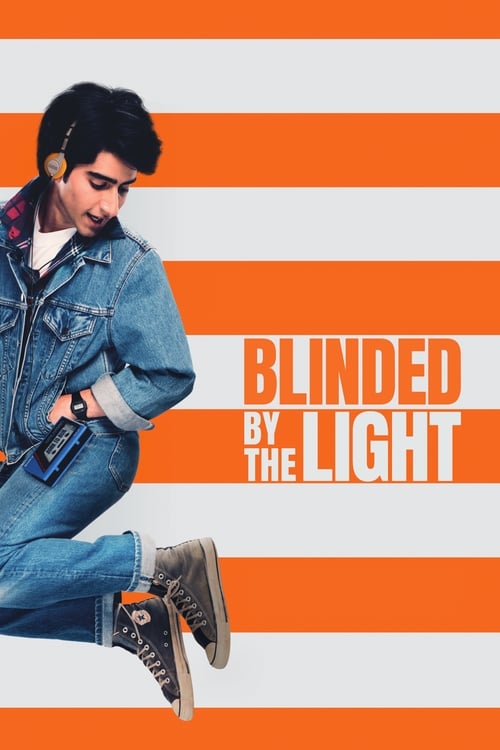
Blinded by the Light (2019)
Directed by Gurinder Chadha
Yes — Blinded by the Light is woke, scoring 60 out of 100 on our wokeness meter.
Blinded by the Light arrives in 1987 Luton, a town that Margaret Thatcher's economic weather has left damp and contracting.
Consciousness Markers
Racism, National Front violence, British Asian identity, and the immigrant experience are central and explicitly dramatized throughout.
The film centers a British-Pakistani Muslim family and community in 1980s Luton, with a predominantly South Asian cast and authentic cultural specificity.
Thatcher-era austerity, Vauxhall layoffs, and working-class economic struggle are present, but the critique is more humanist than explicitly anti-capitalist.
The film delivers earnest speeches about racism, family, and dreams, but critics noted it largely avoids a preachy or lecture-like tone.
A woman director and several strong female characters exist, but the film's central concerns are race, class, and father-son conflict rather than a feminist agenda.
There are no LGBTQ+ characters, themes, or subtext in the film.
The film contains no environmental or climate-change themes.
There is no body-positivity theme or related commentary in the film.
The film does not address neurodivergence or neurodiverse characters.
The film is based on a true story and depicts 1980s Britain, but it does not engage in revisionist historical reinterpretation.
Why it received this score
Blinded by the Light arrives in 1987 Luton, a town that Margaret Thatcher's economic weather has left damp and contracting. Gurinder Chadha directs a British-Pakistani teenager named Javed through the familiar corridors of a coming-of-age picture, and she fills those corridors with a predominantly South Asian cast and a specificity of place that does not apologize for itself. The National Front marches. A pig's head is nailed to a mosque. Javed's father, laid off after sixteen years at Vauxhall, sells his wife's dowry jewellery to fund a wedding. The film treats this material with an earnestness that occasionally tips into sermon, though most critics found the sermon tolerable, even charming.
The racial and class grievances here are not subtext. They are the text, printed on the front page of the local paper and recited in speeches about bridges and walls. Thatcher-era austerity lends the picture a faint economic complaint, though the anger aims at circumstance and dignity, not at capital as such. A woman directs, and several women hold the screen with some authority, but the emotional engine is a father and a son, and the film knows it.
What the film declines to do is instructive. There is no queer thread. There is no environmental grievance. Nobody discusses body image or neurodivergence, and the historical record is left largely unrevised. What remains is a modest, sincere picture about Springsteen, ambition, and the cost of leaving home, which is a great deal more than most August releases can manage. It wants to move us, and it mostly does, without demanding that we file a report afterward.
{"thematic_tags": ["true_story", "book_adaptation"]}
Analysis generated by our Consciousness Algorithm


Synopsis
In 1987, during the austere days of Thatcher’s Britain, a teenager learns to live life, understand his family, and find his own voice through the music of Bruce Springsteen.
Questions about Blinded by the Light
Is Blinded by the Light woke?
Yes — Blinded by the Light is woke, scoring 60 out of 100 on our wokeness meter. That earns it a verdict of Woke.
What makes Blinded by the Light woke?
4 of the 10 markers register at 30 or above, led by Racial Consciousness (85), Representation Casting (80) and Eat the Rich (40). On Racial Consciousness: Racism, National Front violence, British Asian identity, and the immigrant experience are central and explicitly dramatized throughout.
How does Blinded by the Light compare to other 2019 movies?
It ranks #15 of the 284 films from 2019 we've scored; their average is 22. The wokest is Black Christmas (79).
How is the Woke Score calculated?
An AI-assisted process researches the film and its reception, scores it 0–100 on ten markers, then combines those into one 0–100 Woke Score. It measures a specific set of 2020s cultural themes, not film quality.