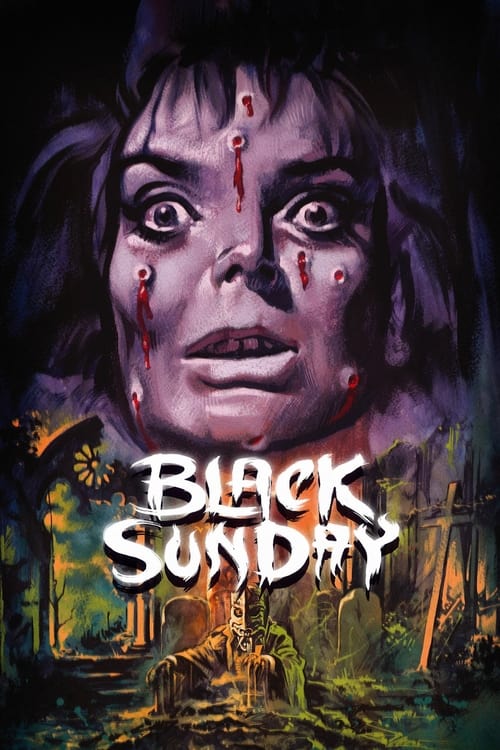
Black Sunday (1960)
Directed by Mario Bava
No — Black Sunday is not woke, scoring 0 out of 100 on our wokeness meter.
Black Sunday arrives from 1960 carrying a bronze mask lined with spikes, a vengeful witch, and no discernible wish to improve anyone.
Consciousness Markers
The cast is entirely white European (Italian and British leads), with no diverse or inclusive casting choices made or implied.
No LGBTQ+ characters, themes, or subtext appear in this gothic witch-vampire tale.
Barbara Steele's dual role as witch and victim is a genre convention of good-versus-evil doubling, not a feminist statement.
No engagement with racial identity, racism, or racial justice whatsoever.
No environmental or climate themes present.
No critique of capitalism, class, or wealth appears in the film.
No body-positivity themes; the film trades on conventional gothic beauty and horror imagery.
No depiction or discussion of neurodivergence.
The film is a loose adaptation of Gogol's 'Viy' set in a fictionalized Moldavia, with no revisionist reframing of real history.
A purely atmospheric horror film with no didactic messaging or moral lecturing to the audience.
Why it received this score
Black Sunday arrives from 1960 carrying a bronze mask lined with spikes, a vengeful witch, and no discernible wish to improve anyone. Mario Bava's official directorial debut takes Gogol's Viy and discards nearly all of it, a fact the director cheerfully conceded. What remains is fog, candlelight, and Barbara Steele playing both the undead Asa and her blameless descendant Katia. The film intends to unsettle, and it does, with a straight face and no sermon attached. The story concerns a witch executed in old Moldavia who returns two centuries later to claim a lookalike descendant, and it moves at the pace of a bedtime story told well.
The cast is entirely white European, assembled because Bava wanted British leads to lend the production the gravity of Hammer's Dracula. No inclusive impulse guided that decision, only market calculation. Steele's double role reads as the old good-and-evil doubling familiar to Italian spectacle, not a statement about women. Absent are the concerns that animate a later era of horror: no engagement with race, no environmental anxiety, no critique of wealth, no revision of the historical record. The Moldavian setting is invented anyway.
This is a film of sensation. A bat startles a doctor, blood drips onto a corpse, a nail goes through an eye, and the whole enterprise proceeds without a single moral to press upon the audience. That restraint, whether born of ambition or of a 1960 Italian production schedule, is its own quiet virtue. We are left with a beautiful, nasty piece of craftsmanship that respects the viewer enough to simply frighten them. In an age of cinema that lectures, this one just screams.
Analysis generated by our Consciousness Algorithm


Synopsis
A vengeful witch, Asa Vajda, and her fiendish servant, Igor Jauvitch, return from the grave and begin a bloody campaign to possess the body of the witch's beautiful look-alike descendant: Katia. Only a handsome doctor with the help of family members stand in her way.
Questions about Black Sunday
Is Black Sunday woke?
No — Black Sunday is not woke, scoring 0 out of 100 on our wokeness meter. That earns it a verdict of Ultra Based.
Does Black Sunday have any woke elements?
No. All 10 markers score zero.
How does Black Sunday compare to other 1960 movies?
It ranks #12 of the 17 films from 1960 we've scored; their average is 7. The wokest is Rocco and His Brothers (29).
How is the Woke Score calculated?
An AI-assisted process researches the film and its reception, scores it 0–100 on ten markers, then combines those into one 0–100 Woke Score. It measures a specific set of 2020s cultural themes, not film quality.