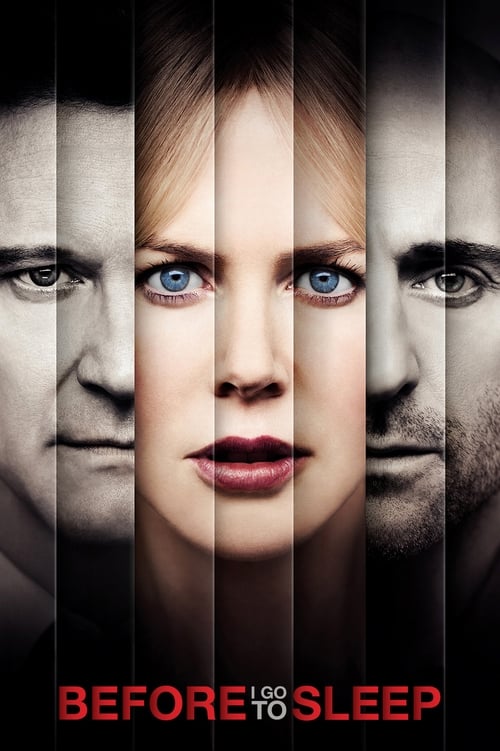
Before I Go to Sleep (2014)
Directed by Rowan Joffé
No — Before I Go to Sleep is not woke, scoring 4 out of 100 on our wokeness meter.
Before I Go to Sleep arrives from 2014 with the quiet confidence of a film that knows exactly what it is and has no intention of being anything more.
Consciousness Markers
The film centers on a woman unraveling the deception of the men around her and fighting for autonomy, but it plays this as genre mechanics rather than a feminist thesis.
The cast is overwhelmingly white British and American leads (Kidman, Firth, Strong), with only incidental minority background players and no conscious diversity casting.
No LGBTQ+ characters, relationships, or themes appear anywhere in the narrative.
The story has no engagement with race, racial identity, or racial justice whatsoever.
No environmental themes or climate commentary are present.
There is no critique of capitalism, wealth, or class structures in the film.
Body image, size, or fat-acceptance themes are entirely absent.
The protagonist's amnesia is a traumatic brain-injury plot device, not an exploration of neurodivergent identity or neurodiversity advocacy.
The film is a fictional psychological thriller with no historical revisionism or reframing of real events.
It is a commercial mystery-thriller that aims to unsettle rather than instruct; there is no didactic messaging or social sermonizing.
Why it received this score
Before I Go to Sleep arrives from 2014 with the quiet confidence of a film that knows exactly what it is and has no intention of being anything more. Christine Lucas wakes each morning beside a man she does not recognize, and by evening she has usually learned something terrible about him. The machinery is familiar: a video diary, a neuropsychologist with boundary problems, a red-haired friend who vanished, a son reported dead. Rowan Joffé directs with polished restraint, and Nicole Kidman carries the whole apparatus on her shoulders with a weariness that reads as genuine. Critics at the time compared it unfavorably to Memento and audiences handed it a C+. That verdict holds up. It is a competent thriller and little else.
The film's cultural footprint is remarkably small. The cast is almost entirely white British and American, with minority performers appearing only in the background where the plot requires a nurse or a passerby, and no effort is made to construct a more representative London. There are no queer characters, no engagement with race or class, no environmental conscience, no interest in body image. Wealth exists as nice furniture. The story is fiction and treats it as such, with no historical claims to revise and no social thesis to advance.
Where the film brushes against something larger is in Christine's slow realization that the men around her have been arranging her reality for her convenience. That is a genuine theme, and it is handled as a plot turn, not an argument. She fights for autonomy because the script requires a third act, not because the film has anything to say about women. There is no sermon here, no lecture, no moment where the audience is instructed in how to feel. It unsettles, then it ends. A modest vintage, best served cold and forgotten by morning.
Analysis generated by our Consciousness Algorithm


Synopsis
A woman wakes up every day, remembering nothing as a result of a traumatic accident in her past. One day, new terrifying truths emerge that force her to question everyone around her.
Questions about Before I Go to Sleep
Is Before I Go to Sleep woke?
No — Before I Go to Sleep is not woke, scoring 4 out of 100 on our wokeness meter. That earns it a verdict of Ultra Based.
Does Before I Go to Sleep have any woke elements?
Very few. None of the 10 markers reaches 30, the level where a marker counts as present; the highest is Feminist Agenda at 10.
How does Before I Go to Sleep compare to other 2014 movies?
It ranks #224 of the 303 films from 2014 we've scored; their average is 13. The wokest is Selma (68).
How is the Woke Score calculated?
An AI-assisted process researches the film and its reception, scores it 0–100 on ten markers, then combines those into one 0–100 Woke Score. It measures a specific set of 2020s cultural themes, not film quality.