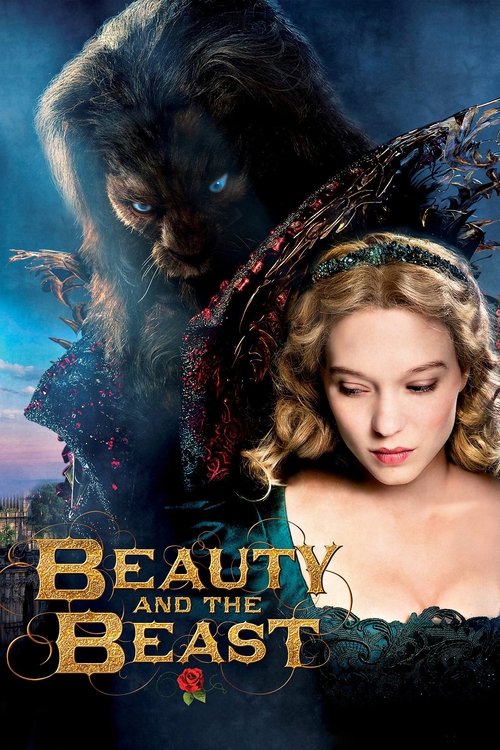
Beauty and the Beast (2014)
Directed by Christophe Gans
No — Beauty and the Beast is not woke, scoring 7 out of 100 on our wokeness meter.
Christophe Gans approaches the oldest story in the French cupboard with the reverence of a man restoring a cathedral.
Consciousness Markers
The central arc of repugnance turning to affection for a 'hideous creature' gestures at loving beyond appearance, though it is the classic inner-beauty trope rather than modern body-positivity advocacy.
The merchant's bankruptcy, the debt to the gangster Perducas, and the spoiled sisters' greed for expensive goods offer a mild critique of materialism, but it is incidental to the romance.
Belle is compassionate and volunteers to take her father's place, but this is the inherited fairy-tale dynamic rather than a modern feminist statement; she remains largely a romantic object.
A French/European production with a predominantly white cast (Seydoux, Cassel); no conscious diversity-casting agenda is evident in the fairy-tale ensemble.
The Nymph of the Forest and God of the Forest give the tale a nature-vengeance backdrop, but this is mythic fairy-tale material, not a climate crusade.
The film is a lush romantic spectacle that tells its story without preaching or moralizing to the audience.
No LGBTQ+ characters, themes, or subtext appear anywhere in this traditional romantic fantasy.
The film engages no racial themes, commentary, or consciousness whatsoever.
No neurodivergent characters or themes are present.
The film is a fantasy fairy tale with no historical subject matter to revise.
Why it received this score
Christophe Gans approaches the oldest story in the French cupboard with the reverence of a man restoring a cathedral. His Beauty and the Beast is a thirty-five million euro exercise in velvet and candlelight, and it tells the tale almost exactly as Gabrielle-Suzanne Barbot de Villeneuve left it. A bankrupt merchant. A debt to a gangster named Perducas. Two spoiled daughters demanding silks, one good daughter asking only for a rose. The materialism gets a gentle scuffing, since the sisters' greed and the merchant's ruin set the plot in motion, but the film has no interest in pressing the point. It is furniture. Pretty furniture.
Lea Seydoux's Belle volunteers for her father's captivity, which is the fairy tale's own arithmetic and not a manifesto. She spends much of the runtime being looked at and admired, and the film never grants her an interior life beyond patience. The romance rests on the ancient proposition that affection can grow where revulsion once lived, which is the inner-beauty mechanism as it has always operated. We are asked to love the beast for his soul. The film extends no such invitation to anyone else's body. The woodland mythology, a Nymph of the Forest and her vengeful father, gives the curse a leafy backdrop, though it works as folklore and spectacle, not as an environmental argument.
The result is a lavish, oddly inert pageant that has been reviewed more harshly than it deserves and praised more warmly than it earns. It preaches nothing. It represents no one in particular. Its cast is European and pale, its themes are courtship and forgiveness, and its moral instruction goes no further than the usual note about seeing past a hideous face. For the classification desk, this is a clean specimen. A traditional romantic fantasy, made in 2014, behaving exactly as a traditional romantic fantasy should. The fatigue sets in early, and it does not lift.
Analysis generated by our Consciousness Algorithm


Synopsis
Forced to face the cruel side of life, a devastated, bankrupt merchant chances upon the enchanted castle of a hideous creature, the mere sight of it chills the bone to the marrow. There, a fate worse than death awaits the poor father-of-six, who, after plucking a sweet-scented rose from the repulsive master's verdant garden, must do the impossible: permit his compassionate daughter, Belle, to take his place and pay for the sins of her parent. Now, an impenetrable mystery shrouds the haunted mansion, and, as repugnance gradually turns into affection, only true love could break the spell.
Questions about Beauty and the Beast
Is Beauty and the Beast woke?
No — Beauty and the Beast is not woke, scoring 7 out of 100 on our wokeness meter. That earns it a verdict of Ultra Based.
Does Beauty and the Beast have any woke elements?
Very few. None of the 10 markers reaches 30, the level where a marker counts as present; the highest is Body Positivity at 15.
How does Beauty and the Beast compare to other 2014 movies?
It ranks #173 of the 303 films from 2014 we've scored; their average is 13. The wokest is Selma (68).
How is the Woke Score calculated?
An AI-assisted process researches the film and its reception, scores it 0–100 on ten markers, then combines those into one 0–100 Woke Score. It measures a specific set of 2020s cultural themes, not film quality.