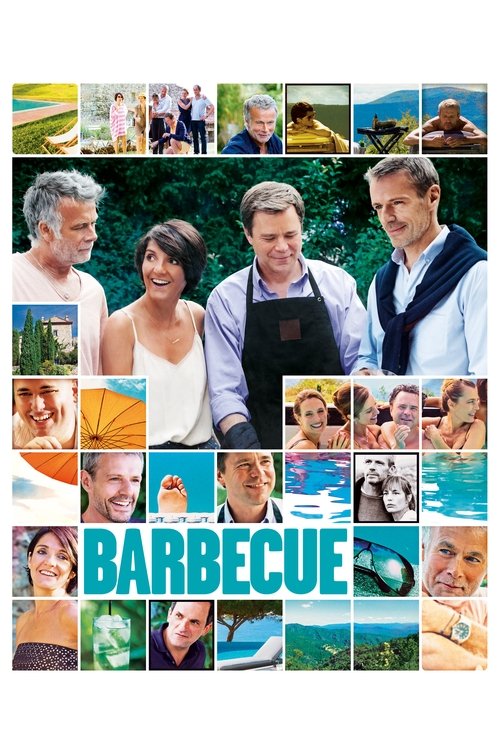
Barbecue (2014)
Directed by Eric Lavaine
No — Barbecue is not woke, scoring 0 out of 100 on our wokeness meter.
"Barbecue" arrives from France in 2014 with the confidence of a film that knows exactly what it is and has no intention of being anything else.
Consciousness Markers
The cast is an entirely white French ensemble, with no evident diverse or inclusive casting agenda.
There are no LGBTQ+ characters, themes, or subplots in the film.
Female characters are present, but the film does not advance a feminist agenda or critique gender dynamics.
The film does not engage with race, racial identity, or racial justice themes.
There is no climate change or environmental messaging in the story.
The bourgeois setting is comic backdrop rather than a critique of capitalism or wealth.
The protagonist's health scare and weight-watching are plot devices, not body-positivity advocacy.
No neurodivergent characters or themes are present.
The film is a contemporary comedy with no historical revisionism.
The tone is light ensemble comedy, with no preachy or didactic messaging.
Why it received this score
"Barbecue" arrives from France in 2014 with the confidence of a film that knows exactly what it is and has no intention of being anything else. Antoine Chevalier, played by Lambert Wilson, has spent fifty years watching his weight, his health, and his temper, and then his heart stops cooperating anyway. He resolves to let loose. That is the premise, and the film pursues it through a weekend of bourgeois friends, grilled meat, and the quiet disappointments of middle age. The Guardian found it boringly white-bread. The New York Times found it utterly unremarkable. Both assessments are correct, and neither is an insult the film bothers to deflect.
What interests us here is the absence. The ensemble is French, white, and comfortable, and nobody in the frame seems troubled by this arrangement. There is a health scare, and there is weight-watching, but these function as plot mechanics, the engine of a midlife crisis, not as an argument about bodies or wellness or anything else. Female characters bicker and reconcile, and the film lets them, without ever reaching for a thesis about gender. Money sits around the table the way it sits around any affluent dinner party, as furniture. No character lectures. Nobody is redeemed by a lesson. The camera simply watches adults behave badly and then go home.
We classify "Barbecue" as a clean slate, a specimen so free of contemporary cultural instruction that it reads almost as an artifact from another era, which, at eleven years old, it more or less is. It is not a good film. It is not a bad one either. It is a French comedy about a man who nearly dies and decides to eat more, and it asks nothing of us beyond a shrug and a laugh.
Analysis generated by our Consciousness Algorithm

Synopsis
On his 50th birthday, a man who's been watching his weight, health and temper all his life suffers a heart attack. He's been doing everything he was told he should do and it still didn't help. He decides to turn the page and let loose.
Questions about Barbecue
Is Barbecue woke?
No — Barbecue is not woke, scoring 0 out of 100 on our wokeness meter. That earns it a verdict of Ultra Based.
Does Barbecue have any woke elements?
No. All 10 markers score zero.
How does Barbecue compare to other 2014 movies?
It ranks #271 of the 303 films from 2014 we've scored; their average is 13. The wokest is Selma (68).
How is the Woke Score calculated?
An AI-assisted process researches the film and its reception, scores it 0–100 on ten markers, then combines those into one 0–100 Woke Score. It measures a specific set of 2020s cultural themes, not film quality.