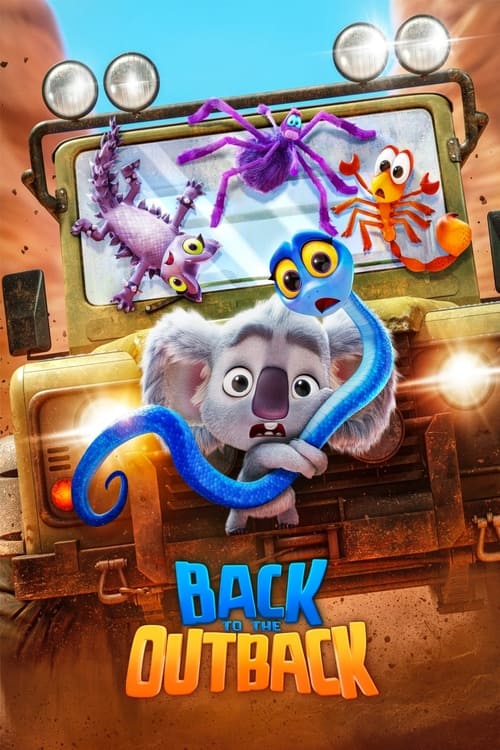
Back to the Outback (2021)
Directed by Clare Knight
No — Back to the Outback is not especially woke, scoring 35 out of 100 on our wokeness meter.
This animated excursion into the Australian interior presents a peculiar blend of mild social consciousness and predictable adventure tropes.
Consciousness Markers
The film's central premise — 'ugly' and feared creatures forming the Ugly Secret Society and finding acceptance — is a sustained self-acceptance and appearance-positivity message, reinforced by the song 'Beautifully Ugly.'
The voice cast includes Aboriginal Australian actors Miranda Tapsell and Jack Charles, Māori actress Rachel House, and Mexican actress Aislinn Derbez, and the film features an Aboriginal girl who helps the animals escape.
Aboriginal Australian representation is present via the girl who aids the escape and Aboriginal cast members, and the film's acceptance theme lightly touches on not being judged for who you are.
The acceptance-and-don't-judge-by-appearances message is delivered fairly gently through the plot and songs rather than heavy-handed speeches.
The protagonist Maddie is a female snake, Zoe is described as smart and self-assured, and Jackie is a maternal leader who founded the Ugly Secret Society, though no explicit feminist argument is made.
Pretty Boy's fall from celebrity status and replacement by Giggles the quokka offer mild satire of fame and popularity culture, but no economic critique.
No LGBTQ+ characters, relationships, or themes appear anywhere in the film.
There is no environmental or climate-change messaging in the film.
No neurodivergent characters or themes are depicted; Nigel's timidity is a personality trait, not a neurodivergence narrative.
The film does not engage with or revise historical events.
Why it received this score
This animated excursion into the Australian interior presents a peculiar blend of mild social consciousness and predictable adventure tropes. The central conflict involves a collection of feared creatures escaping the rigid scrutiny of a modern zoo environment. The film's narrative hinges upon the acceptance of monstrous appearances, a theme that achieves a respectable, if gentle, degree of cultural awareness. We find that the premise of the Ugly Secret Society serves as a platform for a sustained message of self-acceptance and appearance-positivity. This thematic focus is the film's primary strength, managing to convey its message without descending into truly heavy-handed sermonizing.
The representation of Australian culture and its inhabitants receives a cautious nod. The inclusion of Indigenous actors and a supporting human character aids the film's regional consciousness, though it does not push the boundaries of deeper societal critique. The progressive sensibilities present are best categorized as surface level. While the protagonists demonstrate resilience, the film stops short of making any genuine inroads into complex social dynamics, failing to explore critical areas such as economic disparity or systemic marginalization. The limited scope of the story keeps the ideological concerns neatly contained within the boundaries of a family adventure.
We are left with a product that is competent in its execution but ultimately operates within established parameters. The attempts at feminist or queer exploration remain strictly zero. The film is a well-animated piece of escapism that explores the idea that creatures are not defined by public perception, or by their frightening anatomy. It is a low-stakes exercise in cultural affirmation, and in that regard, it fulfills its specific, gentle mandate.
Analysis generated by our Consciousness Algorithm
Part of


Synopsis
Tired of being locked in a reptile house where humans gawk at them like they are monsters, a ragtag group of Australia’s deadliest creatures plot an escape from their zoo to the Outback, a place where they’ll fit in without being judged.
Questions about Back to the Outback
Is Back to the Outback woke?
No — Back to the Outback is not especially woke, scoring 35 out of 100 on our wokeness meter. That earns it a verdict of Based.
Does Back to the Outback have any woke elements?
4 of the 10 markers register at 30 or above, led by Body Positivity (60), Representation Casting (40) and Lecture Energy (30). On Body Positivity: The film's central premise — 'ugly' and feared creatures forming the Ugly Secret Society and finding acceptance — is a sustained self-acceptance and appearance-positivity message, reinforced by the song 'Beautifully Ugly.'
How does Back to the Outback compare to other 2021 movies?
It ranks #57 of the 242 films from 2021 we've scored; their average is 23. The wokest is The Forever Purge (83).
How is the Woke Score calculated?
An AI-assisted process researches the film and its reception, scores it 0–100 on ten markers, then combines those into one 0–100 Woke Score. It measures a specific set of 2020s cultural themes, not film quality.