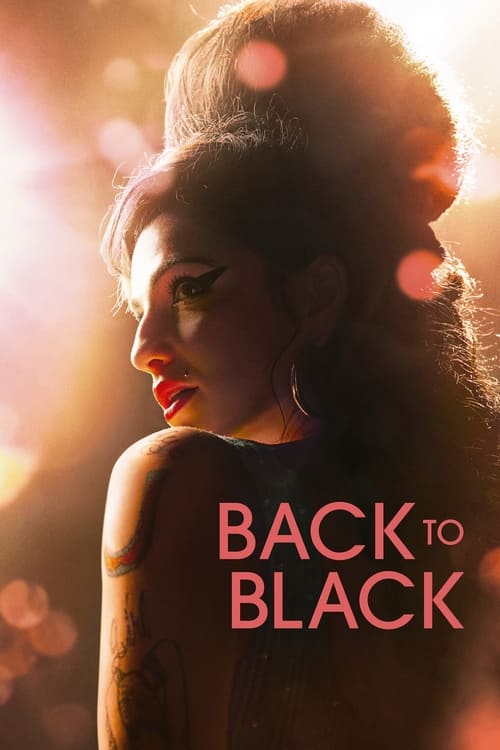
Back to Black (2024)
Directed by Sam Taylor-Johnson
No — Back to Black is not woke, scoring 9 out of 100 on our wokeness meter.
Back to Black arrives as the latest attempt to render Amy Winehouse in amber, tracing her from Camden demo tapes through the album that made her a global fixture and, eventually, a cautionary one.
Consciousness Markers
A female director and a female-centric story about an artist asserting creative control offer mild feminist resonance, but the film does not advance an explicit feminist agenda.
The film carries a sympathetic message about fame, addiction, and media cruelty, but it is delivered through drama rather than direct preaching.
The film centers a Jewish woman and casts a Jewish actress in the lead, but the ensemble is otherwise predominantly white and does not reflect a deliberate modern diversity push.
The music industry and tabloid culture are portrayed as exploitative, but the critique remains personal rather than a systemic anti-capitalist argument.
No LGBTQ+ characters, relationships, or themes are present in the narrative.
The film does not engage with racial identity, systemic racism, or racial justice themes.
There is no environmental or climate-related content in the film.
The film depicts Amy Winehouse's bulimia as a tragic personal struggle, not as a body-positive or fat-acceptance statement.
Addiction and mental illness are present as plot elements, but neurodivergence as a modern identity category is not explored or represented.
The film is a straightforward biopic based on real events and does not reinterpret history through a contemporary progressive lens.
Why it received this score
Back to Black arrives as the latest attempt to render Amy Winehouse in amber, tracing her from Camden demo tapes through the album that made her a global fixture and, eventually, a cautionary one. Sam Taylor-Johnson directs with a sympathetic hand, and the critical consensus has settled somewhere between admiration for Marisa Abela's commitment and weariness at the film's pedestrian instincts. The tabloids are the villains here. The record label is a machine that wants Winehouse smoothed down for American audiences. These are gestures toward a critique of the apparatus that consumed her, though the film keeps its complaints personal, aimed at individual callousness instead of the system that rewards it.
On the matter of representation, the film centers a Jewish family and casts a Jewish actress in the lead, a choice that reads as fidelity to the subject more than a diversity initiative. The supporting ensemble stays resolutely white. A female director and a story about a woman fighting for creative control give the proceedings a faint feminist hum, but nobody is delivering a thesis. The bulimia is present as private tragedy, never as a platform. Addiction and mental illness drive the plot without being framed through any contemporary identity lens.
What the film declines to do is instructive. There is no racial reckoning, no environmental subtext, no reimagining of the historical record through a modern sensibility. Its message about fame and media cruelty is delivered through drama, not sermon. The result is a biopic that wants our sympathy and mostly earns a shrug, culturally aware in the way a well-meaning memorial is, which is to say barely at all.
Analysis generated by our Consciousness Algorithm


Synopsis
The extraordinary story of Amy Winehouse’s early rise to fame from her early days in Camden through the making of her groundbreaking album, Back to Black that catapulted Winehouse to global fame. Told through Amy’s eyes and inspired by her deeply personal lyrics, the film explores and embraces the many layers of the iconic artist and the tumultuous love story at the center of one of the most legendary albums of all time.
Questions about Back to Black
Is Back to Black woke?
No — Back to Black is not woke, scoring 9 out of 100 on our wokeness meter. That earns it a verdict of Ultra Based.
Does Back to Black have any woke elements?
Very few. None of the 10 markers reaches 30, the level where a marker counts as present; the highest is Feminist Agenda at 20.
How does Back to Black compare to other 2024 movies?
It ranks #142 of the 189 films from 2024 we've scored; their average is 22. The wokest is The Six Triple Eight (92).
How is the Woke Score calculated?
An AI-assisted process researches the film and its reception, scores it 0–100 on ten markers, then combines those into one 0–100 Woke Score. It measures a specific set of 2020s cultural themes, not film quality.